HackPrinceton 2026 x Enter Pro: Building the Future
Enter Pro was at HackPrinceton Spring 2026 — and what we saw changed the way we think about who builds next. 105 students. 38 real products. 36 hours at one of the most prestigious universities in the world. This is our account of a weekend spent inside the most honest test of what vibe coding can do — what we shared with the next generation of builders, what they built with Enter, and what it all tells us about where we are headed. The blank screen never stood a chance.
Enter Pro was at HackPrinceton Spring 2026: What Princeton Taught Us About Who the Next Builders Are
The most dangerous thing you can give someone is not a hard problem.
It is an easy excuse.
"I don't know how to code." "I don't have a team." "The timing isn't right." "Someone smarter than me is probably already building this."
These are not reasons. They are waiting rooms. And most people spend their entire lives in them, full of ideas that never became anything. Enter is on a mission to change this, and make everyone have a tool they can trust to ship their ideas in real projects !
Last weekend, we were at HackPrinceton Spring 2026. 105 participants, 38 projects, 36 hours who built with Enter, and one campus in New Jersey that briefly became one of the most concentrated rooms of builders we have ever been in.
Our goals for this article are simple:
- Why Enter was at HackPrinceton — and what we actually came to do
- What we shared with hackers about the AI market and why it matters right now
- Two projects that stopped us in our tracks — and what they say about the next generation of builders
First — What Is HackPrinceton?
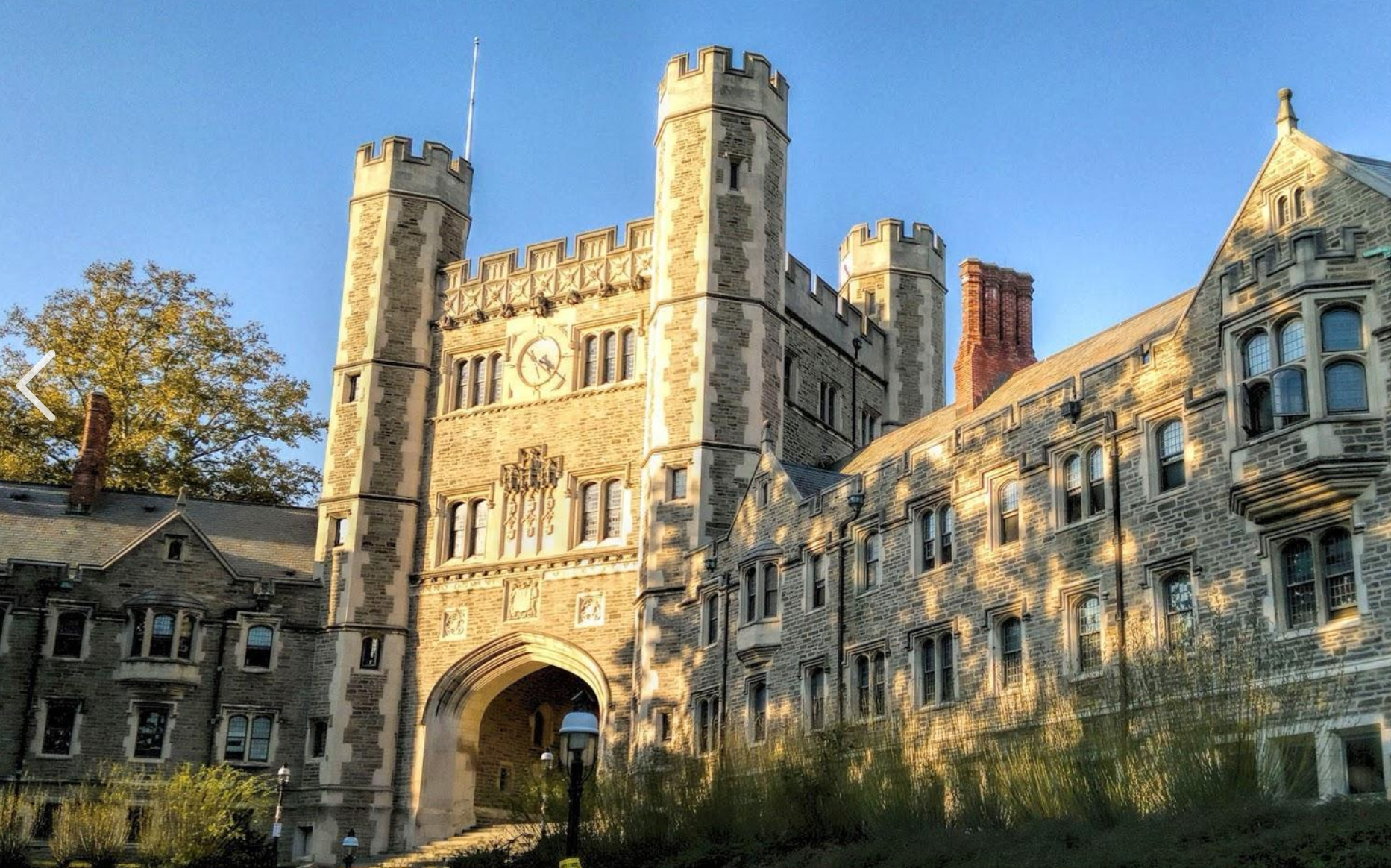
Let us start with Princeton itself. Because if you have never been to that campus, it is hard to fully grasp what it means to be in a room full of students who study there.
Princeton University was founded in 1746 — before the United States existed as a country. It is one of the oldest and most prestigious universities in the world, consistently ranked in the top handful of institutions globally, and a founding member of the Ivy League. It has produced presidents, Nobel Prize winners, pioneering researchers, and founders who built things that changed entire industries. When people talk about the rooms where the future gets decided, Princeton classrooms are in that conversation.
We say this not to intimidate — but to set the scene properly. Because what happened at HackPrinceton is even more interesting when you understand where it happened.
Now — what is a hackathon?
If you have never been to one, the word probably sounds more technical than it is. Forget the hacking. A hackathon is simply this: a fixed window of time — usually 24 to 48 hours — where builders show up, form teams, pick a problem, and try to build something real before the clock runs out. No lectures. No grades. No safety net. You either ship something by the end, or you don't.
That is the entire format. And it is deceptively simple — because when you remove the structure, the deadlines, the permission slips, what you are left with is the clearest possible picture of who someone actually is as a builder. There is no hiding at a hackathon. You find out fast what you are made of.
HackPrinceton specifically is a student-run hackathon that takes place twice a year on Princeton's campus. It is open to students from universities across the country — not just Princeton — and it draws exactly the kind of crowd you would expect: curious, competitive, and genuinely hungry to make something.
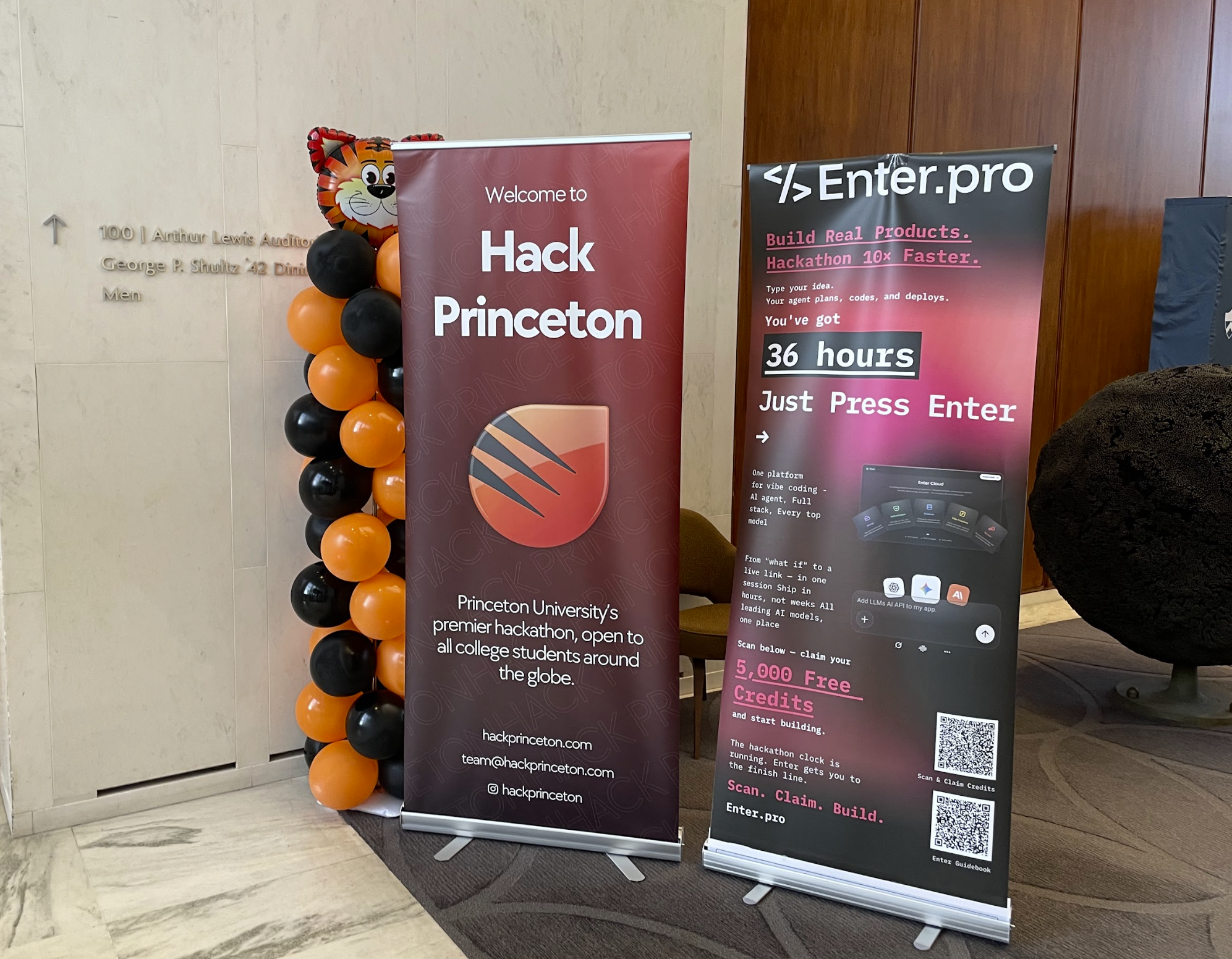
This semester's tracks were: Healthcare, Sustainability, Business & Enterprise, Entertainment & Media and Education — each one a real problem space with real stakes. Plus wildcards for the builders who wanted to go sideways: Best Hardware Hack, Best Game, Best Rookie Hack.
The rules? Simple. Build something real. Submit a GitHub repo. Demo it in two minutes. Ship.
Day 1 - They Show Up Before They Have an Answer
Friday evening. The opening ceremony.
Students were still arriving, still finding seats, still figuring out their teams. The tracks had just been announced, the clock had not started yet; but already, you could feel it.
People crowding around our booth. Asking questions. Downloading Enter on the spot. Not because we asked them to — because they wanted to know if it could actually help them build what they had in their head before the weekend was over.
We were proud to be in the room alongside fellow sponsors who share a real belief in the next generation of builders; engaging in meaningful work for the innovation community.
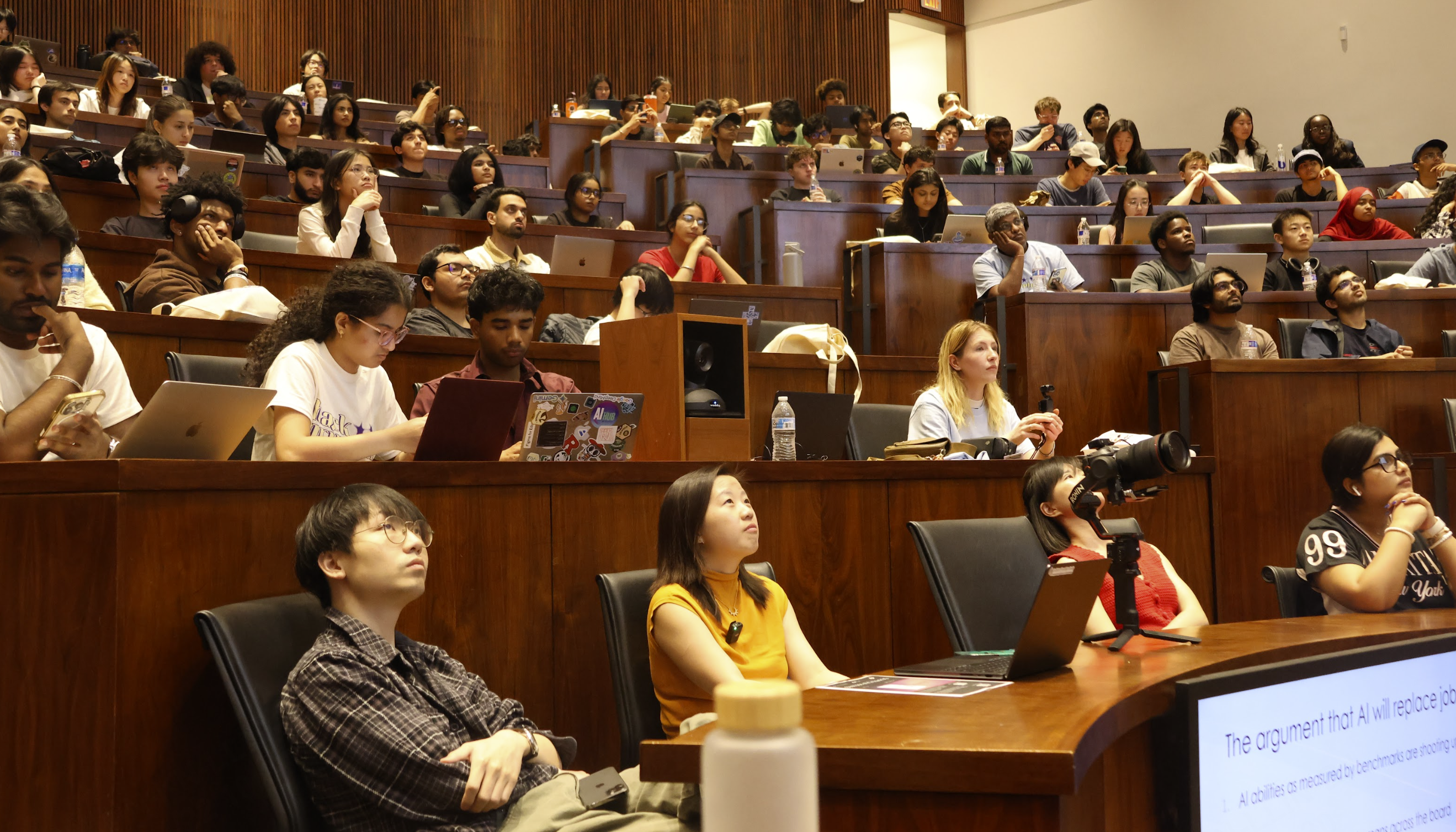
At the opening, we kept our pitch simple. Enter.pro is part of Converge AI — a newly arising AI-native company dedicated to pushing the frontiers of AI applications. We are building the infrastructure and the products for the next generation of AI-first experiences. This weekend, every hacker in the room had access to all of it.
Then the clock started, and we were excited to see what brillant mind will come up with...
Day 2 — Building: The Honest Version of the AI Story
What We Said in the Workshop
We ran a 1h session on Saturday: "Build Now or Catch Up Later."
We wanted to give hackers the honest version of the AI story — not the hype, not the fear, just the numbers and what they actually mean for the people in the room.
Here is the catch up of our insights:
AI absorbed 61% of all global VC in 2025. Not 20%, not 30% — 61. The last time a single category dominated at this level was the internet in 1999. But unlike 1999, this one has revenue, margin, and real deployment at scale. The price of intelligence has collapsed: 500 times cheaper in three years, the fastest price drop in the history of technology. What once cost $50,000 now costs $50
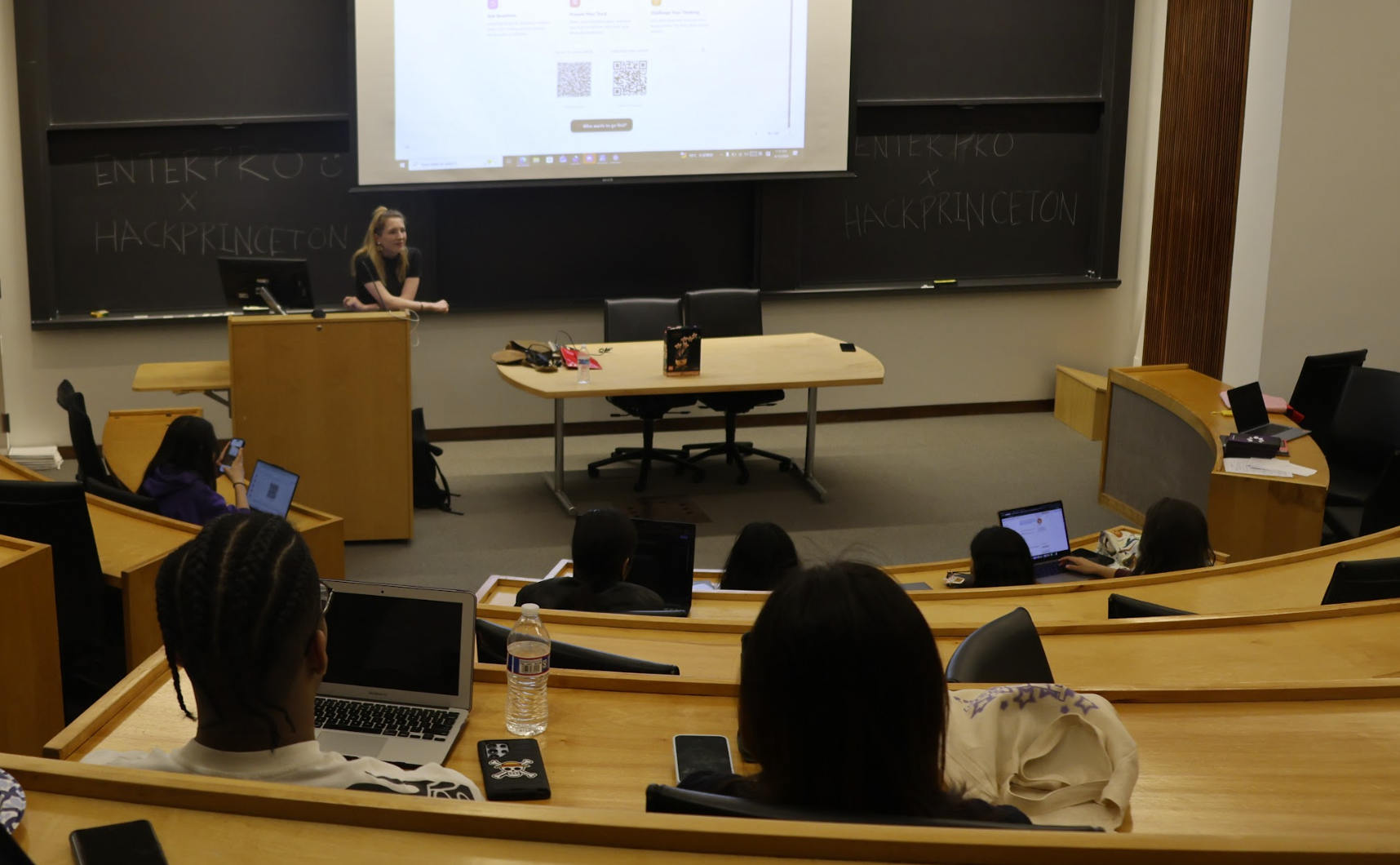
We walked through seven industries being reshaped right now — healthcare, sustainability, enterprise, entertainment, education, gaming, hardware — and the pattern was the same in every single one. AI handles the structured, repetitive 80%. Humans own the 20% that requires judgment, taste, and creativity. But here is where it becomes interesting, and where we wanted our student to reflect on:
"In a world where you have access to all AI capabilities. Now — what is worth building? That's the real question."
That is the question we think matters most right now. Not "can I build this?" — you can. The harder question is "should I build this, and for whom?"
What Happened at the Booth
Between sessions, our booth became a working station.
Teams came in with real questions. A time to connect, to teach and learn from each other.
Watching a student go from blank screen to live link in under a weekend is what makes us the proudest team in the world. We also build Enter with Enter capabilities. Making sure each individuals having an idea can create their own real project, is what we wake up everyday for. And to see it live with hundreds of students brought us the biggest joy.
Day 3 — What 36 Hours Actually Looks Like
Sunday morning. 9:30 AM.
Hackers lined up to present. Tired eyes. Proud faces.
We walked the room during judging and kept seeing the same thing: people who showed up Friday night with nothing, standing in front of judges on Sunday with something real. Something live. Something they built.
The Projects That Moved Us
Vietnam Refugee Trail
By a team of first-generation Vietnamese Princeton students
Here is what this project is: an educational single-player game set after the Fall of Saigon in 1975. You play as a Vietnamese refugee trying to flee the country. One in three people who made that journey did not survive. The game does not let you forget that.
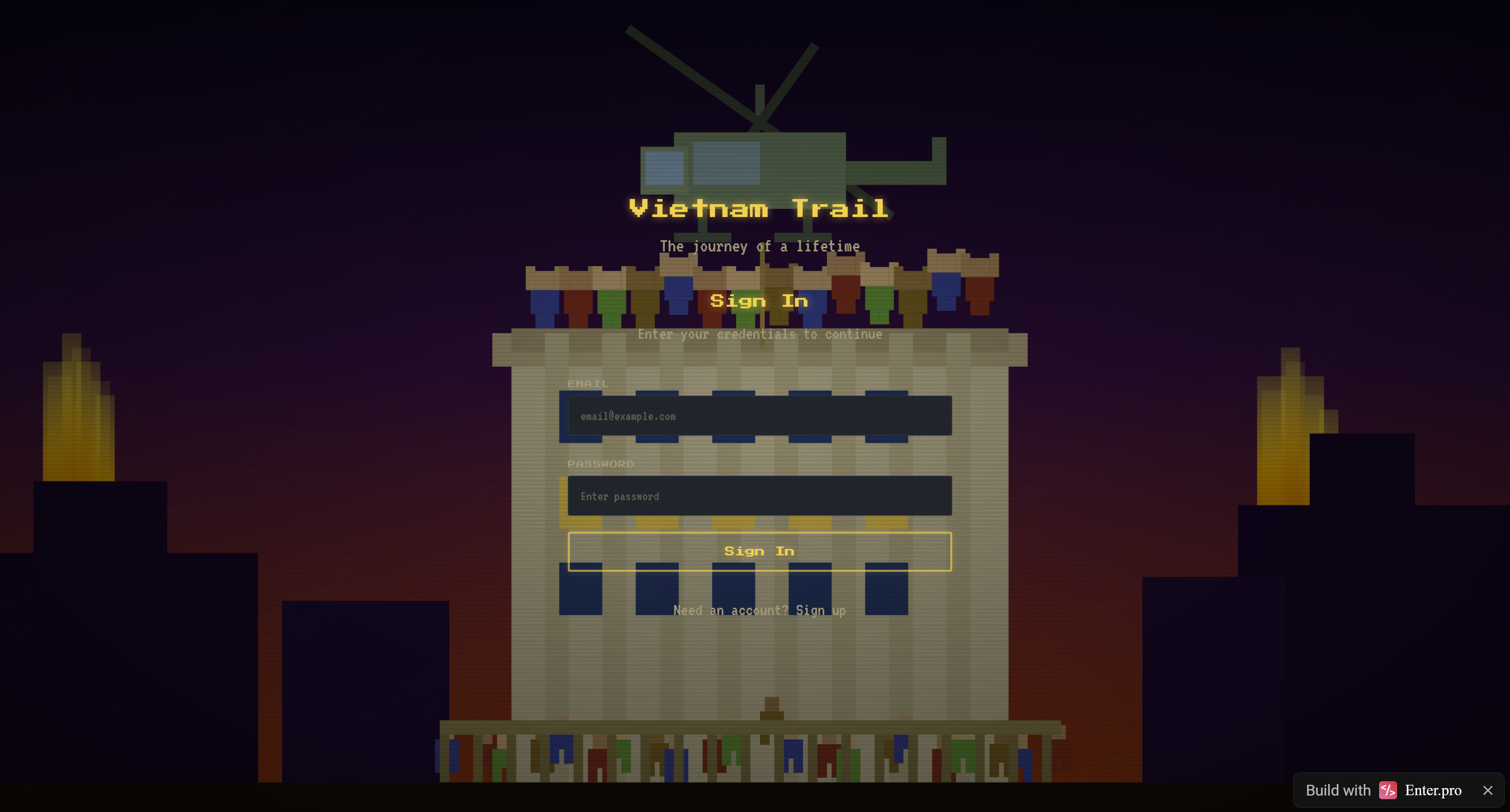
Credit : https://www.we-are-saigone.us/auth
The format is inspired by Oregon Trail — familiar, accessible, made for younger audiences who are not learning this history in their classrooms.
Three first-time builders. 36 hours. A fully working, emotionally considered, historically grounded game.
They described their experience in their own words:
"Enter.pro is responsible for allowing three rookies to build an extensive app in 36 hours."
That is the kind of builder that makes this work worth doing.
Terra Zone AI
By a cross-university team — Rutgers × Princeton
The inspiration for this one started at a career fair. A student was talking to environmental consulting recruiters who described their work: spend weeks pulling geological surveys, cross-referencing zoning codes, running foundation estimates — just to give a client a preliminary yes or no.
Six weeks. Twenty thousand dollars. For a preliminary answer.
The student thought: this doesn't have to be this hard.
That instinct — "I can fix this" — is the soul of every great product. And Terra Zone AI is what happens when a builder follows it.
Draw a polygon on a map. In under 60 seconds, the platform pulls geological data, municipal zoning codes, and construction APIs, runs a risk-adjusted financial model, and delivers a definitive GO / NO-GO / CONDITIONAL verdict with a full investment-grade breakdown.
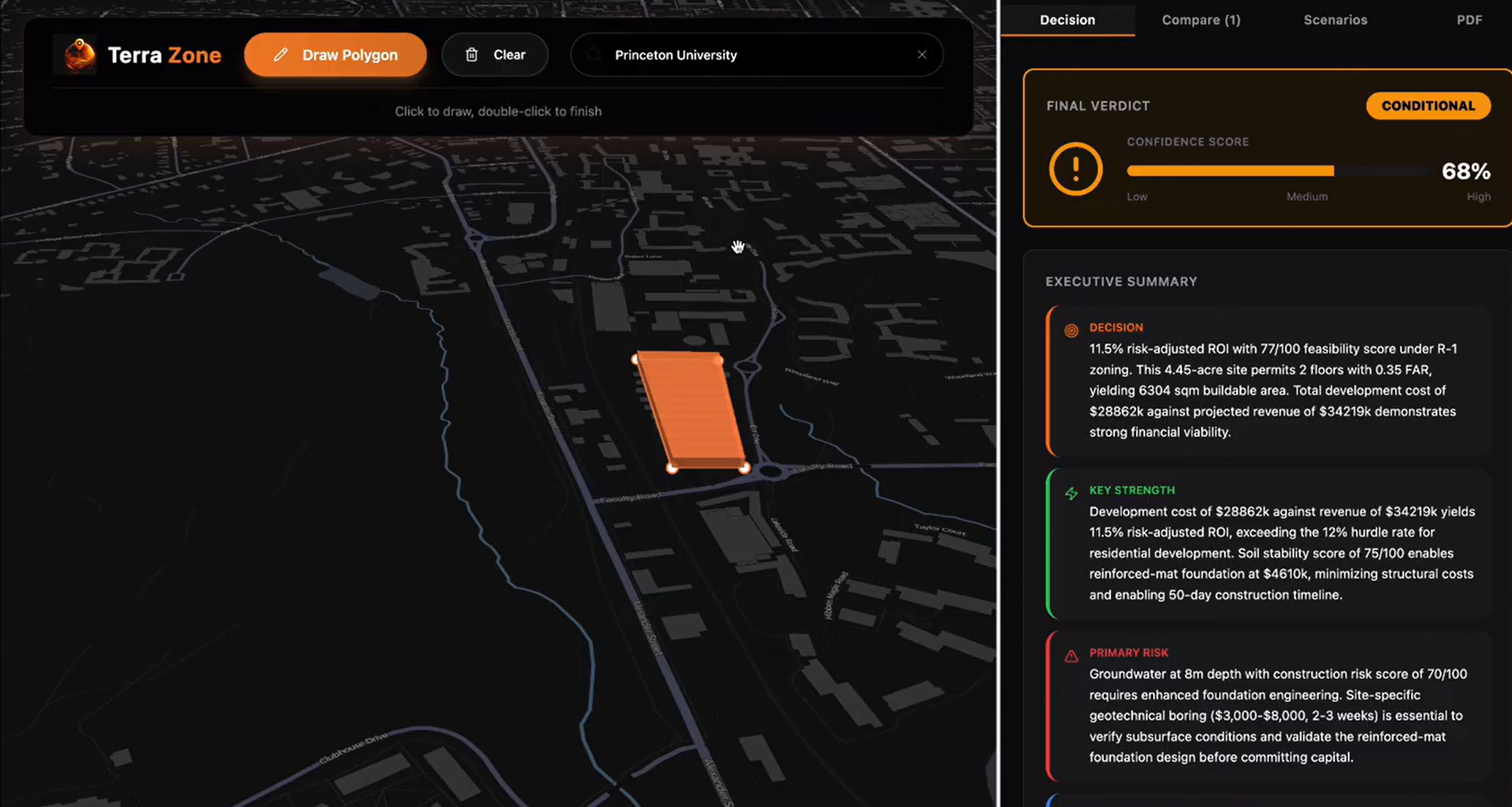
Credit: https://c8dba0ffb8294fcfaa3cd6ee85f2761d.prod.enterapp.pro/
What impressed us most was the engineering discipline behind it. The team built a seven-layer fallback system — so even if an external API fails or the model hallucinates, the platform falls back to deterministic calculations. The user never sees a broken screen. That is product thinking.
These are just two of the 38 projects built this weekend. Each one has a story worth telling — and we plan to tell them. Over the coming weeks, we will be publishing dedicated articles on more HackPrinceton participant projects: what they built, how they built it, and what comes next for each team. Stay tuned.
What Princeton Confirmed
We said this at the workshop, and we will say it again here.
The question is no longer "can I build this?" The tools exist. The access exists. Enter exists.
The question is what is worth building — and who you are building it for.
The students we met this weekend are not waiting for permission. They are not waiting for the right moment or the perfect team or a technical background they do not have. They showed up, they opened a blank screen, and 36 hours later they had something real to show the world.
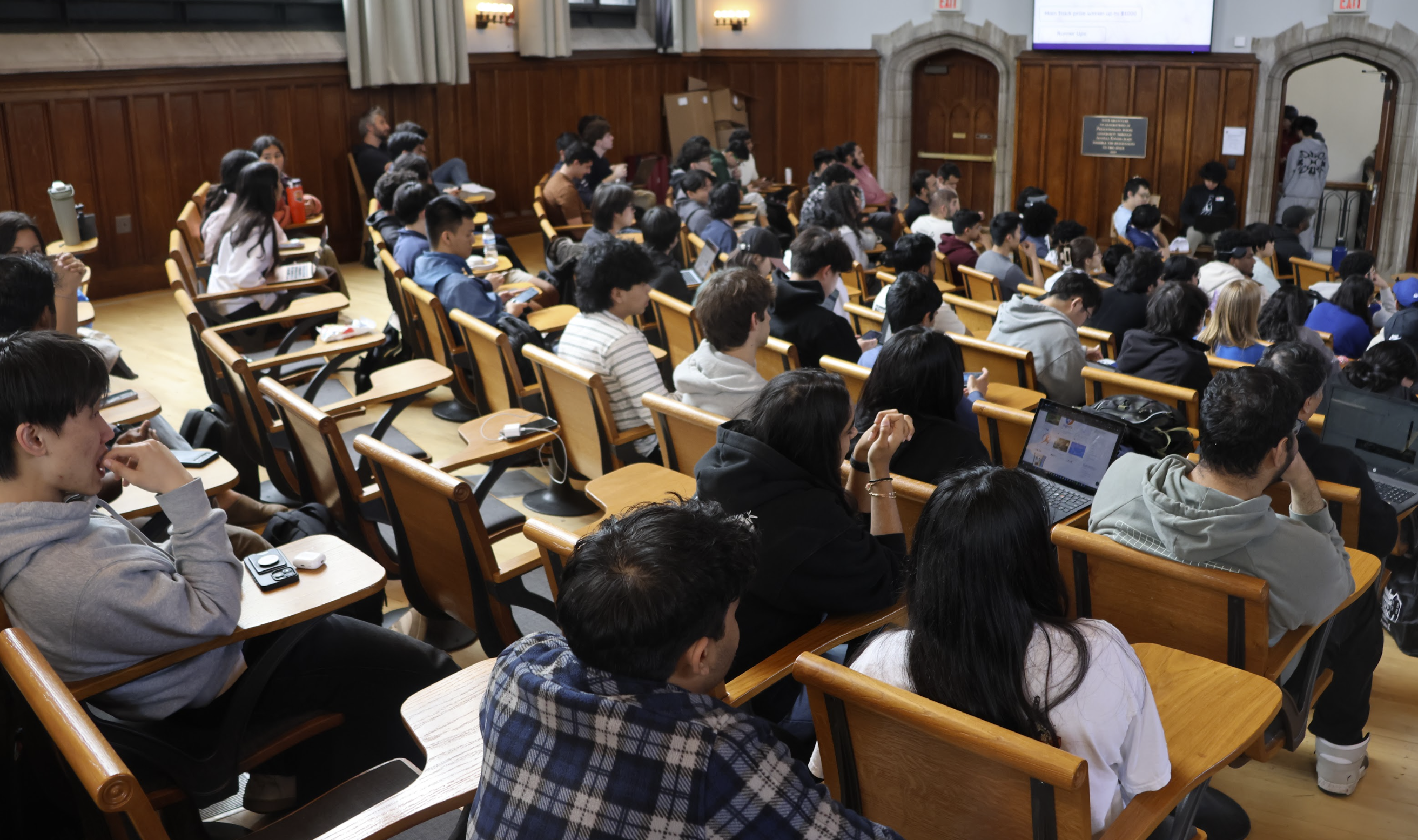
105 participants. 38 projects. One weekend.
To the HackPrinceton organizers, every mentor and fellow sponsor, and every hacker who showed up ready to ship — thank you. You reminded us what this mission is actually for.
The blank screen never wins here.
Over the coming weeks, we will be going deeper — one project at a time. The stories behind the builds, the decisions made at 2am, the problems these students chose to solve and why. Each one its own answer to the question this article asked.
If HackPrinceton taught us who the next builders are, the next articles will show you exactly what they are capable of.
Stay tuned. This is only the beginning.