Enter April Version: The Full-Stack AI Agent That Never Stops
Enter April introduces Skills, MCP, and Cloud — giving the agent domain expertise, real-world apps access, and native infrastructure, so it doesn't stop at the code.
Enter April Version: The Full-Stack AI Agent That Never Stops
Enter April Version is live. This is what changes.
There's a lie at the center of the vibe coding era.
The lie isn't that anyone can build; that part turned out to be true. In 2024, you could describe an app in plain English and watch it materialize on screen in minutes. The promise worked. The problem was everything after.
You'd hit a wall. Always.
The truth is: building the code was never the whole product. It was always just the beginning.
A product needs a database behind it. It needs live data flowing through it. It needs to exist somewhere — deployed, accessible, running in the real world. And for most vibe coding tools, those steps happen outside the platform, in other tabs, through other services, by you. The agent's job ended where the real product work began.
Enter April Version closes that gap.
What "Full Stack" Actually Means
Full stack is one of those terms that gets used so often it starts to lose weight. Worth being precise about what it means here.
A full-stack product has three layers that all have to work. There's the quality layer: the code is clean, consistent, intentional, aligned with your standards. There's the infrastructure layer: the database is running, storage is configured, deployment is handled. And there's the connectivity layer: the product talks to the real world, to live APIs, to external services, to data that changes.
Most AI builders own the first layer. The second and third are yours to figure out.
Enter April Version owns all three — natively, inside one platform. That's what makes it different. Not any single feature. The completeness.
Skills: An Agent That Brings Expertise
Here's something interesting about how expertise works: it's not the same as knowledge.
Expertise is knowing how to structure the routes, when to break the rules, what makes the schema clean versus clever. The difference shows up in output. One produces code you review and ships. The other produces code you read and rewrite.
Skills give your Enter agent expertise; not just knowledge. Each Skill is a domain-specific package: the right patterns, the right instincts, the right quality standards for a particular kind of work. Enable a Skill for CRUD API generation and the agent doesn't approximate what a good one looks like. It generates one. Enable a Skill for Stripe setup and it configures production correctly, the first time.
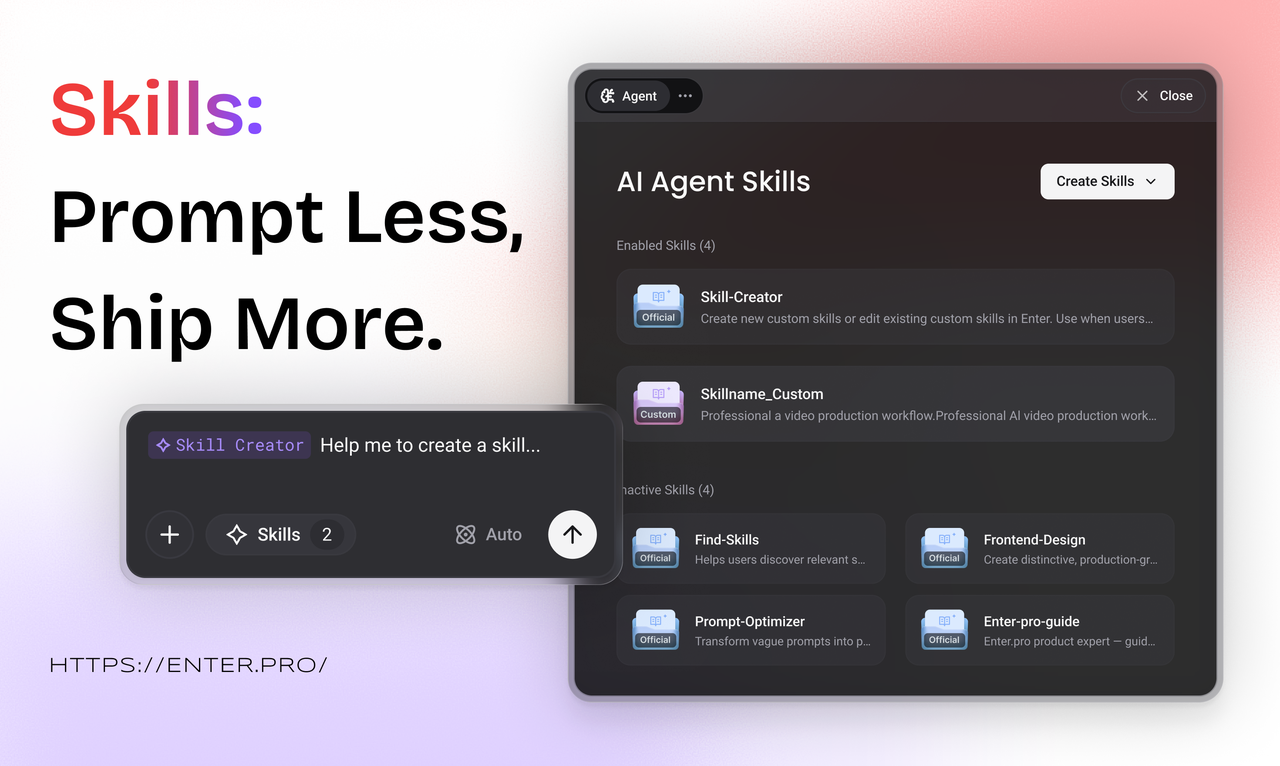
What makes this compound is that Skills are permanent and accumulating. Every one you build or import lives in your library. The next project starts from your full collection. Your agent gets more capable with every build; reflecting your standards, your taste, your definition of done. You stop explaining what good looks like. The agent already knows.
Cloud: The Ground Beneath the Build
There's a moment in every build where the code is working and the question becomes: where does this actually live?
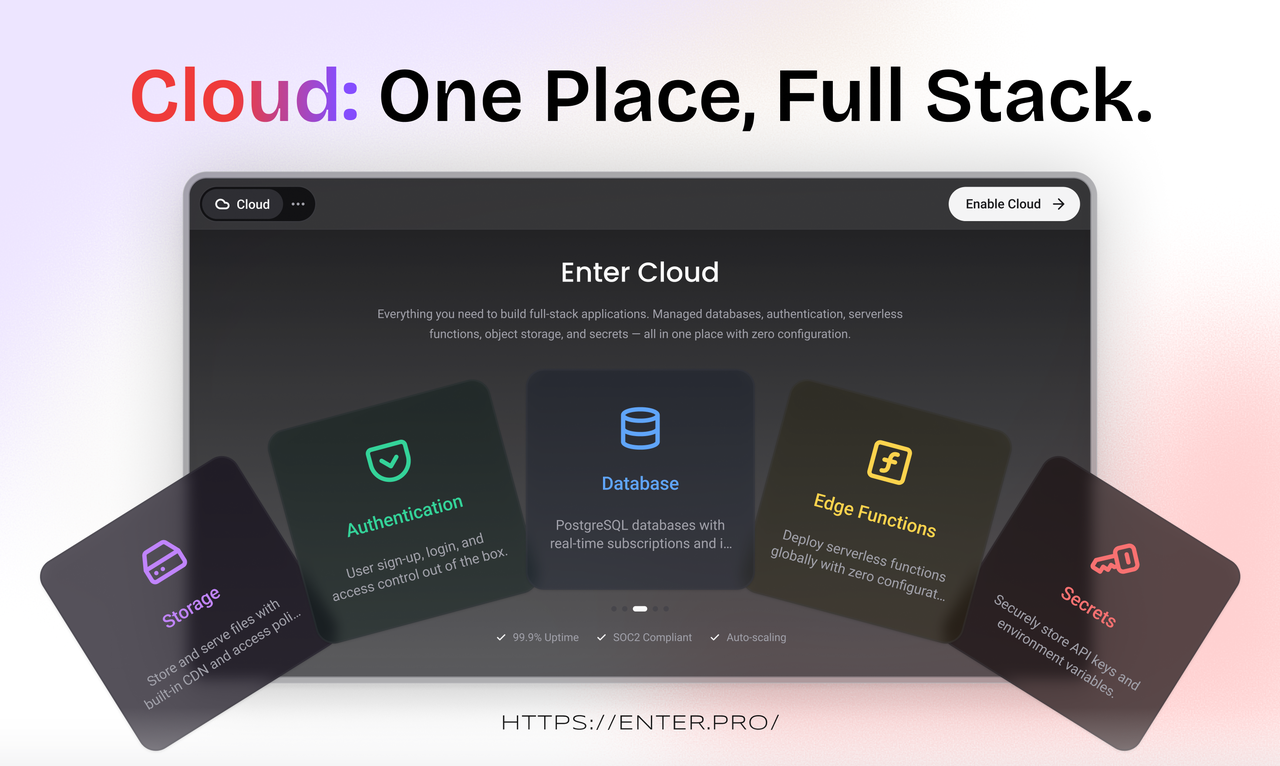
Enter Cloud answers that question before you ask it.
Database, storage, compute — managed, native, inside Enter. The infrastructure is in place from the moment you start. When the build is ready to ship, one click deploys it — live and running. Custom domain, ready to connect. The product runs on infrastructure Enter manages, in the same environment where it was built, maintained in the same place it was designed.
MCP: Everything the Real World Has to Offer
MCP — Model Context Protocol — is worth understanding because it's genuinely exciting in what it makes possible.
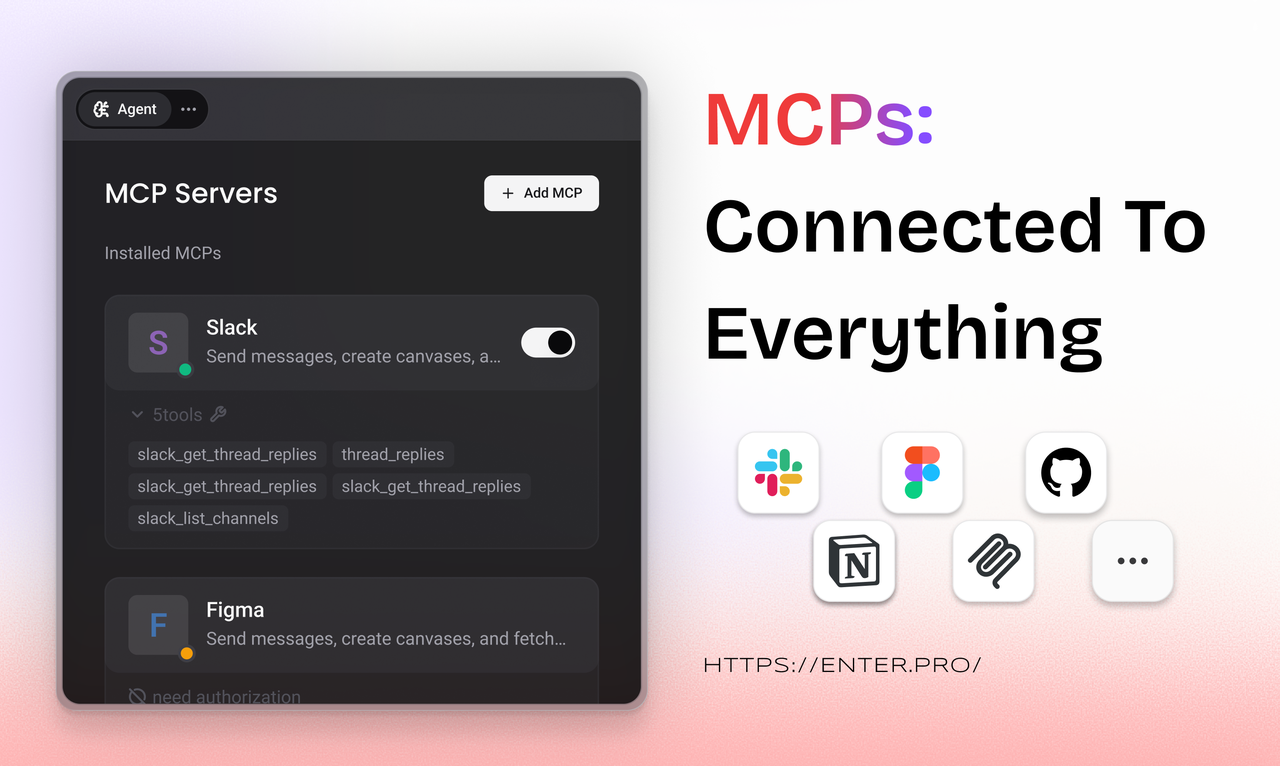
Most agents work with what's in front of them: the code in the editor, the context in the conversation. MCP extends that reach. Configure a server with a simple JSON snippet and your Enter agent connects directly to external services: Notion, Supabase, live APIs, any service with an HTTP endpoint. It queries them. It writes to them. It builds with them, in real time.
What this means in practice: your agent can now call real tools, APIs, and data sources while it builds — not simulate them, not assume them. It's pulling live information, triggering real actions, working with actual services mid-build. You're not describing what you want connected. The agent is doing the connecting, as it works.
One configuration. The world opens up.
The interesting thing about this isn't just convenience. It's continuity. The agent that wrote the code understands the infrastructure it runs on.
They're part of the same system, designed to work together. That's what cloud-native actually means, and it's why the distance from done to deployed collapses to a single action.
What It Looks Like When It's All Running
The clearest way to understand what Skills, Cloud, and MCP actually do together isn't a list of features. It's a product. So here we dive with you in a use case:
CANVAS is an AI image generation tool — built entirely with Enter. An infinite canvas where you describe characters, environments, objects; watch them materialize; branch them into variations; extract them as transparent assets. A real product, built by real users, running on Enter Cloud underneath.
Verification and Login
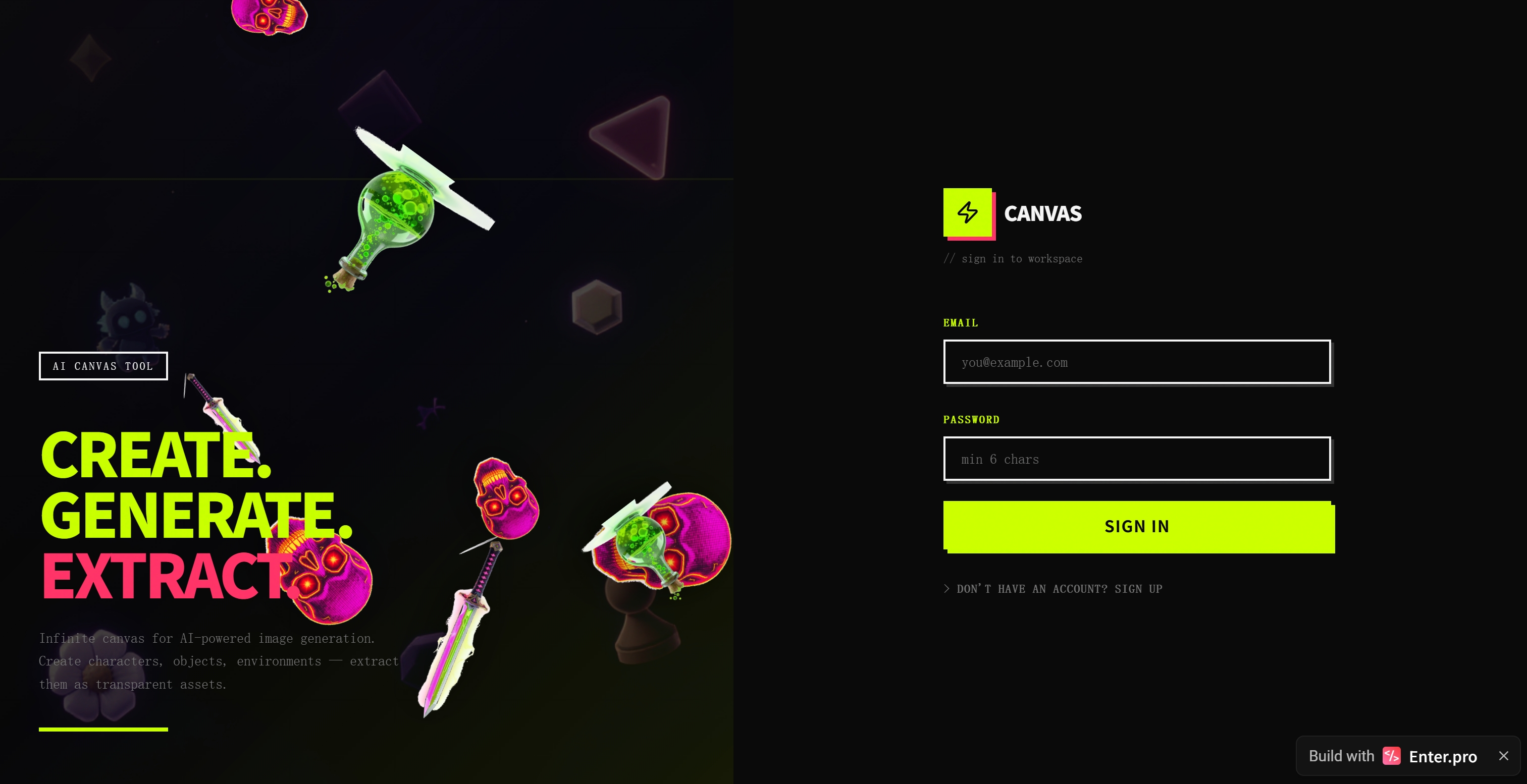
CANVAS has its own sign-in screen. Branded, designed, real. Immerse your users in a fully built product experience, with authentication managed natively inside Enter Cloud. Users sign in. Sessions are secure. The agent handled it.
Database Management: Personal and Shared Database Writing
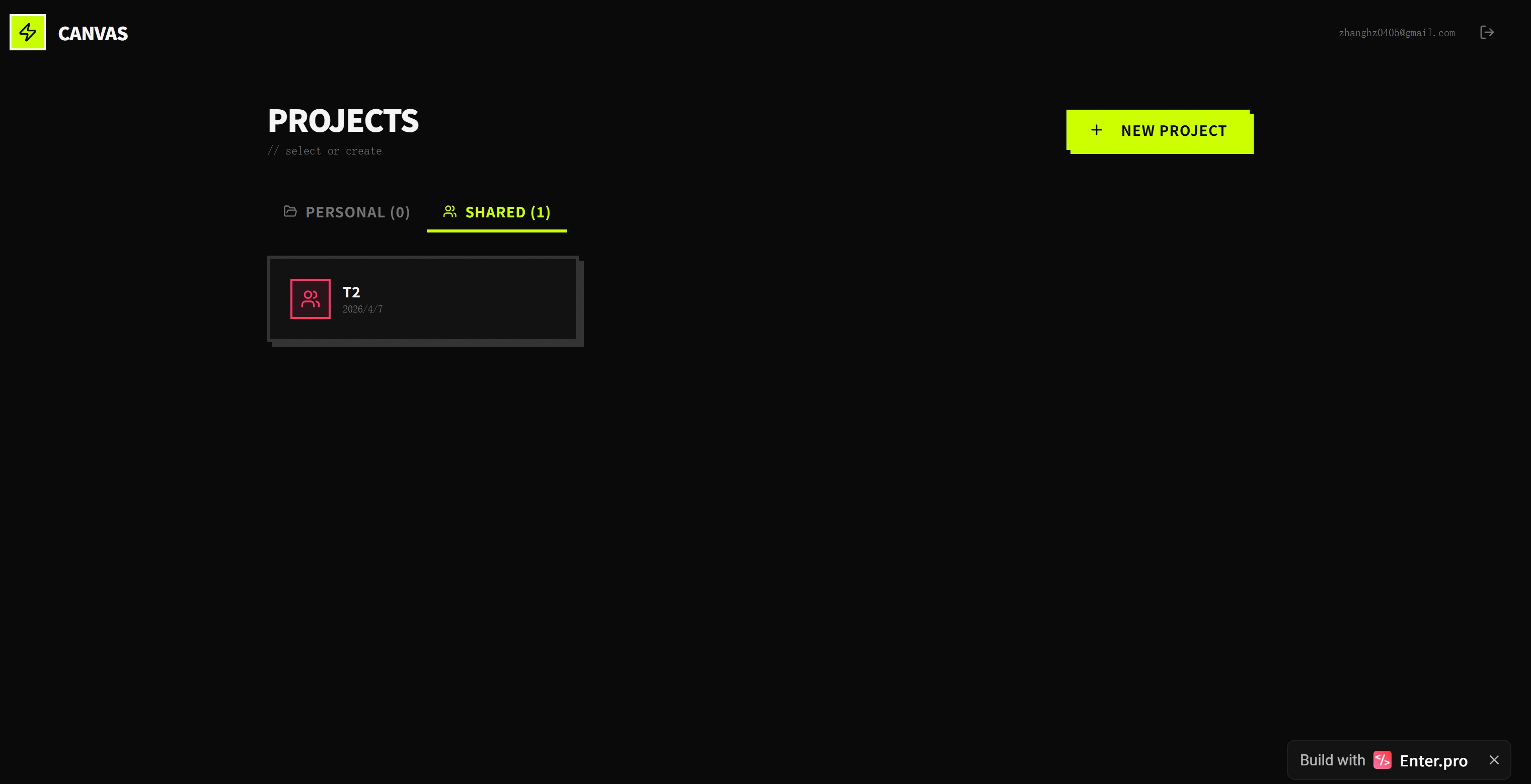
Projects live in two modes. Your personal canvas, scoped to you. Shared projects — like "T2" — accessible to a team. Both managed natively inside Enter. No separate database service. No external config. The infrastructure that separates personal work from collaborative work was there from the first build.
AI ALL Secret Key Management
CANVAS runs AI models to generate every image. Every API key those models depend on — stored and managed securely inside Enter. No environment variables scattered across services. No credentials living somewhere they shouldn't. One place. Locked. Done.
- Edge Function handles the web-side image background removal and cloud storage functions.
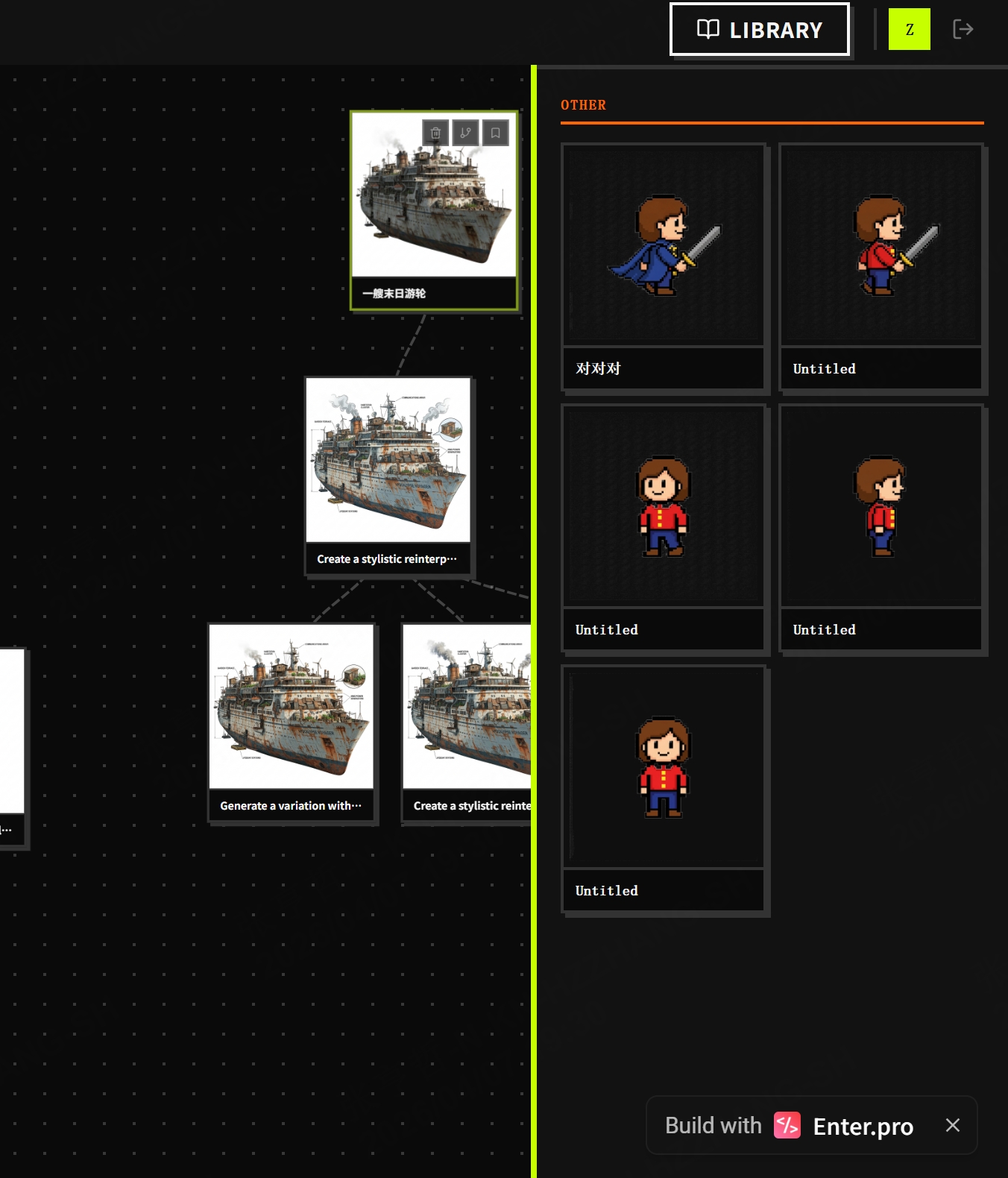
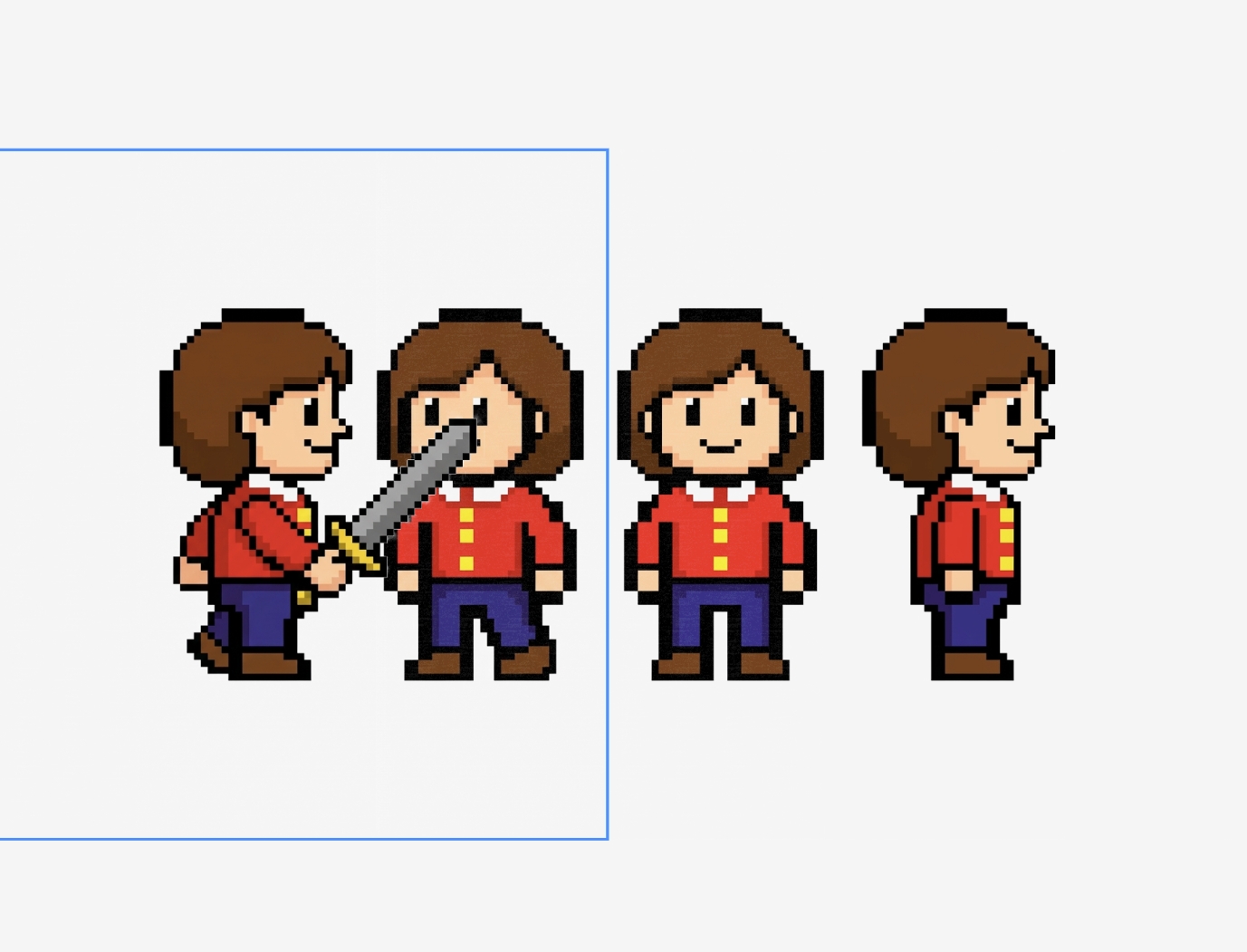
When a user generates an image, an Edge Function handles the processing at the edge — close to the user, fast. Background removal runs server-side. The result saves directly to cloud storage. All of it happens inside the same environment where the feature was written.
- The Realtime Broadcast feature allows users to see others' operation traces while sharing.
Two people, one canvas. You can see the other user's cursor — labeled, moving, live. Not a socket library integrated after the fact. Native realtime, inside the same build environment where everything else lives. Collaboration didn't require a separate infrastructure decision. It was already there.
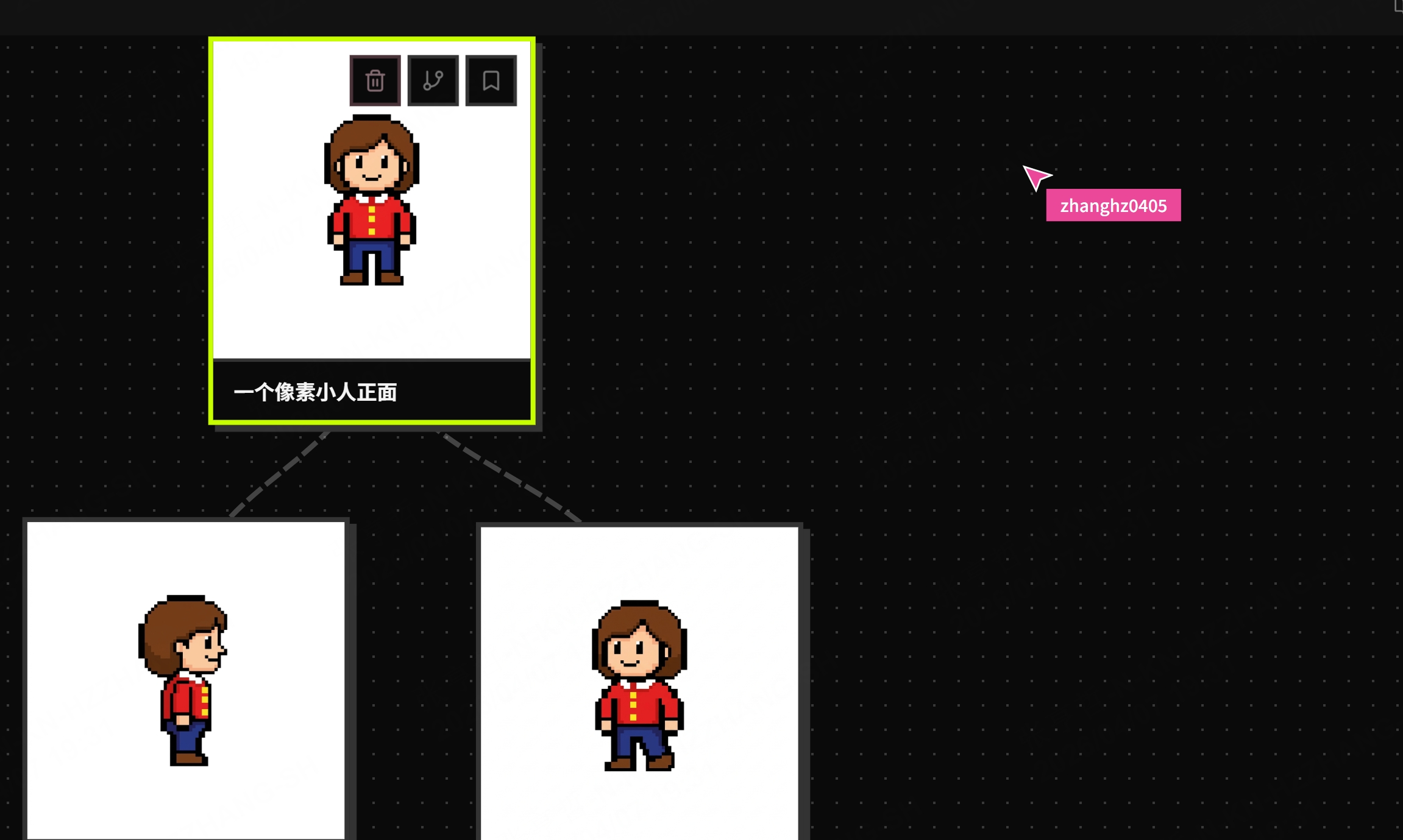
interested to see this product ? Here is the link: https://157586ad07d944d9b7144450baee0ae1.prod.enterapp.pro/
Enter Is Now the Entire Stack
The most interesting thing about Enter April Version isn't any individual capability. It's what the combination represents.
Skills, Cloud, and MCP together mean Enter owns the full journey: from the first prompt to a live, connected, deployed product. Quality is handled. Infrastructure is handled. External connectivity is handled. The agent stays in the room for all of it, carrying the build from idea to something real without stepping back and handing you the wheel.
That's a different category of tool. Not a faster way to generate code, a complete environment for building actual products. The vibe coding era promised that anyone could build. Enter April Version is what makes that promise true all the way to the end.
Skills, Cloud, and MCP are live now. Open your project. The upgrade is already there.
-> Know more about Enter April