From Shenzhen to Hong Kong: What the Greater Bay Area is Building with Enter Pro
Enter Pro partnered with AttraX to host back-to-back Vibe Coding workshops across the Greater Bay Area — Shenzhen on April 16th, Hong Kong on April 17th — drawing roughly 150 attendees. Using Enter Pro, 53 participants with zero coding background collectively shipped 75 projects and 511 published builds in a single evening, spanning AI image studios, business process tools, and academic trackers. The events proved one thing: the barrier to building was never technical — it was belief.
From Shenzhen to Hong Kong: What the Greater Bay Area is Building with Enter Pro
There is a specific moment that happens in a room when someone watches a working application appear on screen — built with Enter Pro from a description typed in plain language, in under twenty minutes, by someone who has never written a line of code.
It is not excitement, exactly. It is something closer to a recalibration. The story they have been telling themselves — about what building requires, about who gets to do it — quietly stops making sense.
That moment happened twice in the Greater Bay Area. April 16th in Shenzhen. April 17th in Hong Kong.
Two Cities. Two Rooms.
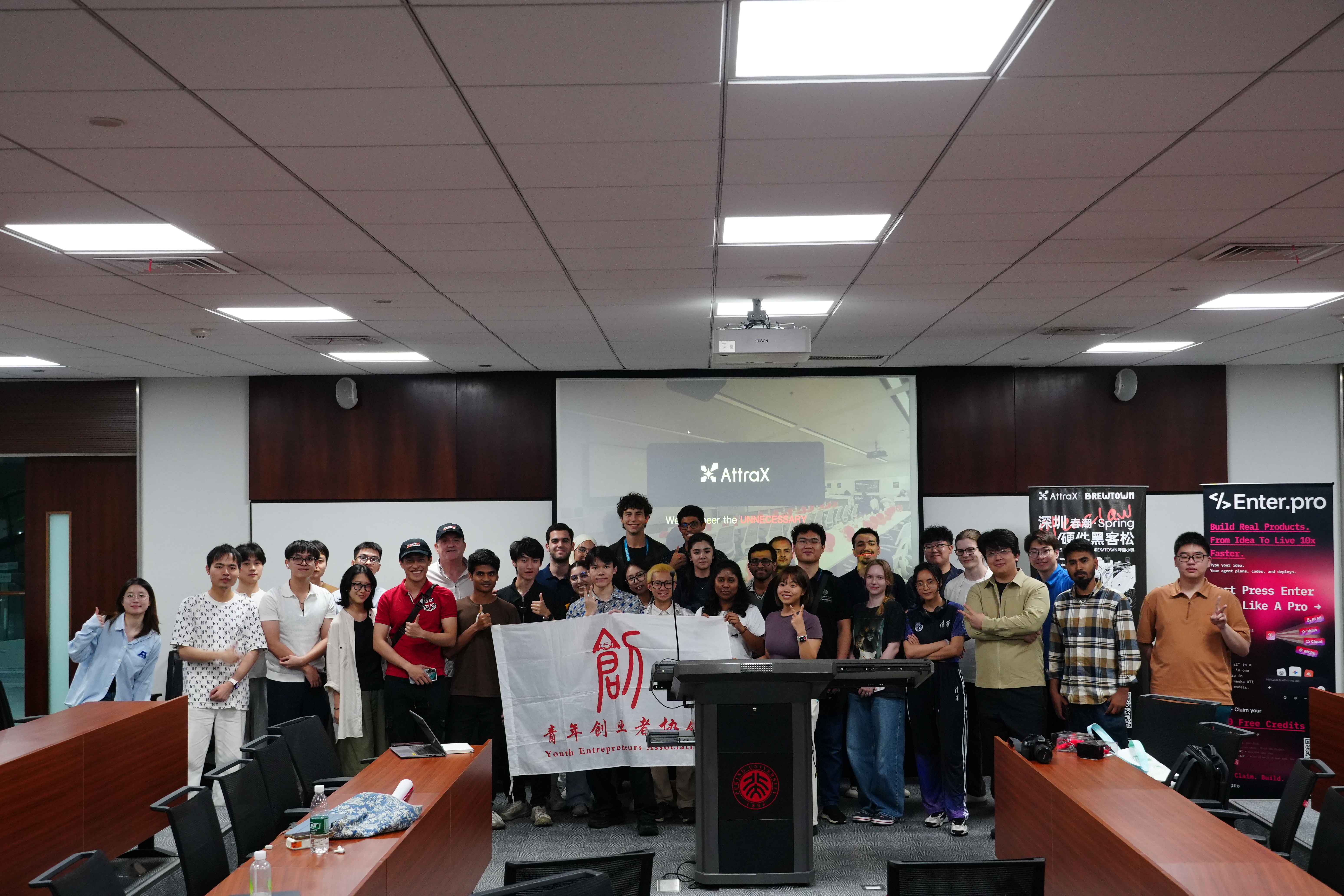
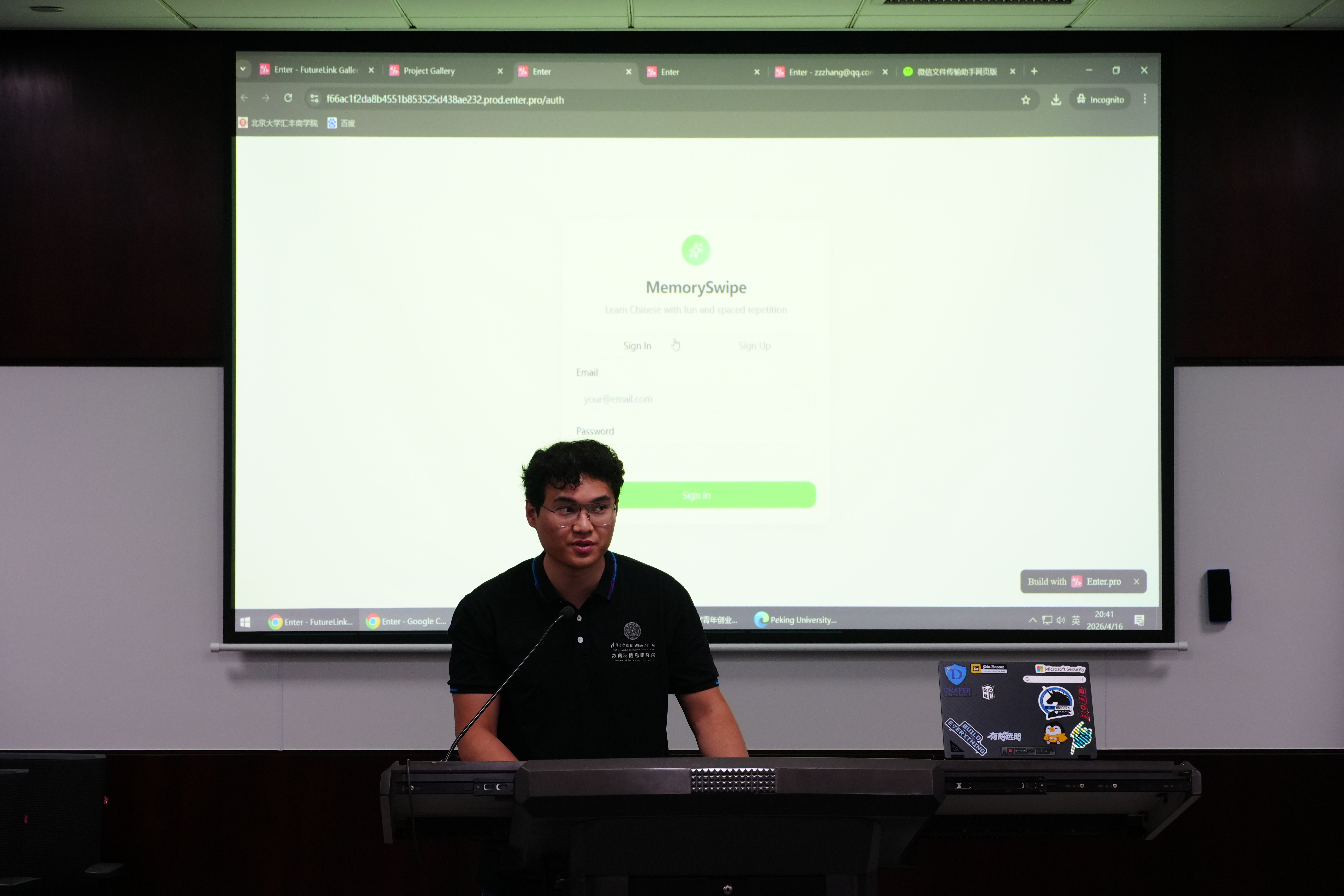
April 16th. Shenzhen. Peking University HSBC Business School.
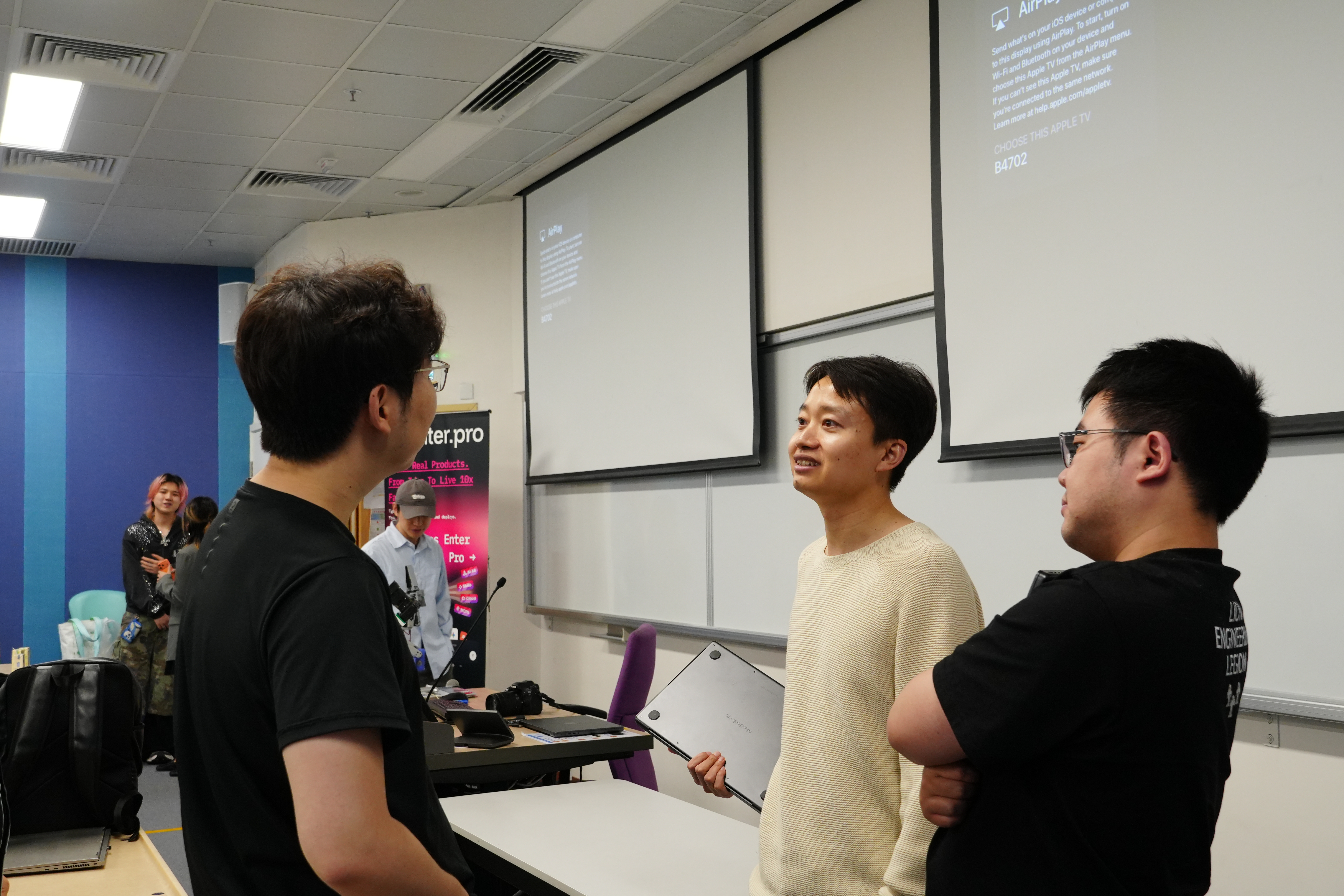
Roughly 80 people gathered for AttraX × PKU Young Entrepreneurs Association's international meetup — researchers, international students, and early-stage founders thinking seriously about what China's AI moment means from a global vantage point. Prof. Zhou Deming, tenured associate professor at PKU HSBC Business School and Director of the AI Management Research Center, opened the evening with a grounded reading of China's AI ecosystem: where the real advantages sit, how global and local dynamics interact, and what builders working across borders actually need to understand.
Then came the hands-on portion: a live vibe coding session powered by Enter Pro, where participants went from idea to something real and deployed before the evening ended.
That shift — from "I can't build this" to "what do I actually want to build?" — is what these evenings are for.
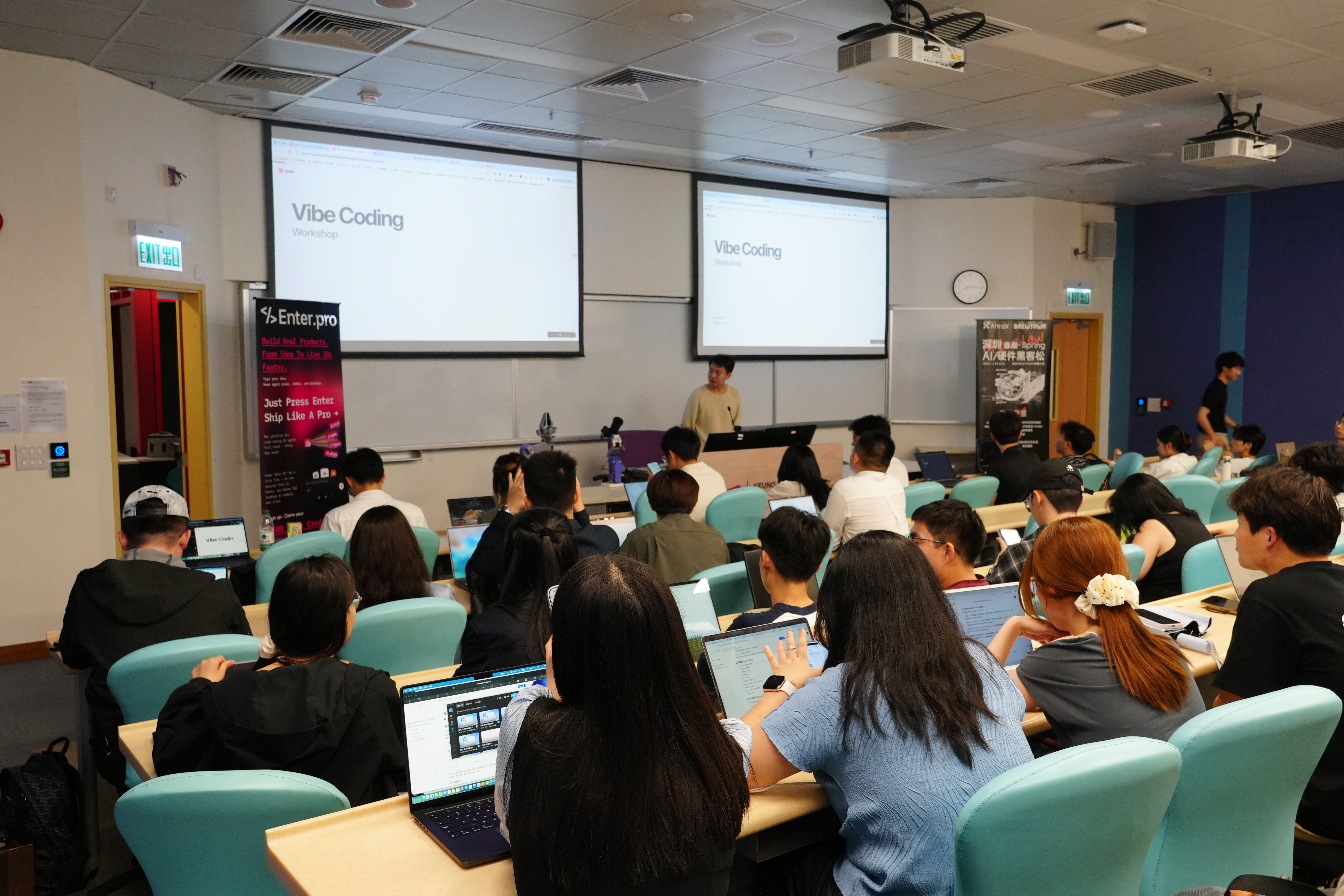
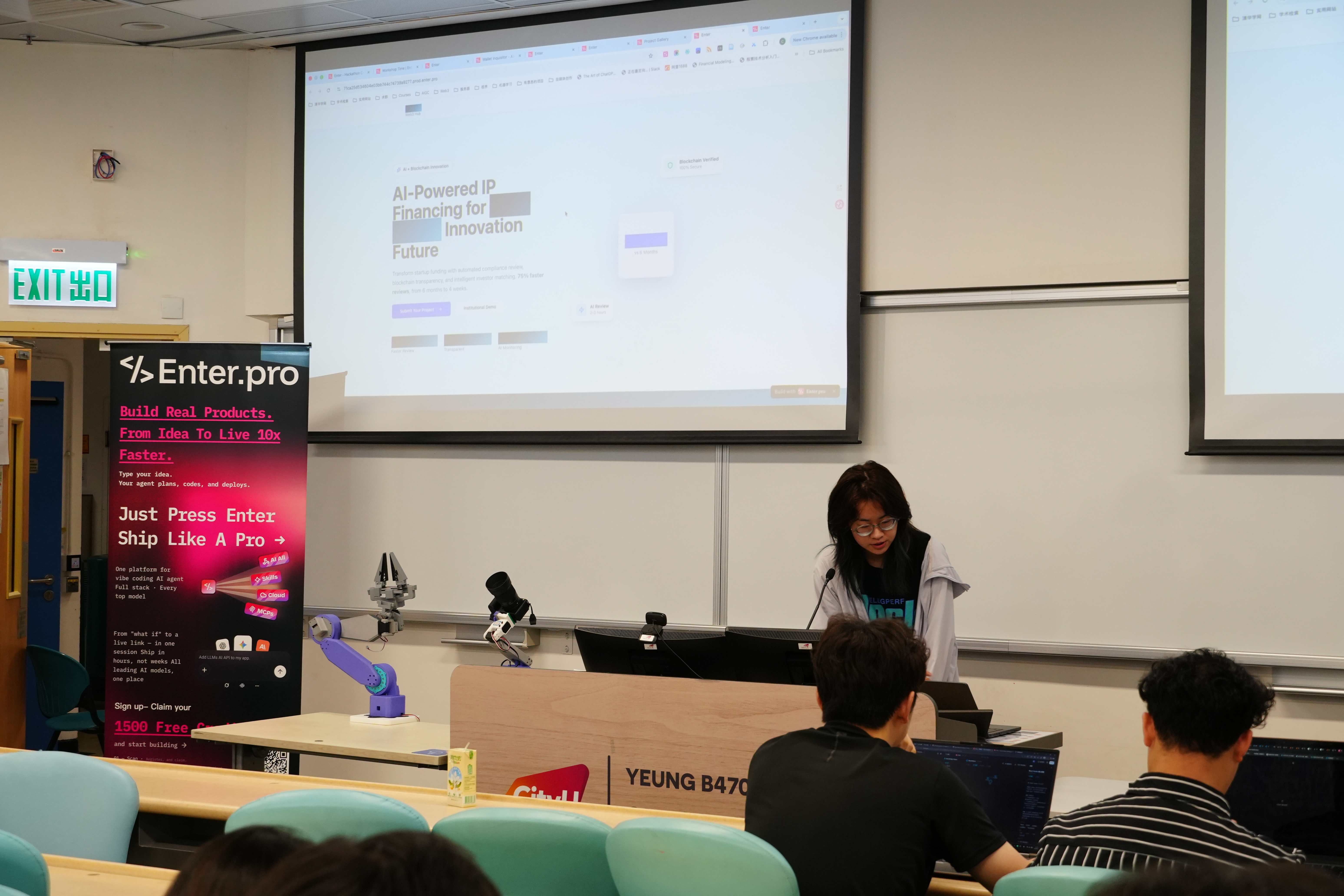
April 17th. Hong Kong. City University of Hong Kong.
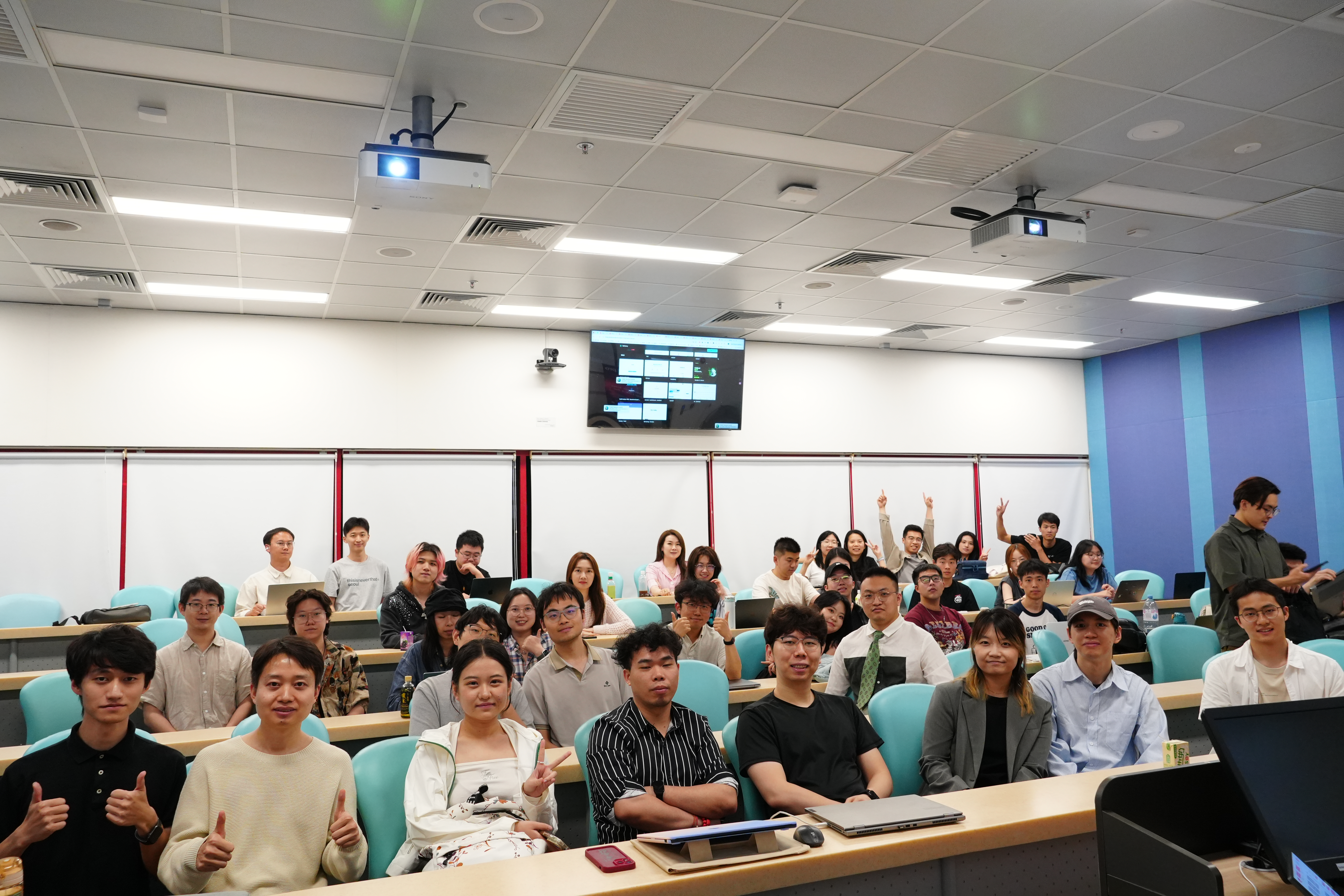
Around seventy people showed up for a different kind of evening — AttraX × Greater Bay Area AI Startup Association × CityU Graduate Student Association. Three founders took the stage before the workshop: Willie Hu of AirJelly, who laid out his thinking on "Context: The Next Leap in AI"; Rui Huang, founder of Nanako AI Lab; and Ricky, founder of Moce AI, building at the intersection of AI and hardware. The conversation moved from market trends to real product decisions — what it actually takes to ship in this environment, and what's worth building.
Then, again, the room got to build.
What Vibe Coding Looks Like in a Room
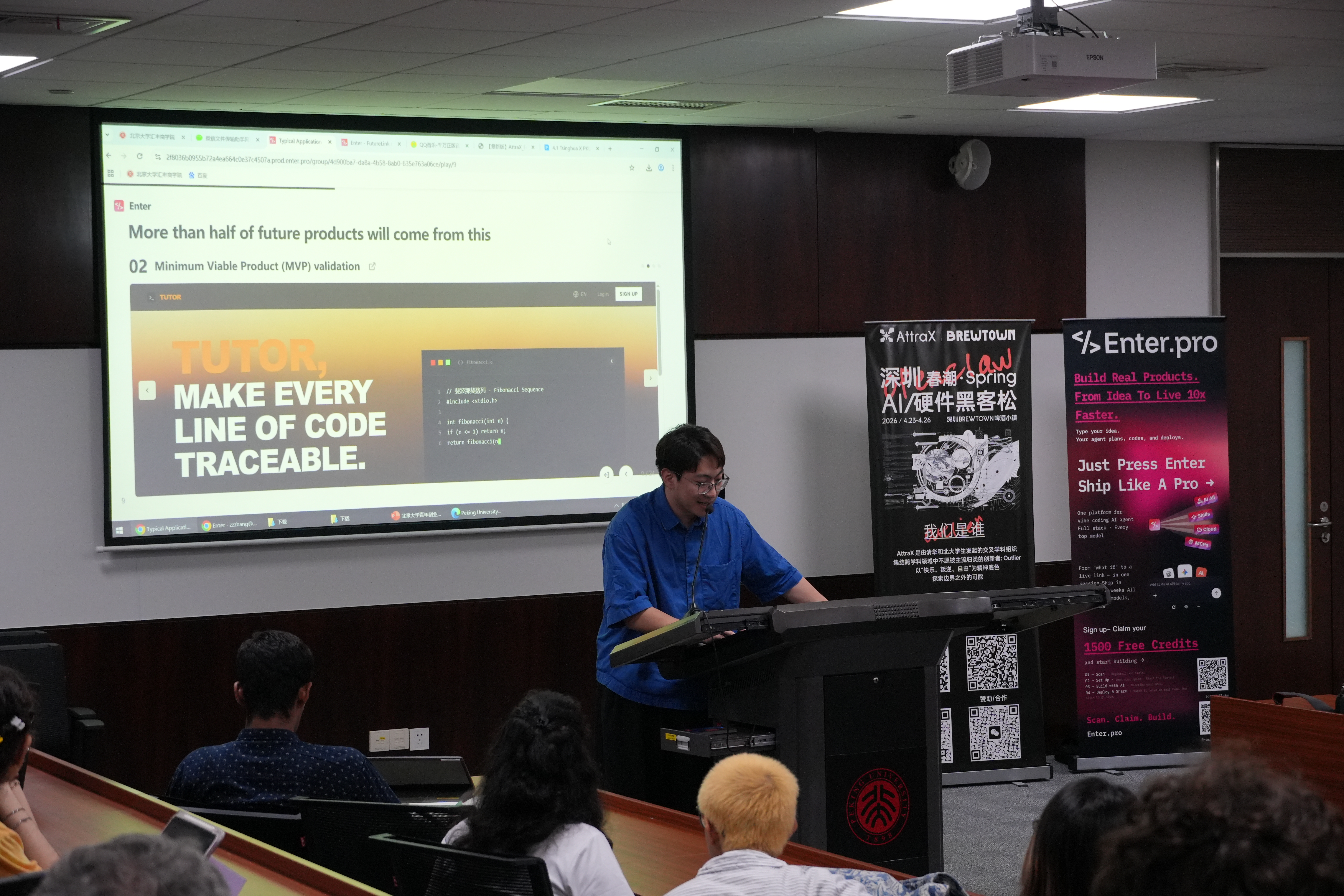
Vibe coding — the practice of describing what you want to build in plain language and letting an AI agent handle the rest — sounds abstract until you watch it happen in front of a full room.
Enter Pro's workshop session made the idea concrete. A participant describes an application. They press Enter. Within minutes, something functional appears on screen — with a real interface, real logic, real deployment. The first reaction is usually disbelief. The second is the question that matters: what else could I build?
That shift — from "I can't build this" to "what do I actually want to build?" — is what these evenings are for.
What Came Out of the Room
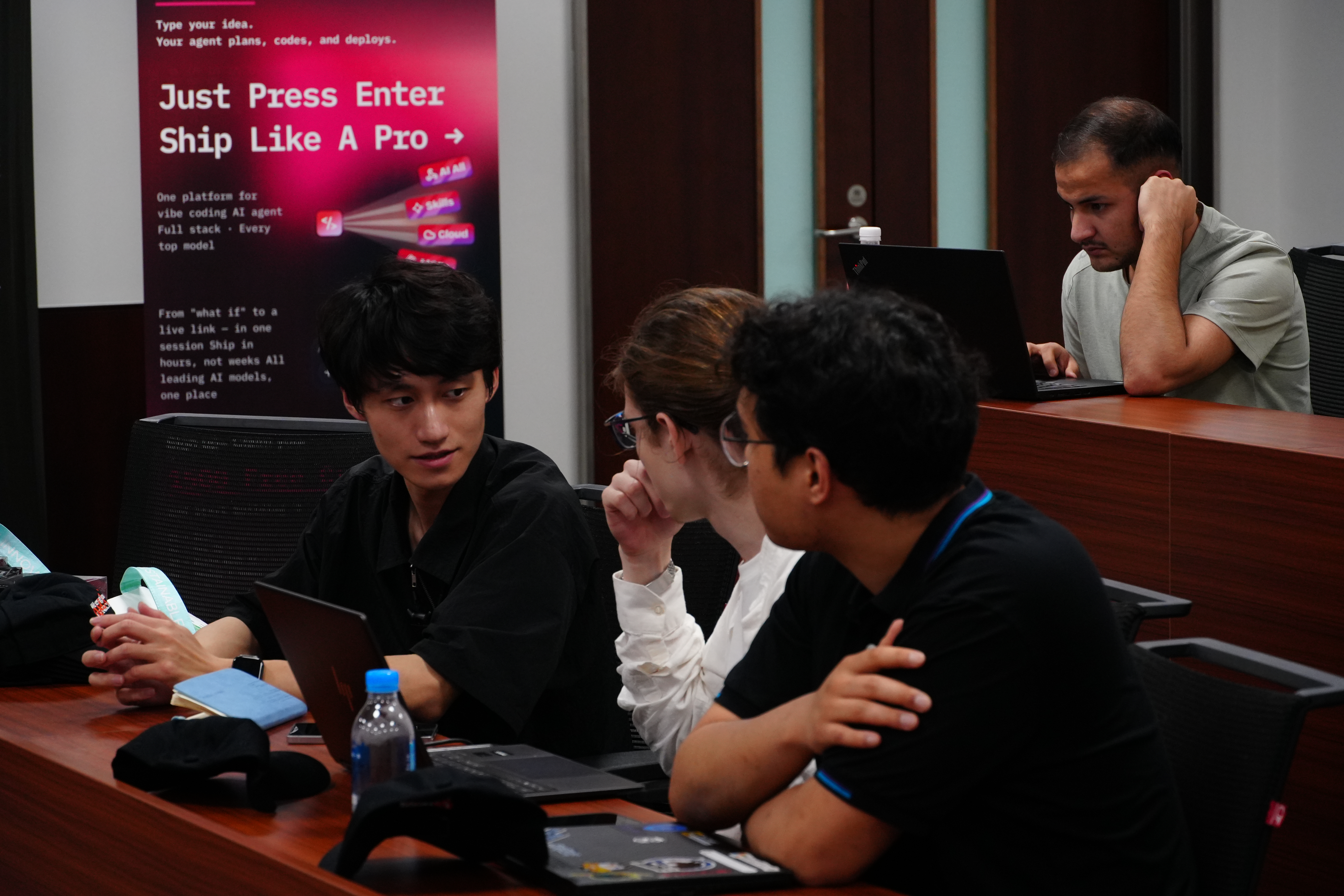
Across both evenings, 53 participants created 75 projects on Enter.pro, logging 704 conversation rounds and 511 published builds.
A few stood out:
Generative AI Studio— An AI image generation studio for designers. Describe a concept, choose a style direction, and the platform produces finished artwork through multi-modal generation and style mixing.
ProcessIQ — A business process analyzer. Paste in a workflow description, and the tool maps the stages, surfaces the bottlenecks, and proposes optimizations. Built for the operator who doesn't want to hire a consultant to diagnose something that should already be visible.
Collection of First Love Roses — A couples' shared memory space. A private corner of the internet — just for two people — where moments get logged and timelines get built. Specific, emotional, and immediately understandable to anyone who's ever wanted somewhere to keep the things that matter.
Research Compass AI — An academic tracker that uses AI to monitor new research in a given field and surface what's worth reading. Built for graduate students and researchers buried under a volume of new work that no human schedule can keep up with.
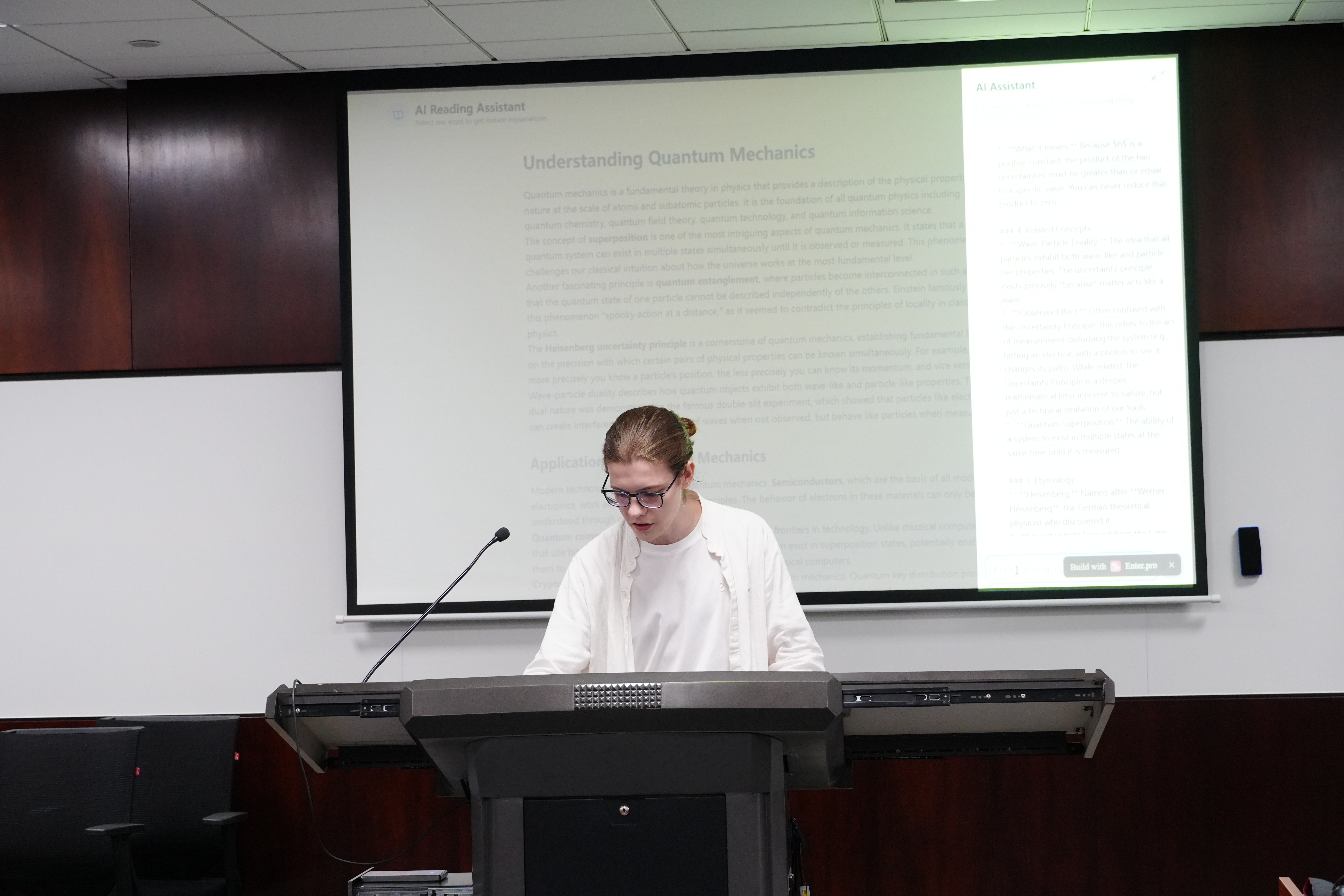
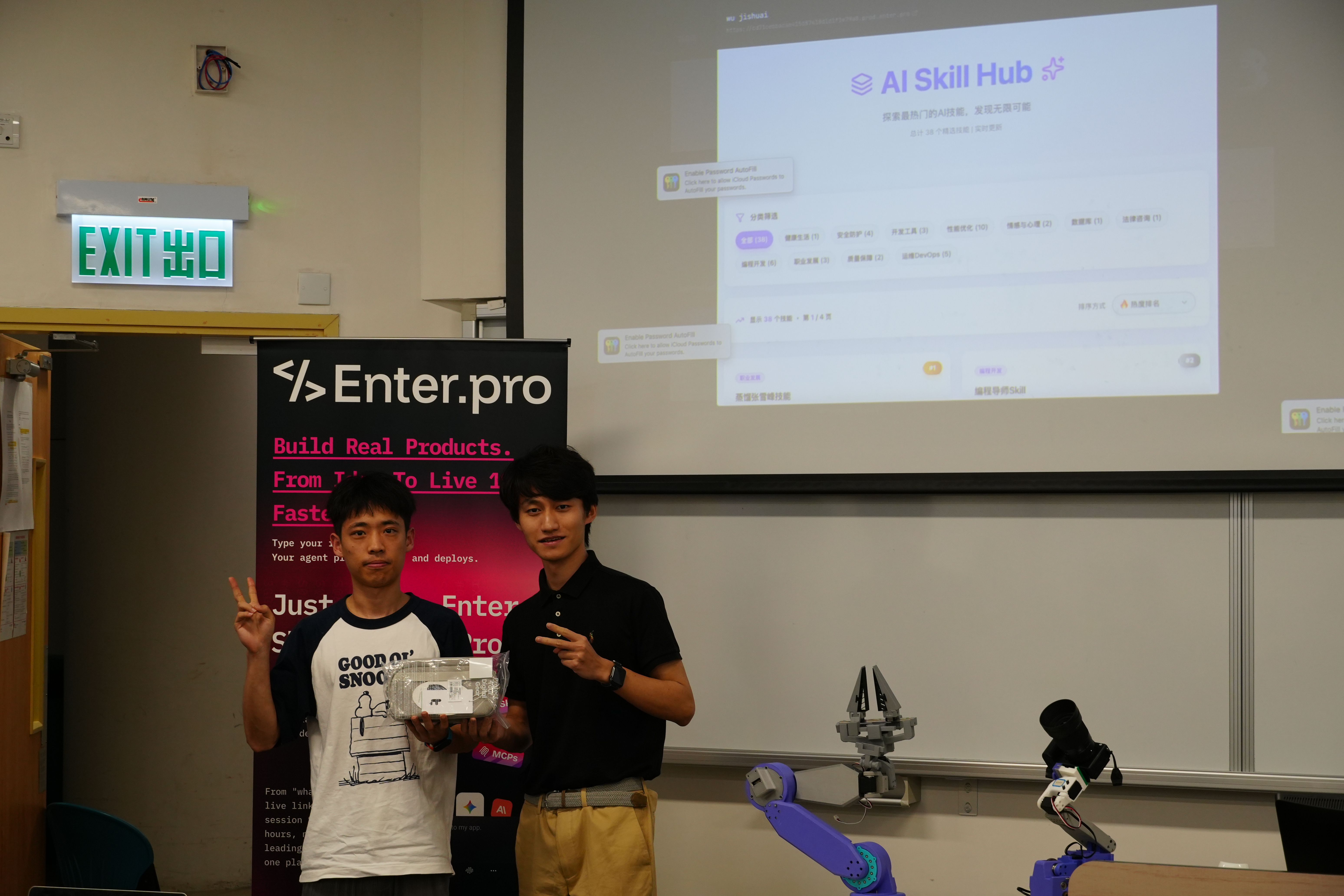
None of these required a technical background to start. All of them began as an idea described in plain language — in a room full of people who, two hours earlier, weren't sure they could build anything.
The Larger Circuit
AttraX runs what they call a city tour for "Outliers" — people building before they have permission, across borders, outside the categories they're supposed to fit into. Shenzhen and Hong Kong were early stops on that circuit.
Enter Pro shows up at these events because the rooms are full of people who are one session away from shipping something they've been thinking about for months. The barrier was never technical. It was the belief that building was something other people did.
Two cities. Two evenings. Seventy-five projects.
The question isn't whether this is a good time to build. The question is how long you plan to wait.