GPT-Image-2 Is Live on AI ALL
GPT-Image-2 by OpenAI is now live on AI ALL. Generate perfect text in images, multilingual designs & more. Try the most capable AI image model today.
GPT-Image-2 Is Live on Enter AI ALL
Three days ago, OpenAI released GPT-Image-2.
If you missed the announcement, here is the short version: it is their most capable image model ever.
And as of today, it is live on AI ALL — Enter pro's unified platform giving you access to every leading AI model from a single workspace.
Which means you can build with it right now.
What GPT-Image-2 Actually Is
Let's start with what makes this release genuinely different — not just better, but structurally different.
Every major image generator before GPT-Image-2 — DALL-E, Midjourney, Stable Diffusion — was built on diffusion architecture. The model starts with visual noise and gradually removes it until a coherent image emerges. That approach produces beautiful visuals, but it has one fundamental weakness: it never truly understands text.
Why? Because in any training image, text occupies a tiny fraction of the total pixels. A photo of a coffee shop might have thousands of pixels of walls and furniture — and a thin strip for the word "OPEN" on the door. Diffusion models learned to reproduce the visual pattern of letters without understanding what those letters mean. The result: three years of AI images with garbled signs, scrambled menus, and nonsense labels.
GPT-Image-2 was rebuilt from scratch. The underlying architecture is autoregressive — it generates images the same way a language model generates text: one token at a time, each one predicted based on what came before. Text characters and image pixels run through the same pipeline. When you ask it to write "SUMMER SALE" on a poster, it is not drawing shapes that look like letters. It is constructing them as language.
What It Can Actually Do
Text that reads like a human designed it
Magazine covers with correct headlines. Product packaging with real brand copy. Scientific diagrams with properly placed annotations. Restaurant menus where the dishes are actual words. All in a single generation pass, no Photoshop cleanup required.
And the text is not just accurate — it is compositionally integrated. It handles placement, sizing, and hierarchy the way a designer would. The words feel like they belong in the image, not like a sticker dropped on top of it.
Multilingual support that actually works.
Product packaging in Mandarin. Social campaigns in Hindi. UI mockups in Japanese. These workflows were essentially impossible with AI image tools before this.
It reasons before it generates
GPT-Image-2 integrates OpenAI's "O-series" reasoning capabilities — the same thinking layer powering their advanced text models. Before the first pixel is rendered, the model can analyze your prompt, plan the layout, pull real-time information from the web, and reason through compositional constraints.
Why Right Now Matters
Every time a major new model drops, a window opens.
Search traffic spikes. Curiosity peaks. People are actively looking for tools, products, and experiences built with the new capability. The builders who launch in that window — even with simple, well-executed ideas — capture users that latecomers do not.
That window is open right now. GPT-Image-2 dropped three days ago. The trend is live.
The question is not whether to build something. It is whether to build it this week or watch someone else do it first.
Build It on AI ALL — First Project Free
AI ALL is Enter's unified model access layer — one workspace, every leading model, no switching between platforms or managing separate API keys.
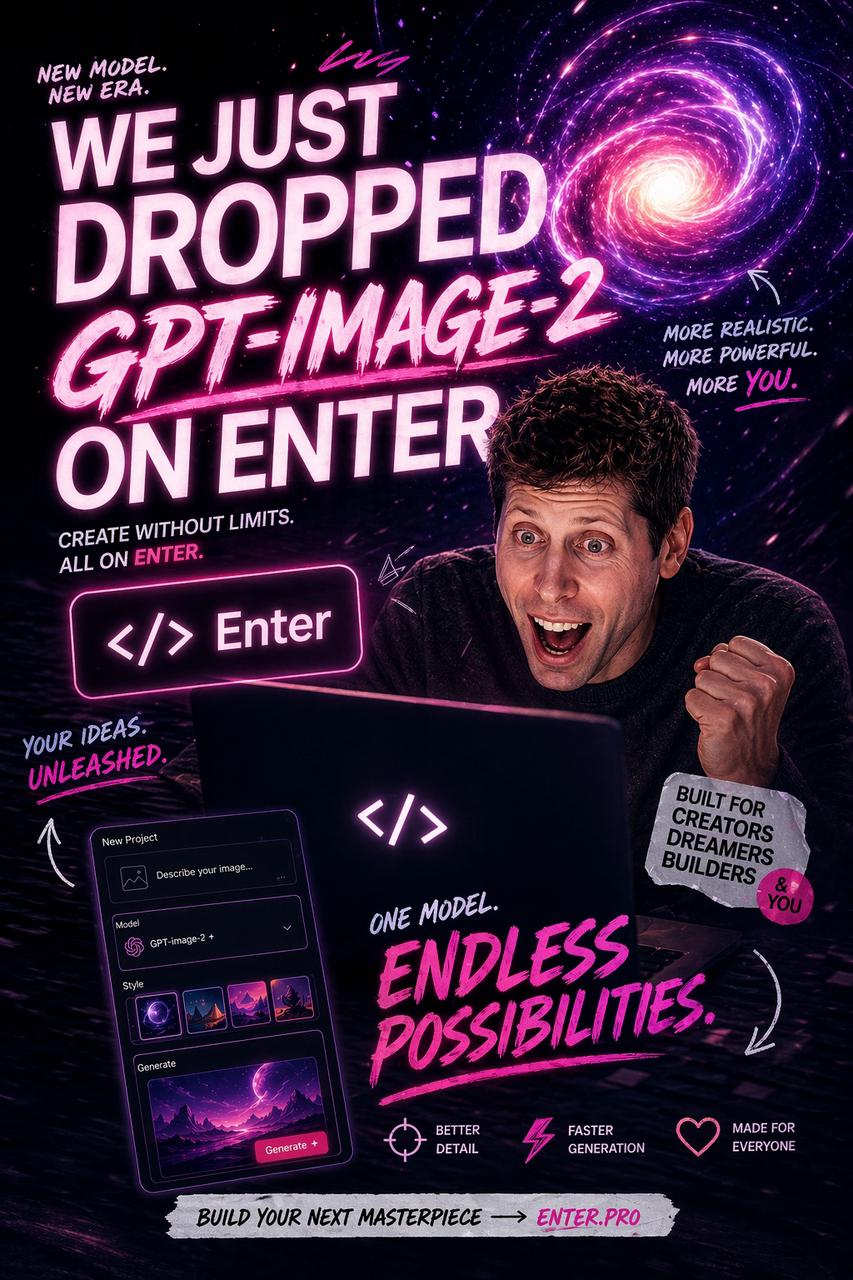
GPT-Image-2 is live on AI ALL today. You can simply choose GPT Image 2 from our AI ALL feature and integrate it directly into your creation:
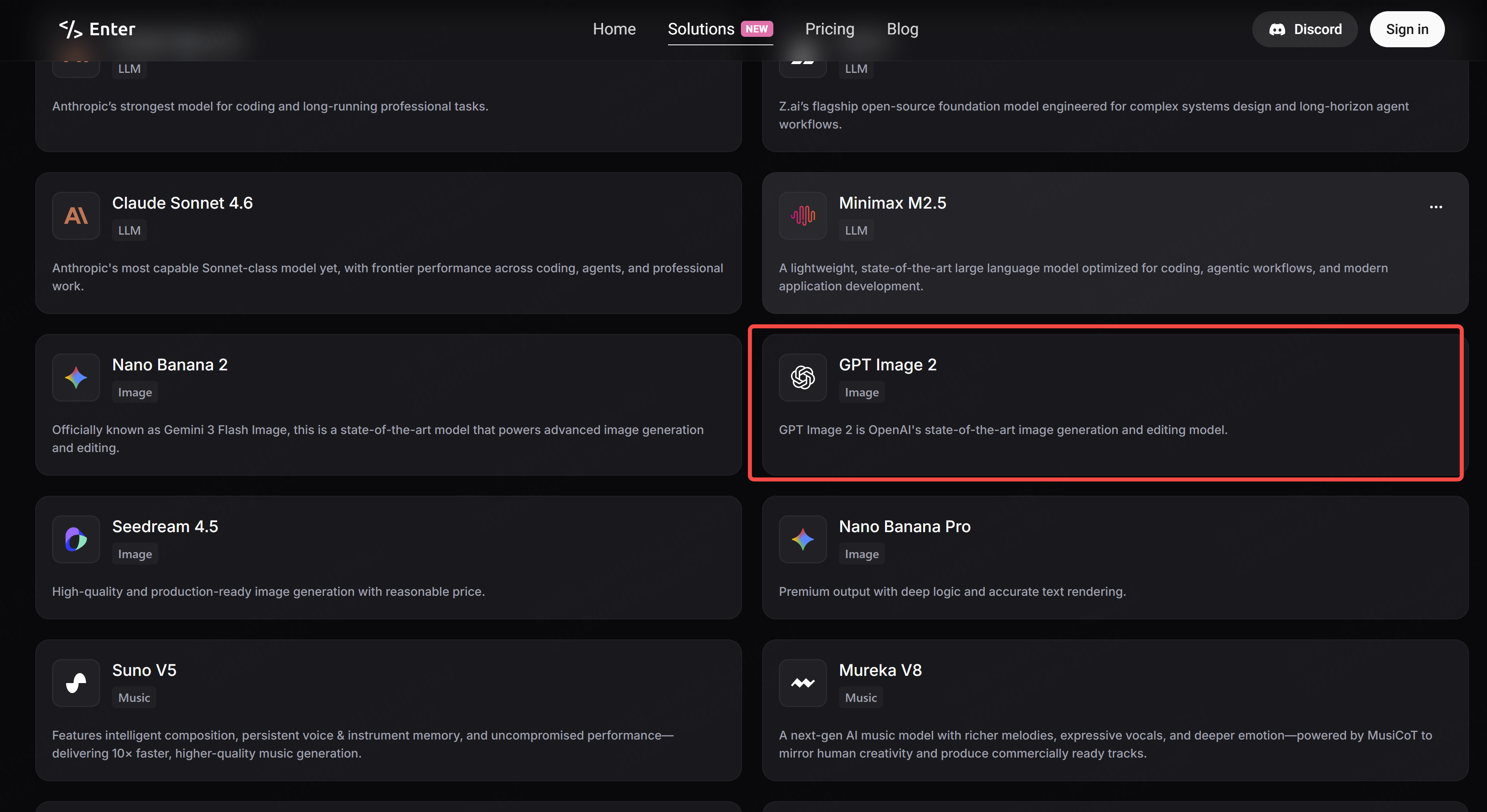
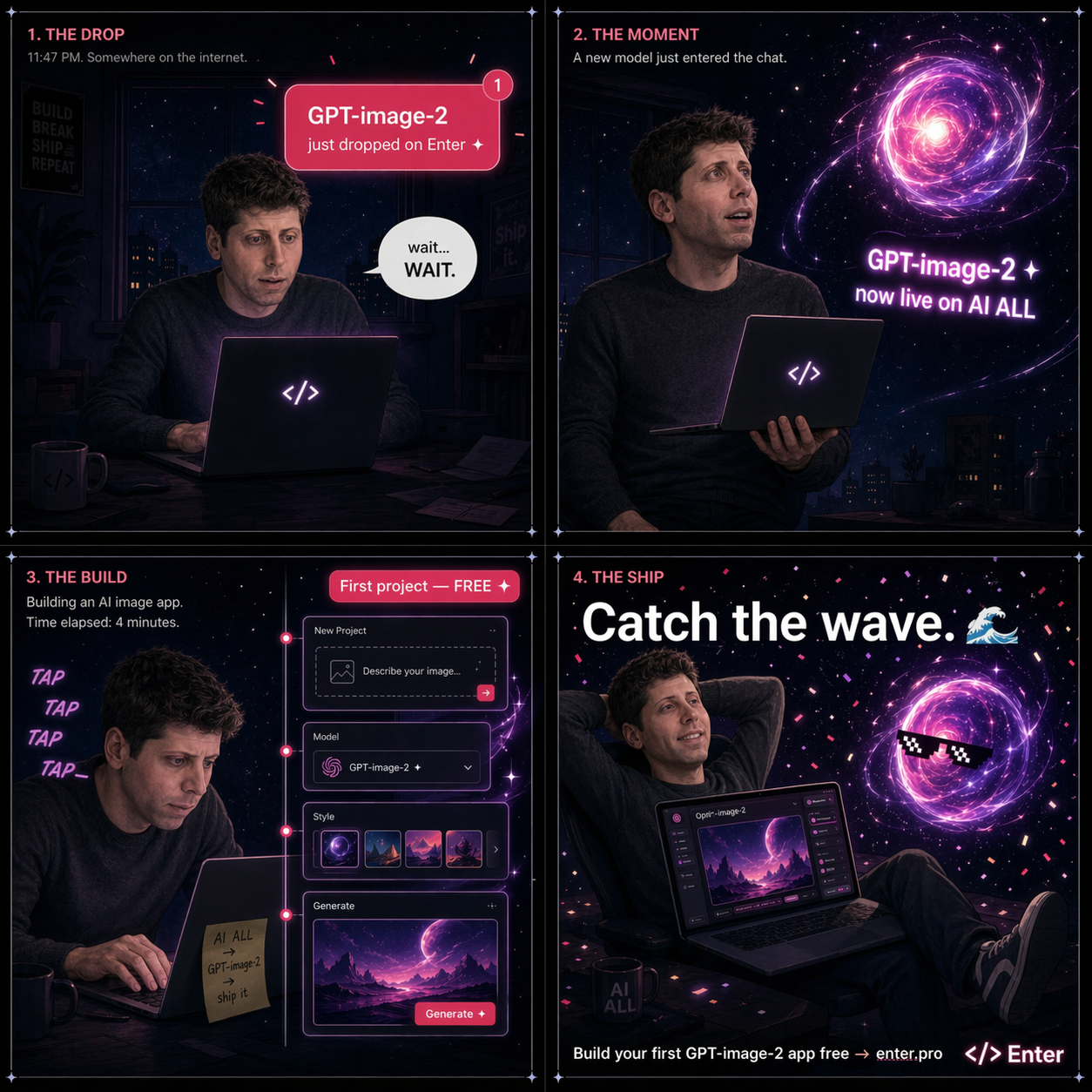
You can start building an application that integrates it right now — from idea to deployed product — on Enter. And because we want you to catch this moment with us, your first project on AI ALL is free.
One build. No cost. No reason to wait.
The trend is happening with or without you. The only question is whether your product is part of it.