Zero to Hero: Why Your Domain Knowledge Is Now a Product
Your industry expertise is now a buildable product. Learn how to translate domain knowledge into real tools—no coding or developer budget required.
Think about the last time you sat in a meeting, on a call, or at a desk and thought: there has to be a better way to do this. Not as a passing frustration — as a specific, trained one. The kind that only comes from having done something hundreds of times and knowing exactly where it breaks, why it breaks, and what the person on the other side actually needs.
That feeling has always been valuable. What changed is what you can do with it.
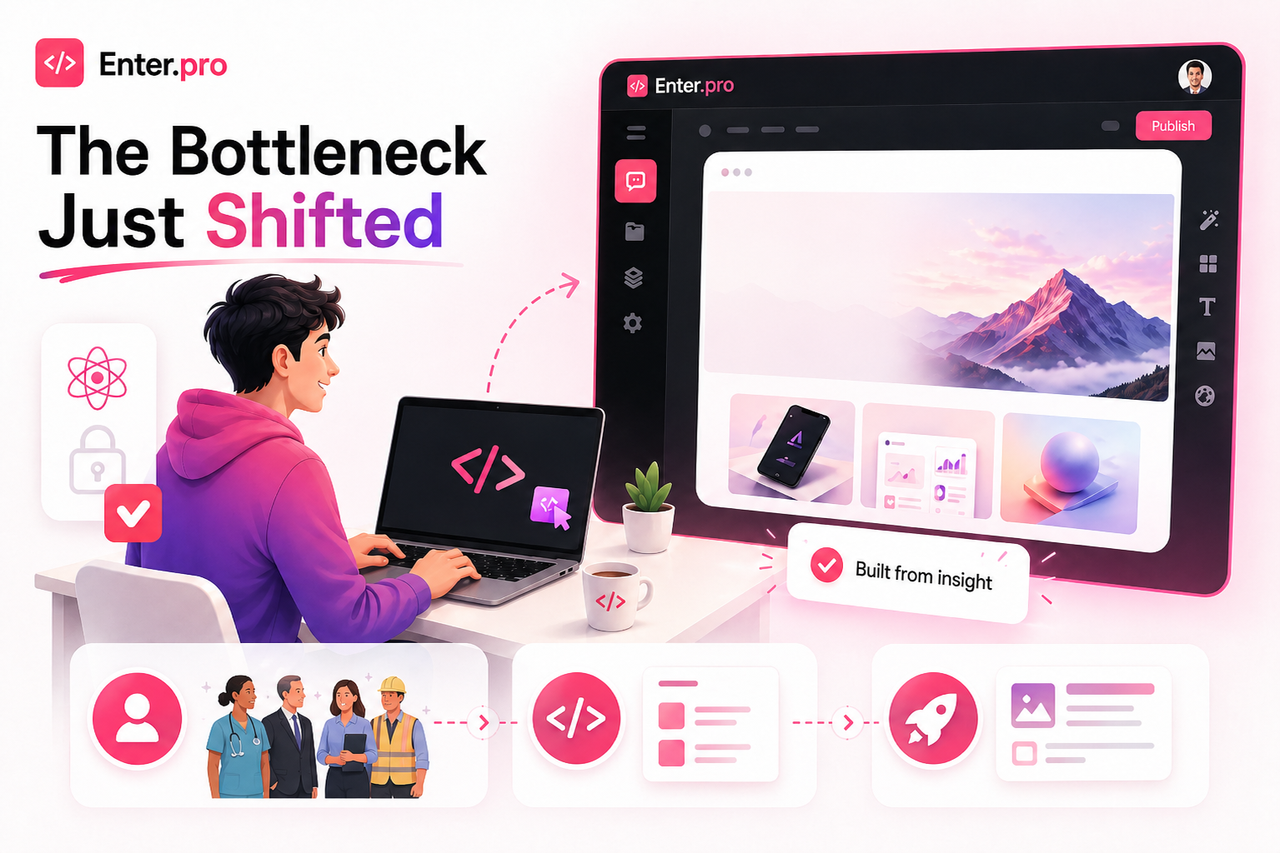
The Bottleneck Just Shifted
For most of the history of software, building something meant knowing how to code — or knowing someone who could. That meant most domain expertise stayed trapped:
- The nurse who knew exactly why discharge instructions confused patients
- The real estate agent who understood what first-time buyers actually needed to hear
- The HR professional who knew the three questions that revealed everything in an interview
They had the insight. They could not build the tool.
That gap is closing fast.
| Stat | Source |
| 63% of people building with AI tools today are not developers | Hostinger, 2026 |
| 60% of all new code will be AI-generated by end of 2026 | Gartner |
| Vertical AI startups captured 53% of all venture deal volume in 2025 | Euclid Ventures |
The machinery of software development is becoming something you direct rather than something you perform.
The bottleneck has moved. The question is no longer can you build it? It is do you know something worth building?*
The people who know something worth building are not only in Silicon Valley. They are in hospitals, law firms, classrooms, accounting offices, and construction sites.
What Domain Knowledge Actually Is
Domain knowledge is not general expertise. It is not knowing a lot about a broad topic.
It is knowing the specific, operational, often invisible truth of how something works in practice — as opposed to how it is described in theory.
| Who | What they know |
| A lawyer | Which clauses clients consistently overlook — and which ones create the most disputes six months later |
| A teacher | The exact moment in a long division lesson when most students lose the thread — and what explanation brings them back |
| A restaurant owner | That Friday service breaks down not because of staffing — but because the prep sheet was designed for a Monday kitchen and nobody ever changed it |
This is the raw material of a product. Not because it is interesting — because it is specific, experienced, and currently unserved by the tools that exist.
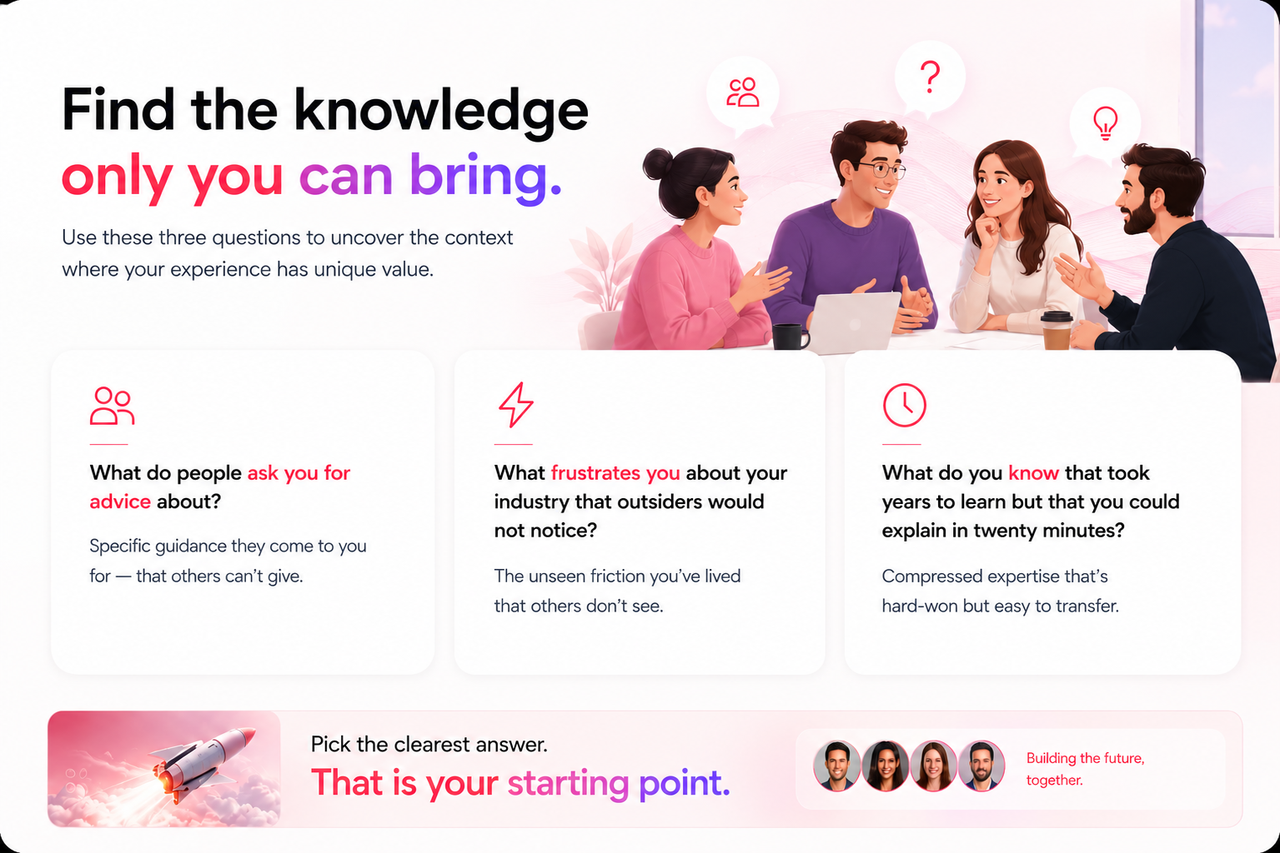
Three Questions to Find Yours
You do not need to be a recognized expert. You need to have spent enough time in a specific context to see what others cannot see yet.
Ask yourself:
| Question | What it signals |
| What do people ask you for advice about? | You have developed a perspective others have not — that is a signal |
| What frustrates you about your industry that outsiders would not notice? | Invisible friction is often the most valuable thing to solve |
| What do you know that took years to learn but you could explain in twenty minutes? | Compressed expertise is exactly what great software delivers |
Pick the clearest answer. That is your starting point.
From Insight to Product — The Translation Step
Having domain knowledge is not the same as having a product. The translation step is turning what you know into something someone else can use — without you in the room.
This requires four things. None of them are technical:
| Element | What it means | Example |
| A specific problem | Not a category — a precise, observable failure | "Patients discharged after cardiac procedures don't follow medication instructions because instructions are written above average reading level" |
| A specific person | Not a demographic — one named user | "The patient, not the clinician, not the administrator" |
| A specific outcome | Not features — what success looks like for them | "They leave knowing exactly what to take, when, and why — without calling back" |
| A first version that does one thing | Solve one piece of the domain completely | A medication instruction tool — not a "healthcare communication platform" |
With those four things, you have a brief. The technical execution follows from the brief — not the other way around.
What Building It Actually Looks Like
This is where the shift in the bottleneck becomes tangible.
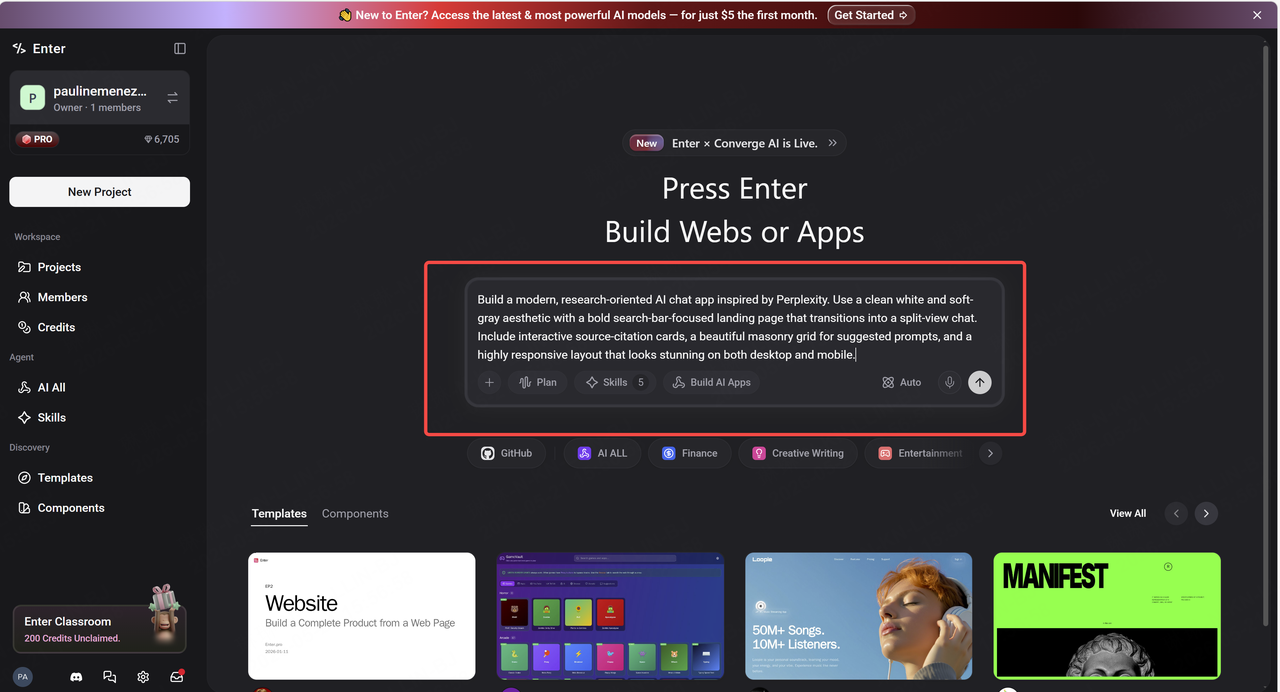
On Enter:
- You bring the brief
- The AI Agent brings the execution
- You describe the person, the problem, the outcome
- Enter translates that into a working product: interface, logic, backend, deployment
- You refine by describing what is not quite right
- You iterate until what is on screen matches what you had in your head
What you do not need:
- ❌ A co-founder
- ❌ A developer budget
- ❌ A six-month timeline
The vertical products being built this way are not generic apps with a coat of industry paint. They are tools shaped around specific professional realities — because the person building them lived those realities.
| Built by | What they bring that nobody else can |
| Former auditor | A compliance checklist that catches what generic checklists miss |
| Financial advisor | An onboarding flow with the questions that actually matter in a first meeting |
| Nurse | Patient instructions written at the right reading level, in the right order |
The domain knowledge is baked in, not bolted on. That depth cannot be replicated by someone who does not have the experience.
The Window Is Open — But Not Indefinitely
Domain-specific products are where durable value gets built — they are:
- Harder to copy
- More useful to the people they serve
- More trusted by the industries they operate in
The window for non-technical domain experts to build those products is open right now — not because the technology is new, but because the access to execute on domain knowledge without technical skills is new. That access did not exist two years ago.
The nurse who builds the patient instruction tool this year becomes the standard against which every future tool in that category is measured.
Domain expertise has always been valuable. What is new is that it is now executable — by the person who has it, on a timeline that keeps pace with the insight.
See you soon!