React vs Angular: Key Differences Every Developer Should Know
Compare Angular vs React for performance, scalability, UI development, and enterprise applications. Discover the right frontend framework for your business with modern development solutions from Enter Pro in 2026.
React vs Angular is one of the most searched frontend development comparisons for businesses and developers building scalable web applications. Both technologies offer powerful capabilities for modern UI development, performance, and scalability, but choosing the right framework depends on your project goals and development requirements.
In this guide, we explore the key differences between React vs Angular, including architecture, performance, enterprise usage, and frontend flexibility. Enter Pro helps businesses choose and develop the right front-end solutions with React and Angular.
What is Angular?
Angular is a frontend framework that leverages TypeScript, a core technology developed by Google, to build large-scale, dynamic web applications. Features offered in Angular include state management, dependency injection, routing, and form management out of the box. Angular suits perfectly well in building enterprise-level applications due to its architecture, robust developer community, and modern web development tools.

Used for:
- Enterprise web applications
- Single-page applications
- Banking and fintech platforms
- Healthcare management systems
Advantages:
- Strong TypeScript support and scalable architecture
- Built-in tools for routing, forms, and state management
- Excellent for large enterprise development teams
Disadvantages:
- Steeper learning curve for beginners
- Larger bundle size compared to React
What is React?
React is a JavaScript library developed by Meta for building fast, interactive user interfaces using reusable components and the Virtual DOM. It focuses mainly on the UI layer and gives developers flexibility to choose libraries and tools based on project requirements. React is widely used for dynamic web applications, SaaS platforms, dashboards, and mobile applications through React Native development frameworks worldwide.

Used for:
- Interactive web applications
- SaaS and startup platforms
- E-commerce websites
- Real-time dashboards
Advantages:
- Fast rendering with Virtual DOM technology
- Reusable components improve development speed
- Flexible and easy to integrate with other libraries
Disadvantages:
- Requires additional third-party libraries
- Less structured compared to Angular
Angular vs React: Key Differences Explained
Angular and React differ in architecture, performance, flexibility, and development approach.
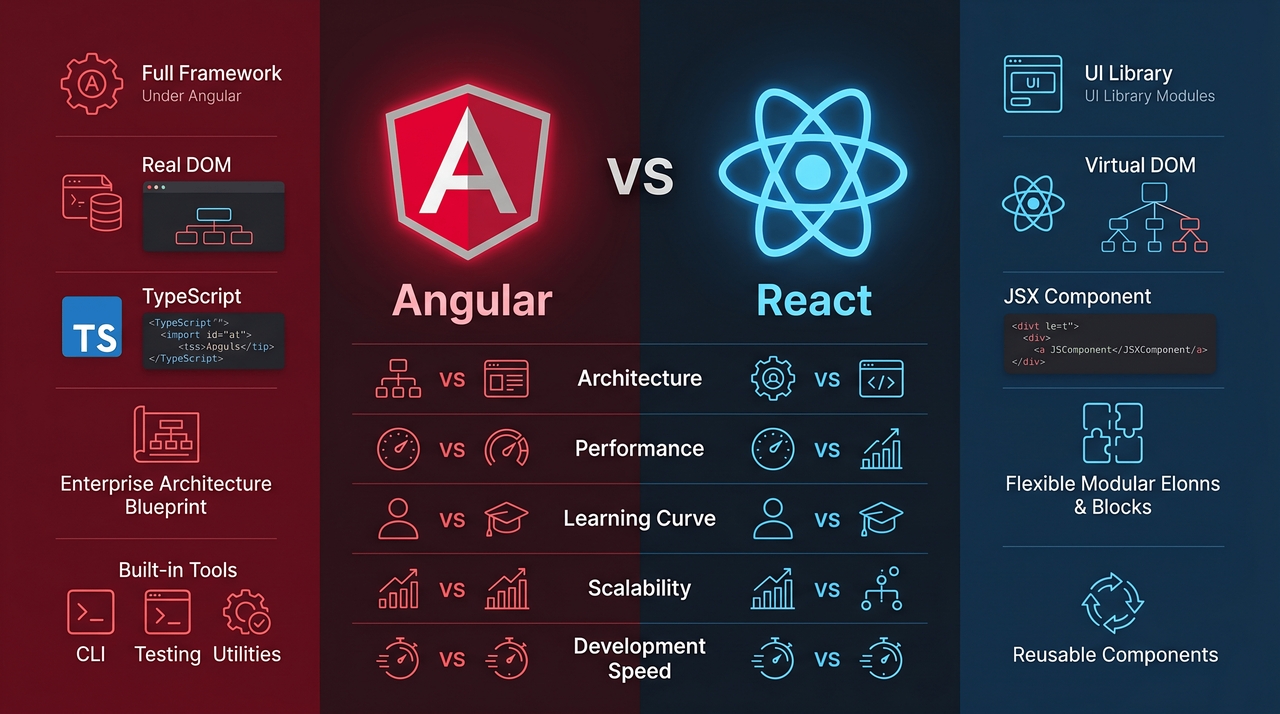
- Architecture: Angular is a full-fledged framework, whereas React is a UI library for building a component-based, interactive interface.
- Performance: React's performance is enhanced by the Virtual DOM, whereas Angular leverages the Real DOM and changes detection techniques for enterprise applications.
- Learning Curve: React has a relatively easier learning curve compared to Angular, which involves using TypeScript, RxJS, and dependency injection.
- Scalability: Angular provides a robust architectural structure that suits large-scale enterprises, whereas React enables scalability in modern web front-end development.
- Development Speed: Development speed is enhanced in React through reusable components, but Angular offers greater productivity through built-in development tools.
Angular vs React Performance Comparison
Differences in Angular vs. React performance depends on how they render, application sizes, optimizations, and frontend requirements.
| Performance Factor | Angular | React |
| Initial Load Time | Heavier due to the complete framework setup | Faster with a lightweight library structure |
| UI Rendering | Uses change detection cycles | Optimized component re-rendering |
| Large App Handling | Stable for enterprise-scale systems | Efficient for dynamic UI updates |
| Memory Usage | Higher because of built-in features | Lower with selective library usage |
| Real-Time Updates | Can become complex in data-heavy apps | Handles frequent UI updates smoothly |
| Optimization Tools | Ahead-of-Time compilation support | Memoization and lazy loading support |
| Bundle Optimization | Larger default application bundles | Smaller and modular build sizes |
| Scalability Performance | Reliable for long-term maintenance | Excellent for interactive applications |
| Mobile Performance | Works well with Ionic integration | Strong performance with React Native |
| Development Efficiency | Structured optimization workflow | Faster iteration and UI updates |
Angular vs React for Enterprise Application Development
Choosing Angular vs. React for enterprise application development is contingent on scalability, maintainability, security, team size, and other factors. The two technologies can be used to develop enterprise apps, but they use different approaches.
| Enterprise Factor | Angular | React |
| Project Structure | Standardized and highly organized | Flexible and customizable structure |
| Large Team Support | Ideal for enterprise development teams | Better for agile and smaller teams |
| Built-in Features | Includes routing, forms, and HTTP client | Requires external libraries |
| Code Maintainability | Easier long-term maintenance | Depending on project architecture |
| Security Features | Strong built-in security support | Security handled through libraries |
| Scalability | Excellent for complex enterprise systems | Scales well with proper setup |
| Development Consistency | Enforced coding standards | Flexible coding practices |
| Enterprise Adoption | Common in banking and healthcare | Popular in SaaS and tech startups |
Angular is often preferred for large enterprise systems, while React works best for scalable and fast-moving business applications.
Angular vs React: Which is Better for Modern UI Development?

Angular vs React, which is better for modern UI development, depends on project scalability, UI flexibility, rendering performance, and frontend development goals.
Angular is better when:
- Enterprise projects require structured and scalable frontend architecture.
- Large development teams need consistent coding standards and workflows.
- Applications require built-in tools for routing and form management.
- Long-term maintainability is critical for business web applications.
- Security and stability are top priorities in front-end development.
React is better when:
- Interactive user interfaces need faster rendering and responsiveness.
- Startups require flexible and rapid frontend development workflows.
- Reusable UI components improve application development efficiency.
- Real-time applications demand a dynamic and smooth user experience.
- Developers need customizable front-end architecture with modern tools.
React is the optimal framework to use for dynamic user interfaces, while Angular is the best framework for enterprise-scale front-end development.
Why Businesses Choose Enter Pro for Angular and React Development
Businesses choose Enter Pro for Angular vs. React development because it delivers scalable, secure, and high-performance frontend solutions for modern digital products. With strong expertise in React framework vs Angular, Enter Pro focuses on real-world enterprise implementation, optimized Angular vs React performance, and future-ready UI architecture. It helps startups and enterprises build production-ready applications using agile workflows, clean coding assistants, and end-to-end frontend development strategies that support long-term business growth and digital transformation goals, including collaborative coding environments.
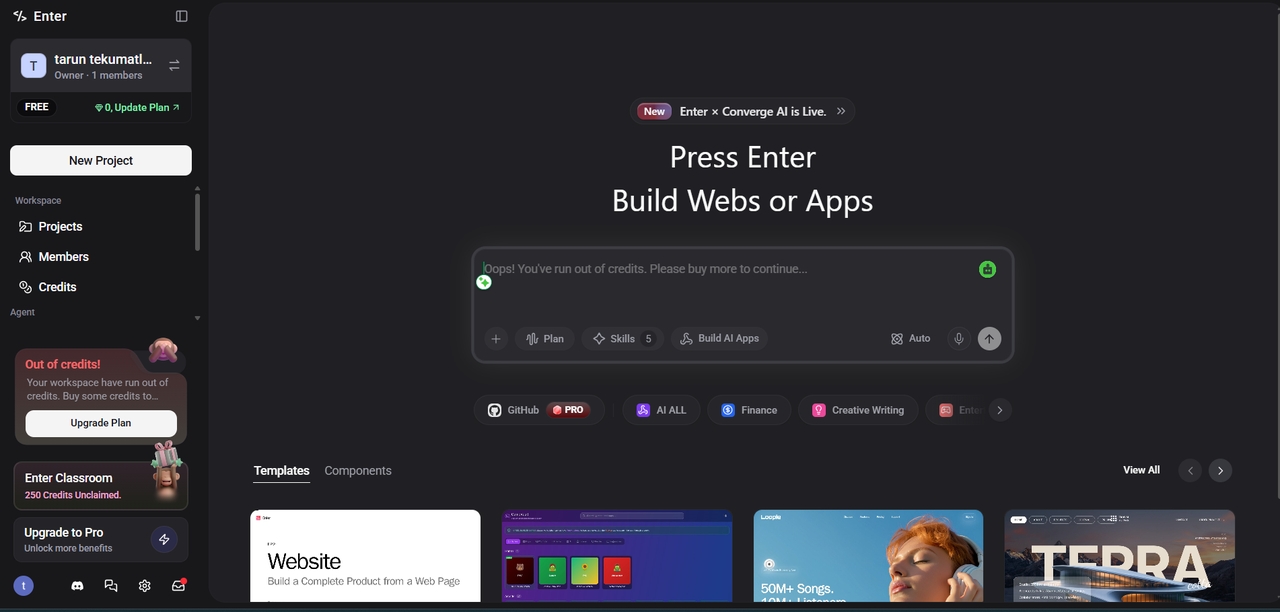
Key features:
- Custom Angular & React Solutions: Enter Pro builds tailored frontend applications aligned with business needs, scalability goals, and modern UI requirements.
- Performance Optimization: Enhances Angular vs. React performance through efficient coding, reduced load times, and improved application responsiveness.
- Enterprise-Grade Development: Delivers secure, scalable, and maintainable frontend systems designed for large organizations and complex business workflows.
- Agile Development Process: Provides quick delivery, constant improvement, and iteration processes for ever-changing project requirements.
- Modern UI/UX Engineering: Creates responsive, user-friendly interfaces focused on engagement, usability, and consistent design experience.
- Scalable Architecture Design: Builds future-ready systems that support high traffic, growth, and long-term application expansion.
Conclusion
The Angular vs React discussion relies heavily on your business objectives, the front-end considerations, and scaling needs. Angular is the way to go if you are considering building an application that requires an enterprise-level design, while React gives you more flexibility along with faster UI development. In terms of React vs Angular, technologies have great performance capabilities and support that will last a long time. If you are planning to build a scalable front-end, Enter Pro can help you choose the right framework with modern app development tools.
FAQ's
Is React vs Angular a better choice for startup applications?
React is usually considered to be more preferable than Angular when starting a project because React features fast app creation, flexible architecture, reusable components, and a solid community.
How does the React framework differ from Angular in architecture?
React is a component-based library with flexible integration options, while Angular is a complete framework that comes with its own set of tools and architecture.
How important is performance in the Angular vs React debate?
Performance plays an essential role in the choice of Angular vs React because the efficiency of rendering and optimization influences the application's productivity.
What makes the React framework vs Angular better for UI development?
React is preferred for UI development because of its reusable components, Virtual DOM rendering, flexible customization, and faster creation of interactive and dynamic user interfaces.
Why do businesses choose Enter Pro for React vs Angular solutions?
Businesses choose Enter Pro for React vs Angular solutions because of scalable frontend expertise, custom development services, enterprise application support, and modern UI development capabilities.