
ARR Meaning: A Complete Guide to Annual Recurring Revenue
Looking for the ARR meaning? Learn how Annual Recurring Revenue helps companies track predictable income and long-term growth. Understand its definition, calculation methods, and role in forecasting business success.
Understanding the ARR meaning is essential for SaaS companies, subscription-based businesses, and startups that rely on recurring revenue streams. Annual Recurring Revenue (ARR) is a metric that helps organizations understand how much money they can expect to receive in a year from active subscriptions and recurring contracts. Business leaders, investors, and financial teams use this metric to judge growth, customer retention, and sustainability over the long term.
In this guide, you'll learn what ARR means in growth, how to calculate it, why it's important, and how tools like Enter Pro can help businesses build scalable subscription-based websites that support recurring revenue growth.
What is ARR meaning in business
Curious to know the meaning of ARR? Annual Recurring Revenue (ARR) is the predictable, recurring revenue that a business expects to earn from subscriptions, memberships, or long-term contracts over a 12-month period. ARR is a reliable indicator of recurring business performance as it does not include one-time charges, setup fees, and other one-off sources of income.
Recurring revenue is revenue that businesses receive repeatedly from customers over a period of time. These can be monthly or annual subscription payments. SaaS and subscription businesses rely on recurring payments from customers. ARR offers a uniform approach to tracking growth, tracking customer retention, and forecasting future revenue.
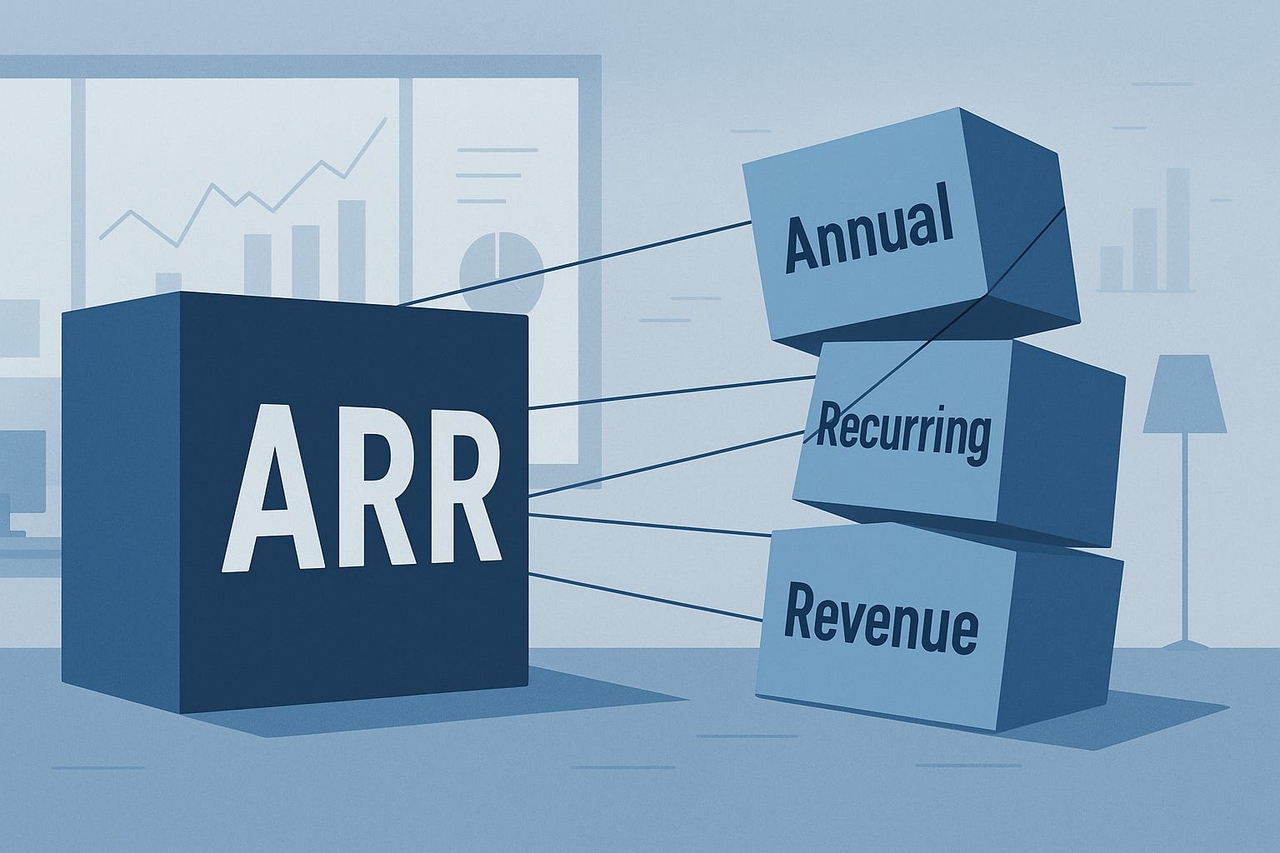
Key components included in ARR
- Subscription fees
The largest and most common component of ARR is subscription fees. They are recurring payments a customer makes to continue accessing a product, service, or platform. Subscription fees may be billed monthly, quarterly, or yearly, but are annualized for ARR calculation.
- Recurring licenses
Recurring licenses are software or technology licenses that customers pay for periodically to renew access to a product or service. Perpetual licenses are a one-off purchase. Recurring licenses generate ongoing revenue from annual or monthly renewal payments. Many SaaS providers operate a subscription-based licensing model where customers pay to use their software on a recurring basis.
- Ongoing service agreements
Many businesses have ongoing revenue streams from service agreements that provide ongoing support, maintenance, monitoring, or managed services. For example, IT support contracts, website maintenance plans, cloud hosting services, cybersecurity monitoring, and customer success programs. These agreements are typically a good portion of ARR and involve periodic payments over a specified period of time.
- Contract renewals
When customers renew their annual or multi-year contracts, the recurring revenue from those contracts continues to contribute to ARR. The higher the renewal rates, the greater the customer satisfaction, the product value, and the business stability. Renewals are especially important, as it is usually cheaper to keep a current customer than to find a new one.
How to calculate ARR
Now that you know the ARR meaning in business and sales, let's find out how to calculate the metrics to get the best idea.

Basic ARR formula
ARR is calculated as:
ARR = (All revenue generated from subscriptions that year + recurring revenue generated from upgrades and add-ons) – revenue lost from downgrades and cancellations that year
The formula includes recurring subscription revenue that is expected to continue over the next year. Businesses should exclude one-time payments, implementation fees, training charges, and professional service revenue to ensure ARR accurately reflects recurring income.
ARR calculation examples
Example 1: Monthly subscription business
Assume a SaaS company has 200 customers paying $50/month, and the company has $10k MRR. So, if you multiply that by 12, you get $120,000 in ARR.
Example 2: Annual contract customer
A customer signs a software contract for $ 12,000 a year. Given the contract has a year of recurring service, the full $12,000 helps to directly grow ARR.
Example 3: Multiple subscription tiers
The company has three plans: Basic, Professional, and Enterprise. If the company has $500,000 in total annual recurring revenue from all active subscribers, then the company’s ARR is $500,000, regardless of how the customers are distributed across the tiers.
Benefits of tracking annual recurring revenue
Improved Revenue Forecasting
One of the main benefits of tracking ARR is the ability to make more accurate predictions about future revenue. Because ARR is based on recurring subscription and long-term contract revenue, companies are better able to predict future earnings than with one-time sales. Such predictability allows management teams to see where growth trends are headed, anticipate seasonal changes, and be prepared for potential revenue problems before they arise.

Better Financial Planning
ARR gives businesses a firm financial base on which to budget and plan long-term. Recurring revenue is more predictable than transactional revenue, allowing companies to allocate resources better and make smarter financial decisions. That means knowing what it takes to hire, marketing budgets, technology investments, and operating costs.
Enhanced Investor Reporting
According to investors and stakeholders, ARR is one of the most important indicators of a business’s health and potential for growth. A strong ARR means a company has built recurring revenue streams and is less reliant on unpredictable one-time sales. This predictability helps to mitigate risks and boost investors’ confidence.
Stronger Customer Retention Insights
ARR is a great metric to measure customer retention performance since it directly reacts to customer renewals, upgrades, and churn. Tracking ARR lets businesses know how well they’re retaining their current customers and if their products continue to provide value over time.

Easier Performance Benchmarking
ARR helps businesses to measure progress and assess performance over time. Because it is based on recurring revenue, ARR offers a reliable yardstick for measuring growth from one period to the next. They can compare current ARR to previous years, quarterly results, or internal growth goals to see if they’re on the right track.
Enter Pro: Build a scalable subscription business website
A great product is only half the battle when it comes to building ARR - you also need a professional online presence that supports both customer acquisition and retention. Enter Pro helps entrepreneurs, SaaS, and subscription businesses to create scalable design portfolio websites in record time without deep technical knowledge. By simplifying website creation and management, businesses can concentrate on growing recurring revenue while providing a seamless customer experience.

Step-by-step guide
Step 1: Open Enter Pro and add a text prompt
Begin by entering a simple description of your business, product, or subscription service. The AI-powered platform uses your prompt to generate a website structure tailored to your specific goals and audience. Select the AI model and click the "Generate" button to get started.

Step 2: Use the visual editor to customize your website
After generating the initial design, use the Visual Editor to modify layouts, update content, adjust branding elements, and delete unnecessary elements. Make sure to save the changes.
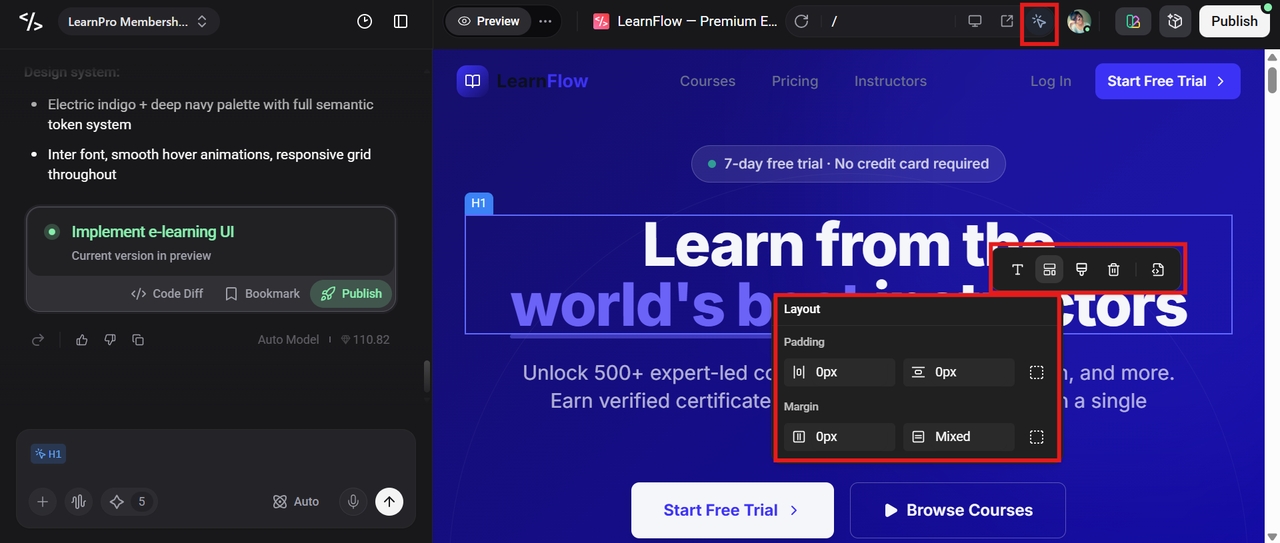
Step 3: Publish the website & go live
Once customization is complete, publish your website using the "Publish" button in the top-right corner. Businesses can launch quickly and start attracting subscribers, generating leads, and supporting recurring revenue growth.
Key features

- Ready-made templates
Enter Pro offers professionally-designed templates for SaaS products, subscription businesses, and digital services, so you can launch faster with a polished look.
- 100% code ownership
Unlike many website builders, Enter Pro gives users full ownership of the code, thus allowing for more flexibility, portability, and long-term control of their websites.
- Production-ready integrations
The platform integrates with key business tools, including payment gateways, analytics platforms, CRMs, and marketing solutions, so businesses can grow easily as ARR increases.
Conclusion
Annual Recurring Revenue is one of the most important metrics for subscription businesses as it measures predictable income and potential for long-term growth. Knowing ARR meaning helps organizations make smarter decisions around forecasting, budgeting, customer retention, and expansion strategies. Businesses focus on growing ARR by delighting customers, reducing churn, increasing the value of their product, and creating new streams of recurring revenue via upselling and cross-selling. Having a strong online presence is also a huge factor in supporting subscription growth and attracting long-term customers. Platforms such as Enter Pro enable businesses to build scalable, professional websites that support recurring revenue models without the complex development process.
FAQs
What does ARR stand for in business?
ARR stands for Annual Recurring Revenue, which is the predictable revenue a business expects to generate from recurring subscriptions, memberships, licenses, or long-term contracts over a 12-month period. ARR is especially popular with SaaS and subscription-based companies. It provides a clear picture of the recurring revenue that can be expected year after year.
What is the difference between ARR and revenue?
ARR and total revenue are related but have different purposes. Total revenue is the total income a business makes, including recurring subscriptions, one-time purchases, consulting, setup fees, training charges, or other non-recurring transactions. ARR, on the other hand, only includes revenue that is expected to recur every year.
Is ARR only used by SaaS companies?
No. While SaaS companies are the most common users of ARR, it applies to any business that has recurring revenue. ARR can be used by subscription box services, membership organizations, streaming platforms, cloud service providers, managed service companies, and even some eCommerce businesses that offer subscriptions.
What revenue should not be included in ARR?
ARR should be comprised solely of recurring revenue that is expected to recur over time. As a general rule, one-time sources of revenue should be excluded, such as: setup & onboarding fees, advisory services, services for professionals, training and deployment charges, custom development efforts, sales of hardware, one-off software purchases, and non-recurring charges for support.
How do you calculate ARR?
ARR is usually calculated by annualizing the recurring revenue from active subscriptions and contracts. So, for example, if a company has a Monthly Recurring Revenue of $10,000, then its ARR would be:
$10,000 x 12 = $120,000 recurring revenue annually
Companies with annual contracts can also determine ARR by summing the total annual value of all recurring active subscriptions and contracts.