How to create an AI fashion app with Enter
Aura is an AI shopping agent that turns Pinterest pins and Instagram reels into personalized, sized, one-click purchases. Discover how it bridges fashion content and buying.
Enter was at HackPrinceton Spring 2026 — 410 participants, 36 hours, on Princeton's campus. Some teams came in solving problems in healthcare and law. The team behind Aura came in solving something just as real: the fashion impulse that dies in a browser tab.
The Loop Nobody Has Closed
Fashion content is one of the most consumed media categories on the internet. Billions of saves. Millions of engaged viewers. Creators whose entire platforms are built around showing people how to dress.
And yet the gap between watching and wearing has never been bridged. You see an outfit on a creator whose style you love. The impulse is immediate and specific. And then — tab switching, sizing guesswork, buried reviews, abandoned carts. By the time you have tracked down the individual pieces, checked whether they come in your size, and read enough reviews to feel confident, the impulse is gone. Most of them die there.
Aura was built to close that loop.
What Aura Actually Is
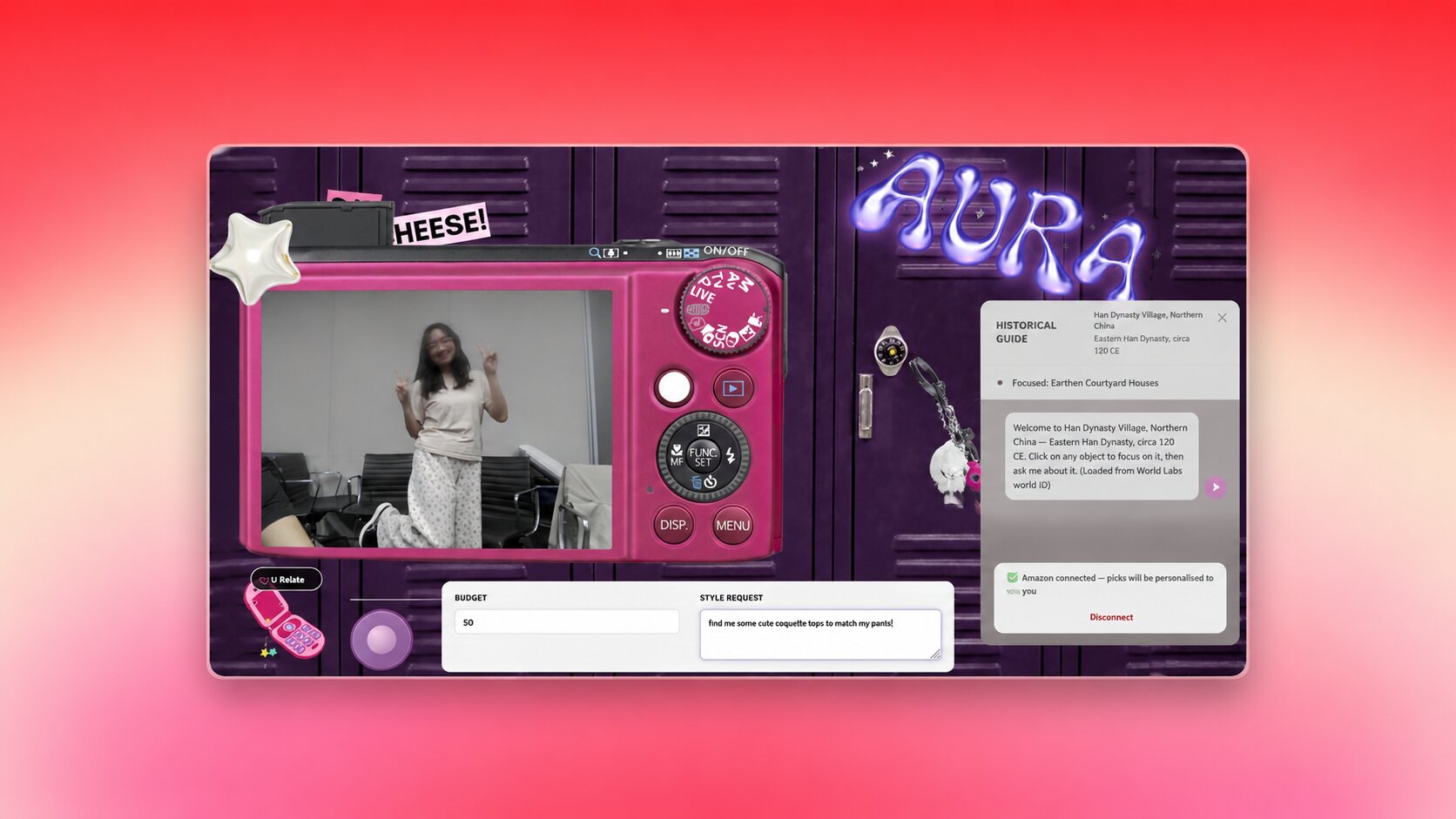
Aura is an AI shopping agent that transforms passive content — a Pinterest pin, an Instagram reel, a creator lookbook — into an active, personalised shopping action. The content becomes the input. A curated, sized, purchasable recommendation becomes the output. The user decides whether to say yes.
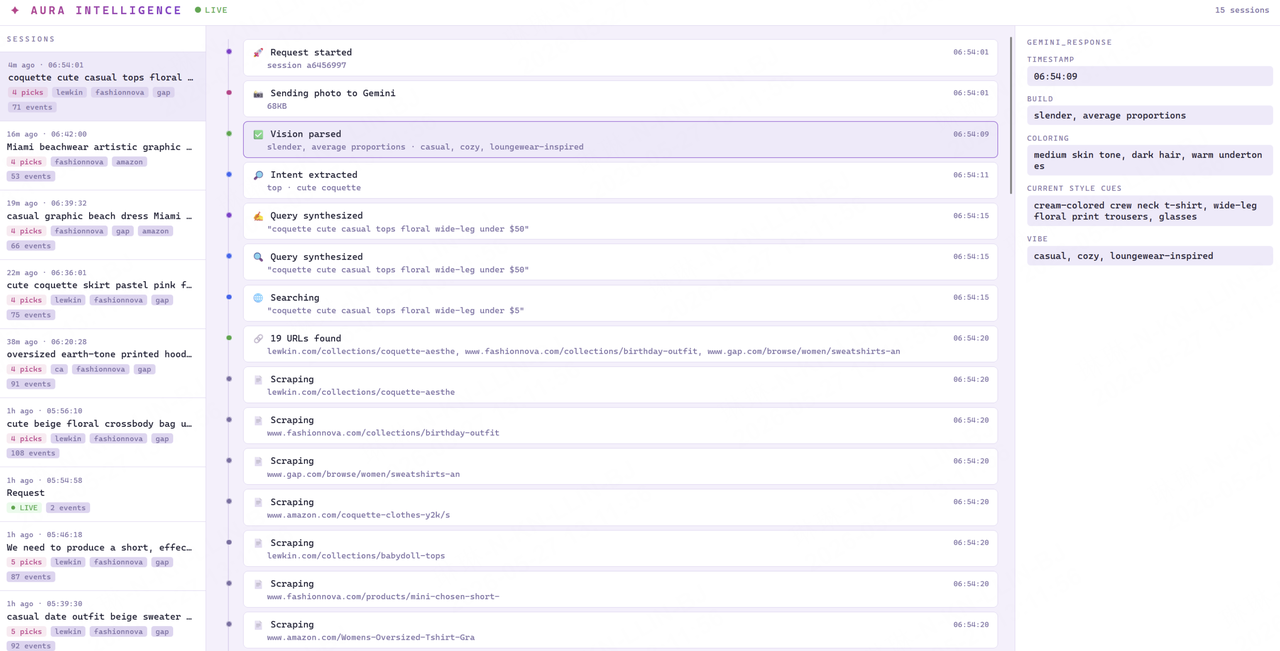
Three agents run underneath the experience. A Scout agent searches across fashion platforms continuously, finding products that match the user's style profile. A Review Intelligence agent crawls real review pages, extracts sizing comments and garment measurements, and builds a fit verdict per product — so the recommendation accounts not just for what you like but for what will actually fit. A Reasoning agent takes all of it — every candidate, every review, every sizing verdict, the user's full profile — and decides what is actually worth surfacing.
When the user is ready, checkout happens without leaving the app. One click. No redirect. The purchase completes directly on the platform, within a budget the user has already set.
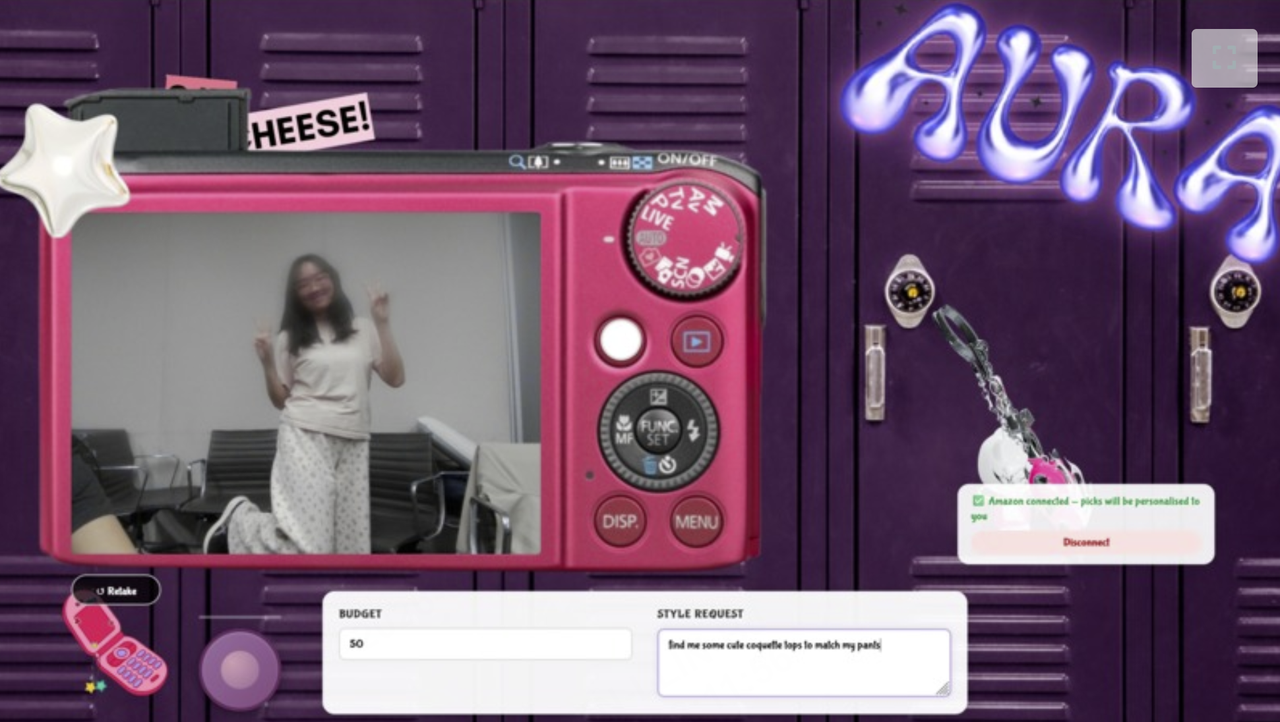
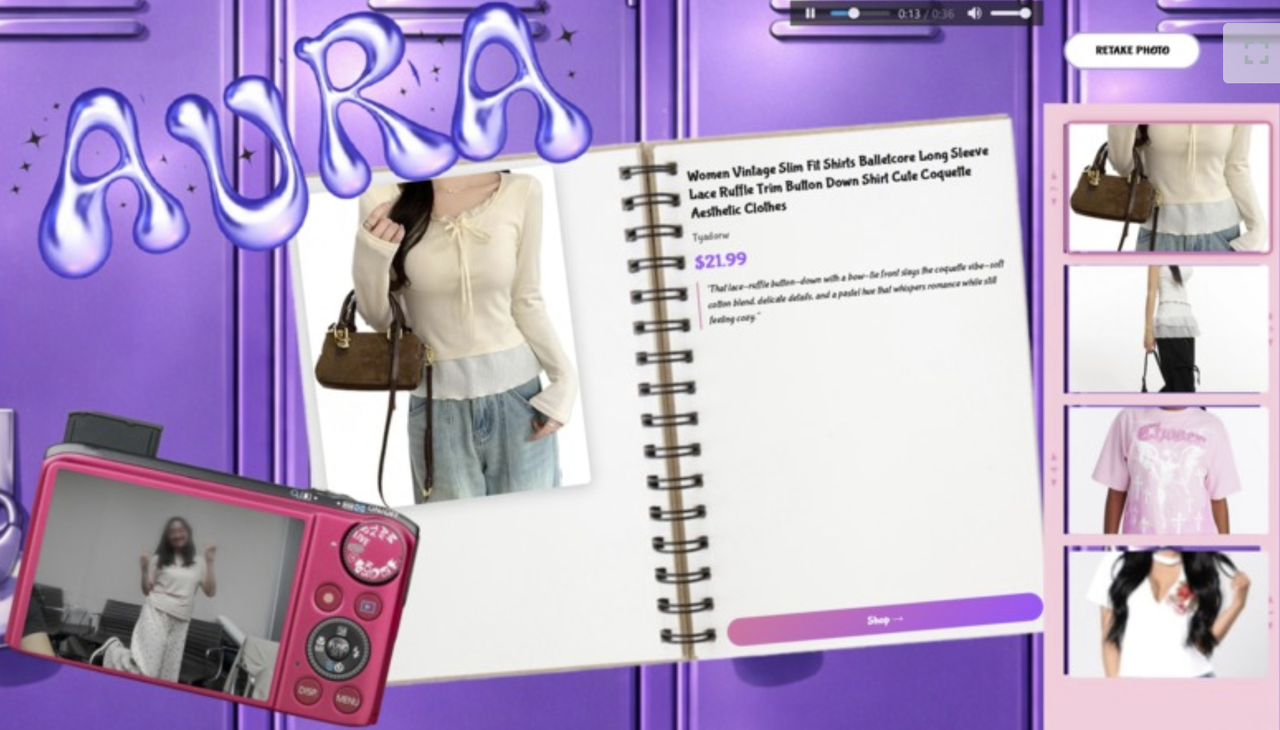
The interface was built to feel editorial rather than transactional. Smooth animations, 3D visuals, a voice persona that sounds like a friend rather than a storefront. The Y2K aesthetic was deliberate — the project was inspired by Bratz, by Winx Club, by the visual confidence of early-2000s fashion culture — and the design reflects that.
Aura's recommendation interface, showing AI-curated outfit picks with per-product fit verdicts and one-click checkout — built to feel like a fashion editorial, not a product listing.
How It Came Together
The build covered a lot of ground in 36 hours. Multimodal image reading to interpret outfit photos and social posts into structured garment data. Parallel asynchronous product scraping across multiple platforms. Review extraction to generate sizing verdicts. A full checkout layer built directly into the app. Voice input so the interaction feels conversational rather than mechanical.
Enter was part of the frontend — used for design assets alongside the React, Anime.js, and Three.js stack that gave Aura its visual identity.
The virtual try-on feature — compositing a user's photo with a product photo to preview a look — made it into the build. Getting it to run in a reasonable time without paid infrastructure was a battle the team describes with the kind of specificity that only comes from three hours of failed attempts. They shipped what worked and marked the rest for next time.
Two of the team members were relatively new to hackathons. The frontend design went through several iterations before landing on something that felt right, which meant a significant rush toward the end. They got there.
What They Are Proudest Of
That they would actually use it.
That is not a throwaway line — it is a meaningful bar for a hackathon project. The team built something that solves a problem they personally experience, with an aesthetic they genuinely wanted to exist, and delivered nearly everything they planned at the start.
The frontend is the other source of pride. Difficult to build, harder to make feel cohesive, and worth the effort. Fashion is a visual medium. A product about fashion that looks wrong fails before the AI even speaks.
What Comes Next
The try-on feature is the first priority — the infrastructure to make it run at an acceptable speed is the piece that needs solving. Once it works, the experience of previewing a full outfit on yourself before purchasing closes another part of the loop entirely.
The longer-term vision is a subscription layer: follow a creator's content, and Aura interprets their library continuously — surfacing shoppable matches sized to your body as their new posts land. Drop a Pinterest board link and receive a personalised, purchasable haul in seconds.
The core insight — that fashion content and fashion commerce should not be two separate experiences with friction in between — does not require a long roadmap to validate. It just requires the loop to actually close.
The Industry Angle
The fashion discovery market runs on impulse. The platforms that host fashion content are optimised for engagement, not for conversion. The gap between the two is not an oversight — it has simply not had the right layer applied to it yet.
What Aura proposes is that AI sits between inspiration and purchase: not as a recommendation engine that serves generic results, but as a personalised agent that understands your size, your existing wardrobe, your style instincts, and the creator content you are already consuming — and does the work of matching those things together before the impulse fades.
That is a different kind of shopping experience. And it was built, start to finish, in a single weekend at Princeton.
Team members: Kaylei Mixon || Kai Wen Khoo || Katelyn Louie || Angelina Zhou
Missed the earlier volumes? → Vol. 1 — Heritage in Pixels → Vol. 2 — Terra Zone AI → Vol. 3 — reAgent → Vol. 4 — TaleTailor → Vol. 5 — LEGR → Vol. 6 — PolyPath → Vol. 7 — EcoThread→ Vol. 8 — Aletheia → Vol. 9 — Synova → Vol. 10 — Overturn Insurance→Vol. 11 — VentureLink →Vol. 12 — Atlas: Immersive 3D AI Learning →Vol. 13 — ACTA AI →Vol. 14 — Guardian: AI