How Kronos Automates Production Incident Response
Kronos is an autonomous incident response agent built by WhyVenv, the Second Place winner at Quackathon. Designed for production debugging, it connects alerts, logs, code retrieval, AI diagnosis, and GitHub issues into one workflow, helping engineers move from “something broke” to actionable context faster.
“Other models kept pointing to the same thing again and again, even after we had fixed it. When we gave Enter Pro a shot, it figured out what the actual cause was.”
WhyVenv built Kronos, an autonomous incident response agent for Quackathon, to help engineers move from production errors to root cause faster.
The Pager Is Only the Beginning
When production breaks, the alert is rarely the hard part.
Grafana can tell you something is down. Logs can tell you something failed. A dashboard can flash red loudly enough to wake someone up at 2 AM.
But after that, real work begins.
An engineer still has to open the logs, understand the error, search through the codebase, guess which function matters, decide whether the issue is urgent, and figure out whether the right next step is a GitHub issue, a patch, or a full escalation.
That gap between knowing something broke and understanding what broke is where incident response becomes painful.
It is also where Dawood Khan found the idea for Kronos.
Dawood studied AI, but after college he moved closer to system engineering. His interest was not abstract. He had seen how production systems fail, how teams respond, and how much manual investigation still sits between an alert and a fix.
At a Grafana event in Hyderabad, the problem became even clearer. Engineers were describing the same pattern: the system goes down, someone gets the call, and then the team begins the familiar work of tracing the failure by hand.
Quackathon became the moment to build something different. Built by WhyVenv, Kronos went on to win Second Place at Quackathon, standing out in the Track 01: Software - The Sentient Workspace challenge for turning production incident response into an agentic workflow.
What WhyVenv Built
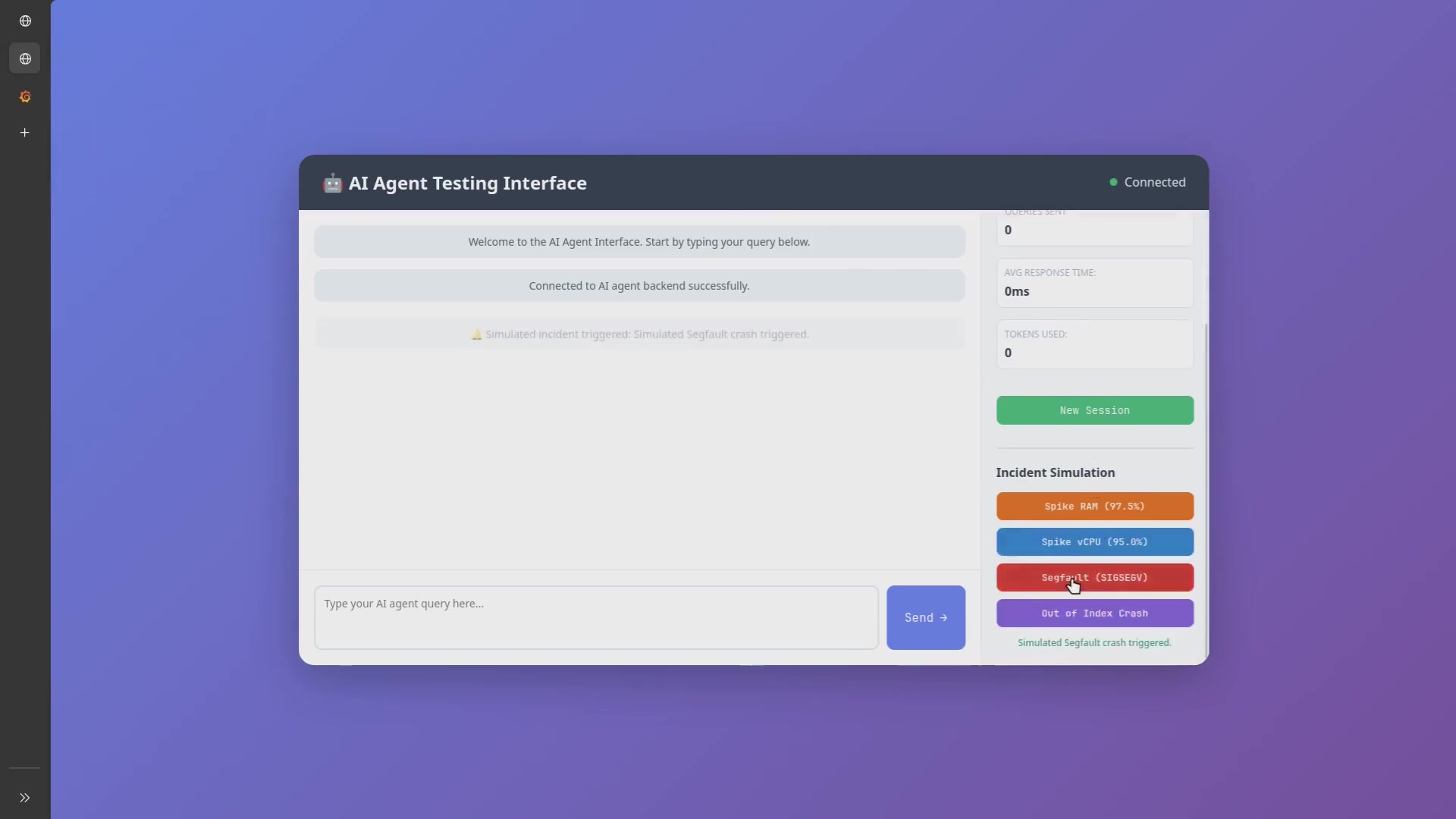
WhyVenv's project was Kronos, an autonomous incident response agent built for Quackathon's Sentient Workspace track.
The idea was straightforward, but ambitious:
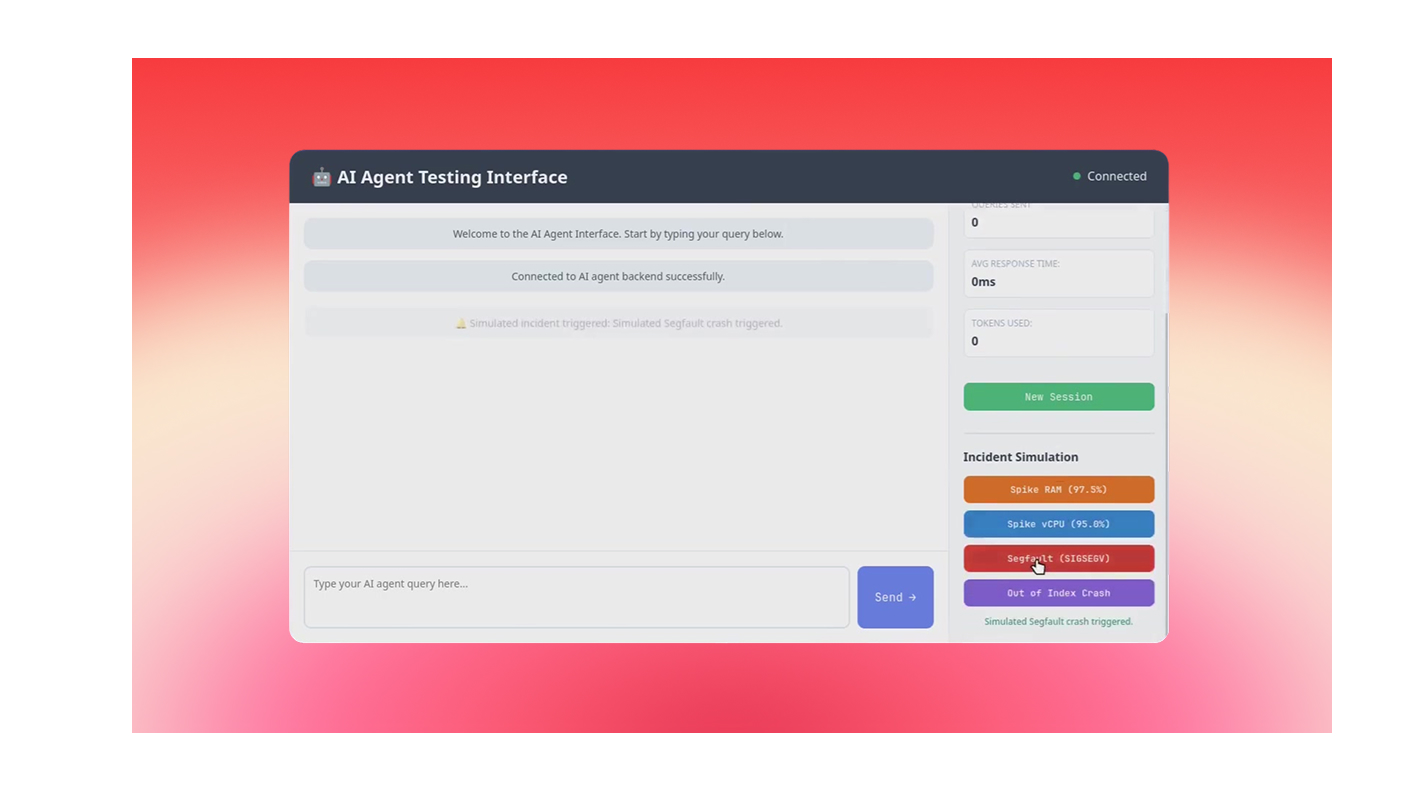
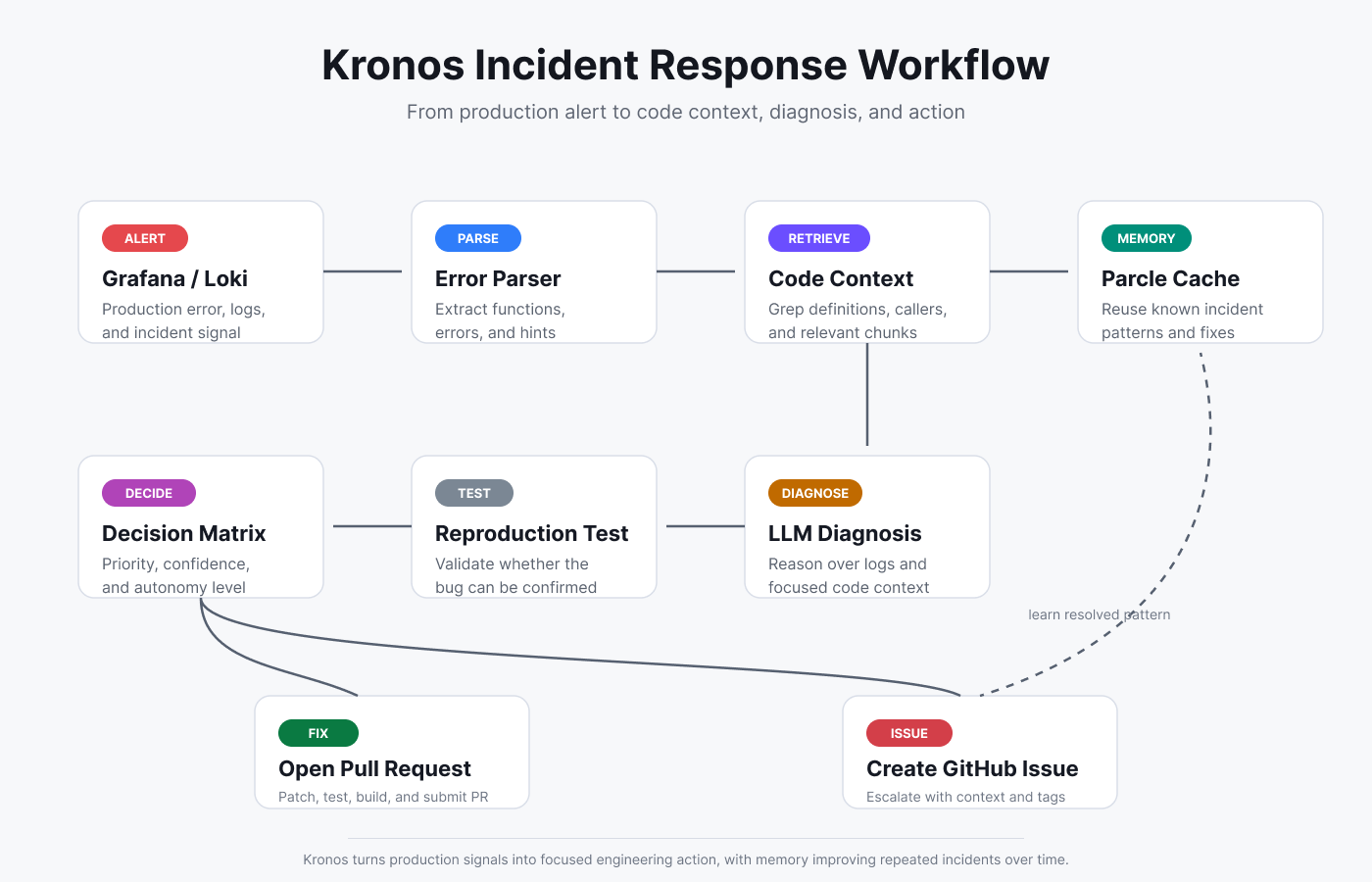
Kronos receives production errors, reads the logs, retrieves the relevant code, asks an AI model to diagnose the likely root cause, and then decides what should happen next.
Sometimes that means opening a GitHub issue.
Sometimes, depending on the severity of the problem, it means attempting a fix.
The point is not just to notify the engineer that production is broken. The point is to give the engineer a head start on the work that normally follows the alert.
In Dawood's words during the interview, Grafana alerts made it easy to know when something was down. The problem was everything after that: finding what caused the issue, where the bug lived, and what action the team should take.
Kronos was built to automate that middle layer.
The Engineering Insight Behind Kronos
“The part I was most proud of was the retrieval stage. Instead of using only ASTs or embeddings, we worked from the trace logs, because that is how engineers usually find the issue.”
The part Dawood was most proud of was not the dashboard, the GitHub integration, or even the AI diagnosis.
It was the retrieval stage.
Many AI coding systems try to understand a codebase through embeddings, AST parsing, or broad context loading. Kronos took a more engineer-native route: start from the trace logs and use them to narrow the search.
That choice matters.
When engineers debug production failures, they rarely begin by asking an AI model to read the entire repository. They look at the error. They follow the stack trace. They grep through the code. They move from symptom to source.
Kronos was designed around that same instinct.
The system uses logs as the entry point, retrieves the code that appears most relevant, and only then brings the AI model into the workflow. That makes the model less of an all-seeing oracle and more of a reviewer working from a focused packet of evidence.
Dawood was clear that the approach still needs refinement before it can be trusted at large scale. But for the demo, it worked. More importantly, it reflected a serious product instinct: the best AI systems do not replace the engineering workflow blindly. They learn from how engineers already solve problems.
Building the Observability Stack With Enter Pro
Kronos had to work across tools the team had not deeply used before.
Grafana. Prometheus. Loki. Dashboards. Logs. Metrics. Alerts.
For a hackathon team, that is a lot of infrastructure to understand before the actual product can even begin to work.
This is where Enter Pro became useful for WhyVenv.
The team used Enter Pro throughout the project for research, idea refinement, and debugging. Dawood and his teammates used it to understand the observability stack, figure out how the components fit together, and move past integration issues when the system was not behaving as expected.
One moment stood out.
The team was stuck on why their data alerts were not coming through correctly. They had tried other AI models, but Dawood felt some of them kept circling around the same point even after the team had already fixed it.
When they gave Enter Pro a shot, it helped them identify the actual cause more directly.
That is the kind of moment that matters in a build sprint. Not a polished demo answer. Not a generic suggestion. A concrete push through a real blocker.
For WhyVenv, Enter Pro was not just a place to generate code. It was a way to reason through unfamiliar systems quickly enough to keep building.
Two Days of Focus
Dawood had planned the project before the team began serious development.
He knew what they wanted to build. He had thought through the basic architecture. He had a rough sense of how the work should be divided.
Then the actual hackathon rhythm took over.
The first day was not all code. The team spent time together, talked, joked, and found their footing. The real build came after that: a concentrated sprint where they divided the work, researched unfamiliar pieces, implemented the core flow, and refined the product until it could hold together.
The architecture started simple:
crash report -> relevant code -> LLM diagnosis -> issue or fix.
Then each part became sharper as the team built.
That simplicity is part of why Kronos is compelling. It does not begin with a complicated theory of agentic software. It begins with a workflow every on-call engineer understands: something broke, find the cause, decide what to do next.
What Kronos Suggests About AI Agents
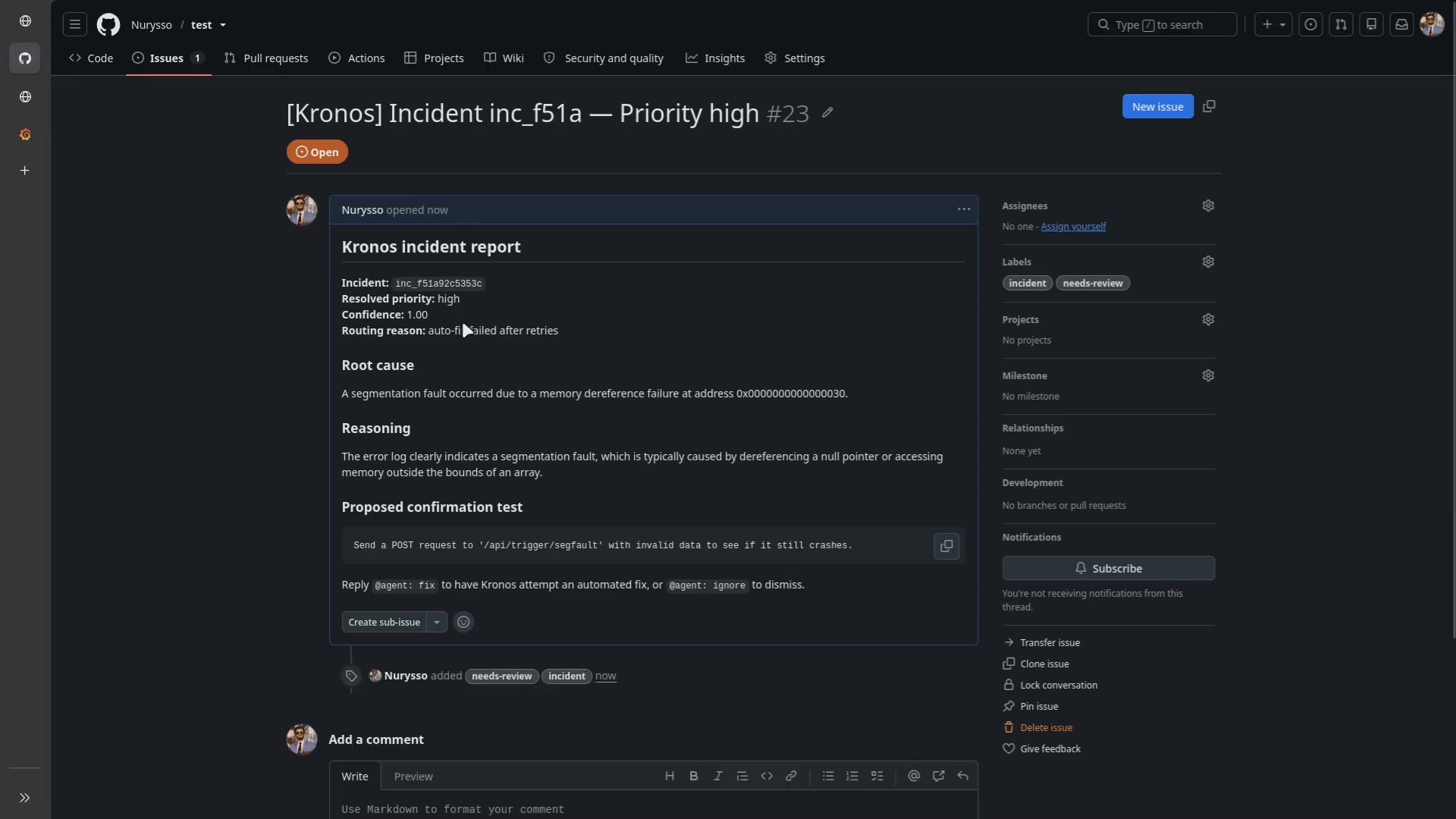
Kronos is not a chatbot sitting beside a codebase.
It is closer to a workflow agent: a system that receives a signal from the real world, gathers the right evidence, asks for reasoning only where reasoning is useful, and then routes the result into the tools engineers already use.
That distinction matters.
Dawood is sensitive to the cost and control problems around AI systems. In the interview, he talked about token usage, expensive model calls, and the importance of not letting an agent handle everything when deterministic backend logic can do part of the work more efficiently.
That is a mature instinct for someone building with AI in 2026.
The future of AI agents will not only be about using stronger models. It will also be about knowing when not to use them. Which parts should be code? Which parts should be retrieval? Which parts should be model reasoning? Which parts should stay under human review?
Kronos, even as a hackathon project, points toward that question.
What Comes Next
The project still has questions to answer before it becomes production-ready:
- How well does the retrieval approach scale across larger codebases?
- How should severity and autonomy be calibrated?
- When should an agent open an issue instead of attempting a fix?
- How much context is enough for a model to diagnose a real incident?
- What should humans approve before anything reaches production?
Those are not small questions. They are exactly the questions that make Kronos worth paying attention to.
Because production incidents are not going away. The only question is whether every response has to begin with manual panic.
Kronos imagines a different first step: one where the system that sees the failure can also begin to understand it.
That is what Enter exists to support.
Not just faster code. Faster movement from a real pain point to a working product.
And for WhyVenv, that movement was enough to turn a painful engineering pattern into one of Quackathon's winning projects.
Explore Kronos.
This story is part of our Quackathon Builder Series, where we go one project at a time to understand what builders made with Enter Pro, why they built it, and what their work tells us about the future of AI-powered software creation. Stay tuned.