How to use Enter to solve Sustainable issues
EcoThread makes sustainable fashion effortless. Browse secondhand styles, get eco scores via Chrome extension, and text a bot in-store. Style smarter today.
"Buy less, choose well, make it last." — Vivienne Westwood

EcoThread is the seventh project we are covering from HackPrinceton Spring 2026 — and the one built on the sustainability track with Enter, and deserve an entire dive in their project.
Most people who care about sustainable fashion already know the alternatives exist. Secondhand platforms, vintage markets, ethically-made brands: the options are there. The problem is not awareness. The problem is that acting on it means opening twelve tabs, doing your own research, and hoping the sizing is consistent across four different platforms while you're trying to decide whether a dress is worth $34.
Nobody does that. So the easier option wins, the fast-fashion cart gets checked out, and the piece ends up in a landfill in four washes.
The team behind EcoThread decided the problem was not that people do not care. It was that caring had too much friction.
What EcoThread Actually Is
EcoThread is a sustainable fashion stylebook and discovery platform, but describing it as a single platform undersells what it actually does.
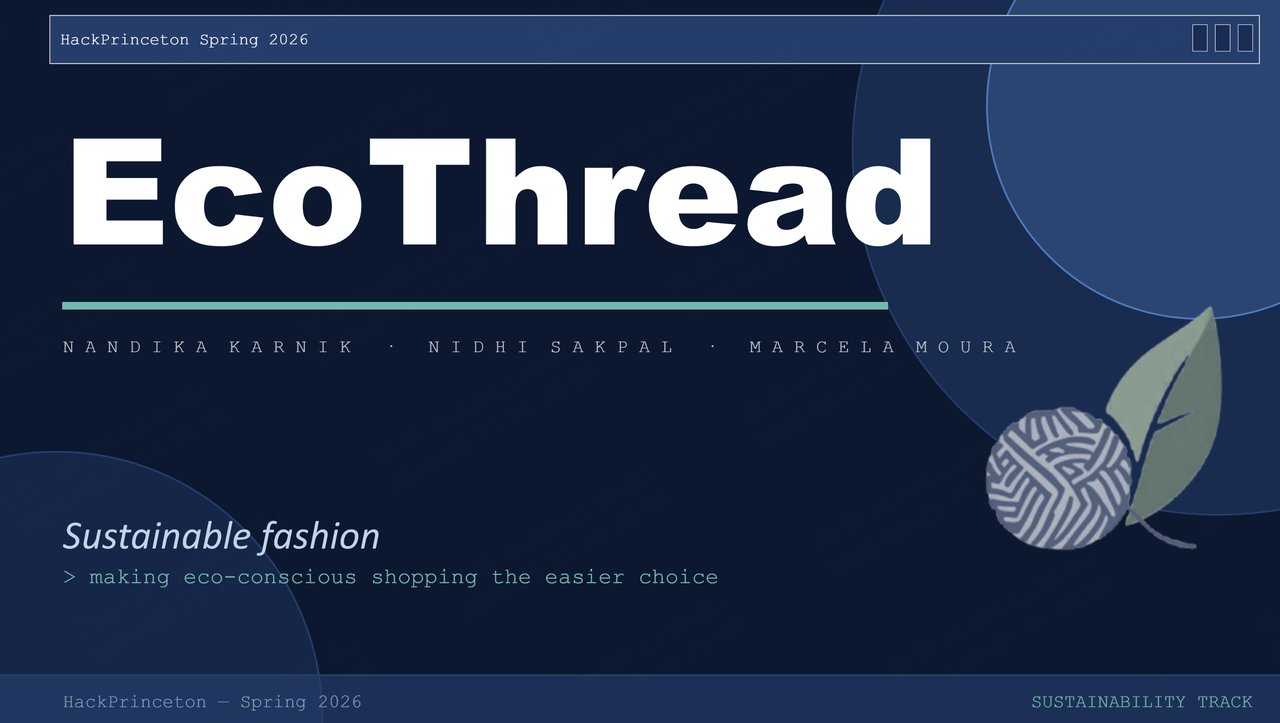
It lives in three places at once.
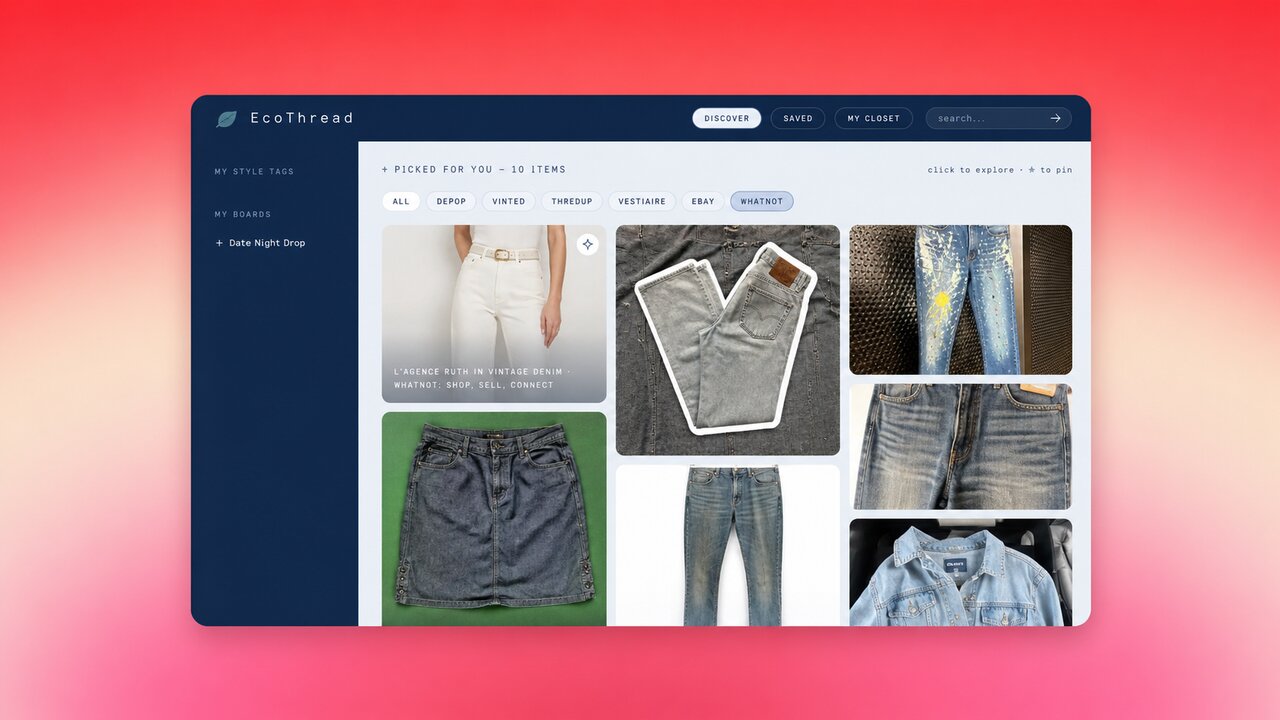
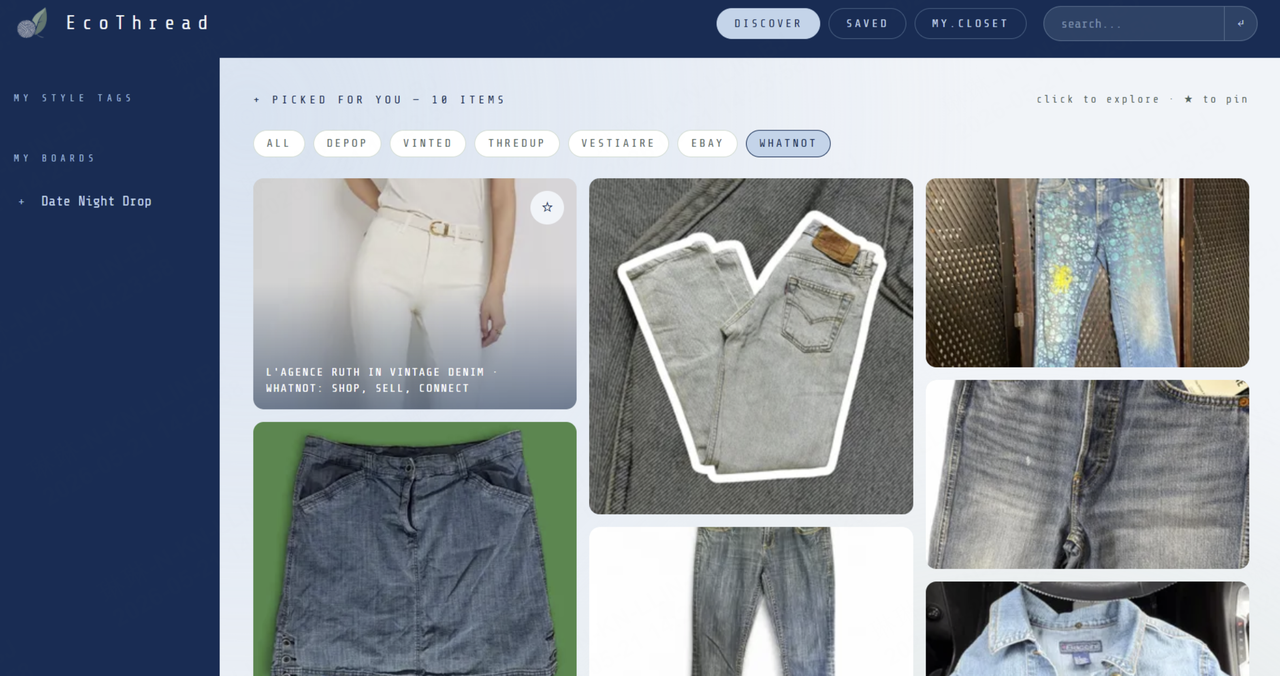
The feed is a Pinterest-style discovery app. Users pick their style: Y2K, Dark Academia, Streetwear, Vintage 90s, Cottagecore, Minimalist; and their occasions: Prom, Wedding, Date Night, Everyday. EcoThread serves back a personalized masonry feed of real pieces pulled live from six major secondhand and vintage marketplaces. Every item in the feed is already a sustainable choice by virtue of where it comes from. Users save pieces to occasion-tagged boards — Prom 2026, Summer in Paris — with cover mosaics and the full pin-and-curate flow. It feels like a social app. The sustainability is the default, not the feature.
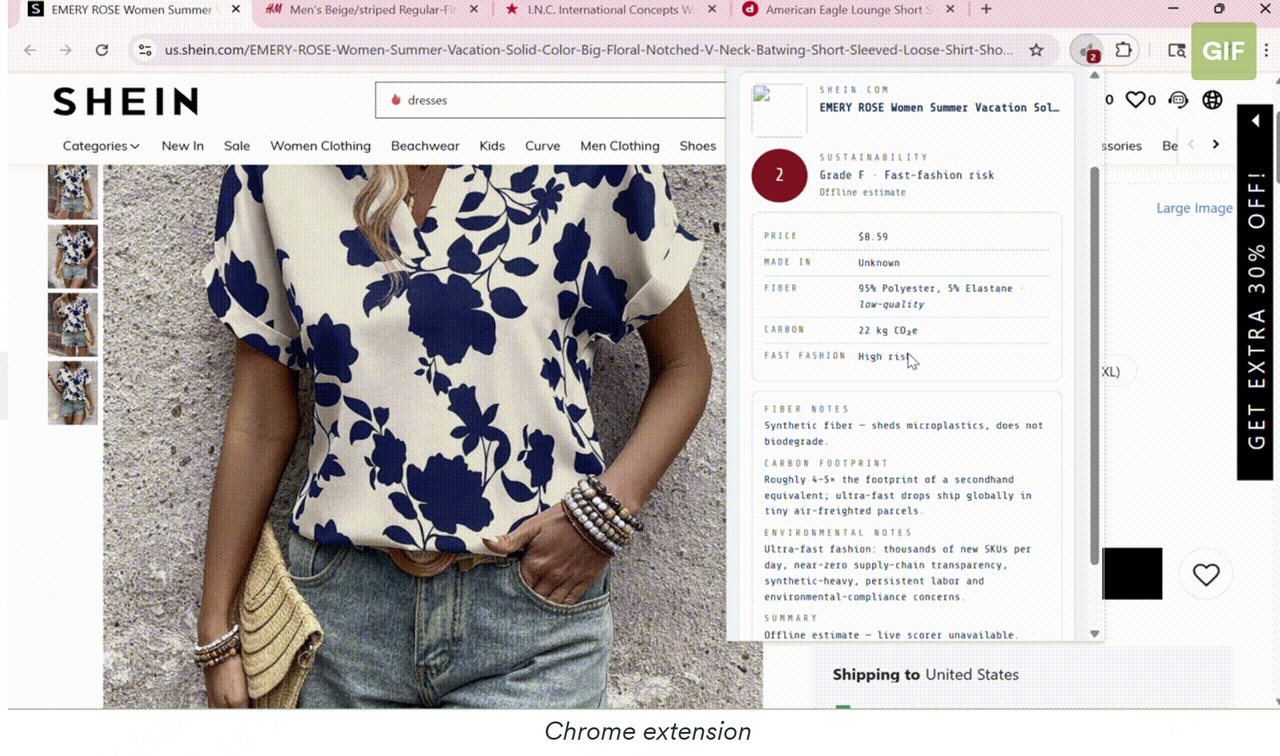
The Chrome extension is where EcoThread follows you into the rest of the internet. It works on twenty-six retailers: fast-fashion sites, general retail, secondhand marketplaces; and activates the moment you land on a product page. A badge in the toolbar glows green, amber, or red. Open the popup and you see the sustainability context for what you are looking at, alternatives from the same secondhand catalog at similar prices, and a score that tells you what you are actually buying.
The iMessage bot is for the moment you are physically in a store, holding a tag, not sure if the piece is worth it. Text the brand name and fabric details. The bot texts back what the piece is actually made of and gives you the summary on whether it is sustainable. No app install. No account. Just a reply in iMessage, while you are still standing in the aisle.
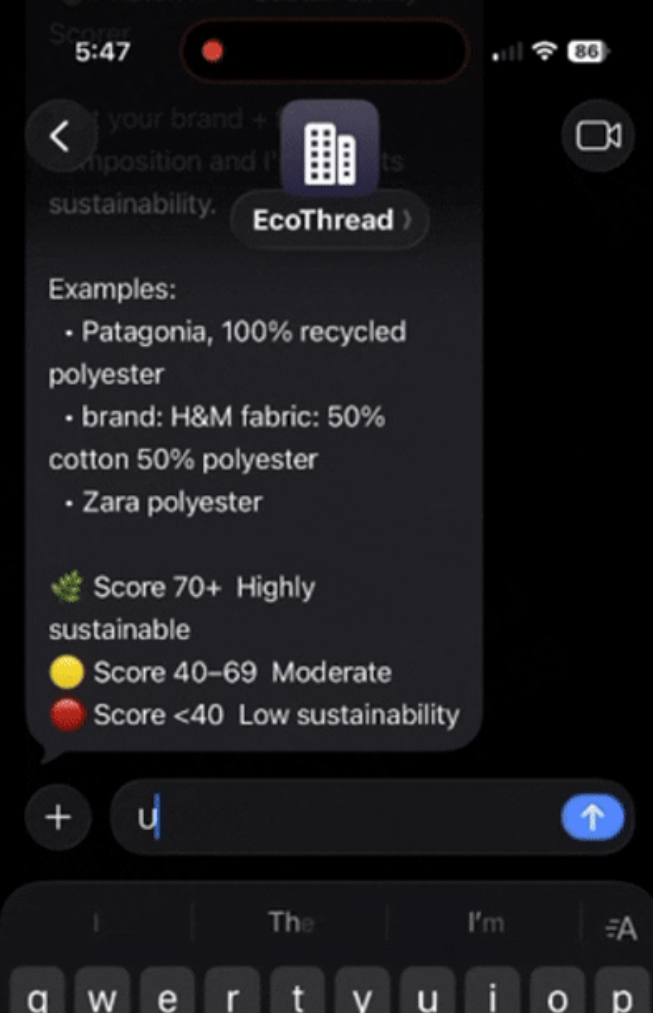
The common thread across all three surfaces: the idea that holds the whole product together is one catalog and one reasoning engine. The feed is where you look. The extension is where you get redirected. The iMessage bot is where you get a second opinion in person.
What They Are Proudest Of
Three surfaces in 36 hours, all pulling from the same live catalog: that is the headline. But the detail the team keeps coming back to is the iMessage flow.
Zero account setup. Text a tag. Get a verdict. That is the full interaction. The bot does real reasoning on the brand and materials and replies with a plain-English summary before you have put the piece back on the rack.
It works. In a store. Right now.
This Is the Seventh Project We Have Written About From HackPrinceton
We have kept writing because the ideas have kept earning it.
EcoThread with 3 team members: Nandika Karnik, Marcela Moura, Nidhi Sakpal earn their place in this series because the problem they are solving is real, and the approach is genuinely original. Not a sustainability dashboard. Not a guilt-based browser nag. A platform that meets you inside the shopping behavior you already have and makes the better option as easy as the convenient one: across the feed you browse, the sites you visit, and the stores you walk into.
That is a harder product to build than it looks. They built it in a weekend.
What Comes Next
Closet mode: photograph what you already own, and EcoThread suggests outfits from your existing wardrobe before recommending anything new.
An aggregate impact dashboard: total CO2 saved across all pins and purchases, visible over time.
Swap-at-checkout prompts: "This piece costs $28 and lasts four wears. Here is a near-identical vintage option at $24." Shown at the moment the decision is actually being made.
And more scrapers — because twenty-six retailers is a start, not a finish.
Missed the earlier volumes? → Vol. 1 — Heritage in Pixels → Vol. 2 — Terra Zone AI → Vol. 3: reAgent → Vol. 4: TaleTailor → Vol. 5: LEGR → Vol. 6: PolyPath