How to use Enter to understand what you are building
Most AI deployments fail before they start. Learn how reAgent gives companies the visibility and framework needed to deploy agentic AI responsibly and successfully.
If you are reading this article, chances are you have some interest in AI.
But where does that interest actually come from?
For some of you, it is genuine curiosity. A fascination with what this technology can do — how it reasons, how it learns, what it might become. That is a beautiful place to start from.
For most of us, though, if we are being honest — the interest arrived differently. It came from the headlines. From the conversations at work. From the feeling that something enormous is happening and that standing still might mean being left behind. Not passion, exactly. More like pressure.
And that pressure is being felt everywhere.
According to Deloitte's State of AI in the Enterprise report, surveyed companies have broadened workforce access to AI tools by 50% in a single year. Investment is surging: 84% of organisations increased their AI budgets in 2025. Nearly 3 in 4 companies plan to deploy agentic AI within the next two years.
Everyone is moving. Fast.
But here is the question nobody is asking loudly enough:
Are they moving in the right direction?
The Gap Between Ambition and Reality
The same Deloitte report — built from conversations with over 3,200 business and technology leaders across 24 countries, paints a more complicated picture underneath the momentum.
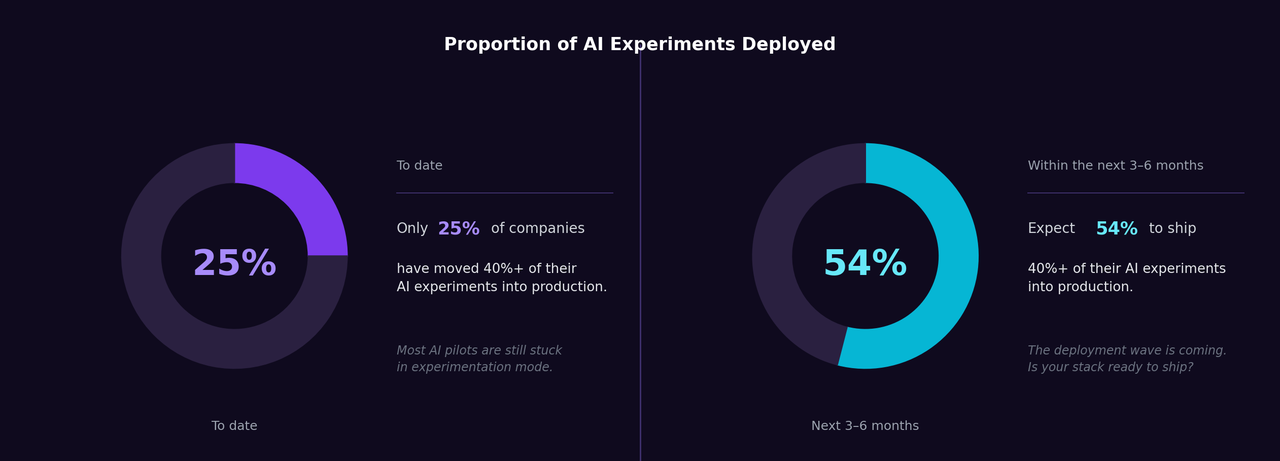
Only 25% of organisations have successfully moved 40% or more of their AI experiments into production. The rest are stuck in what can be called the proof-of-concept trap: running pilots that work beautifully in controlled conditions, then watching them stall the moment they meet the complexity of the real world.
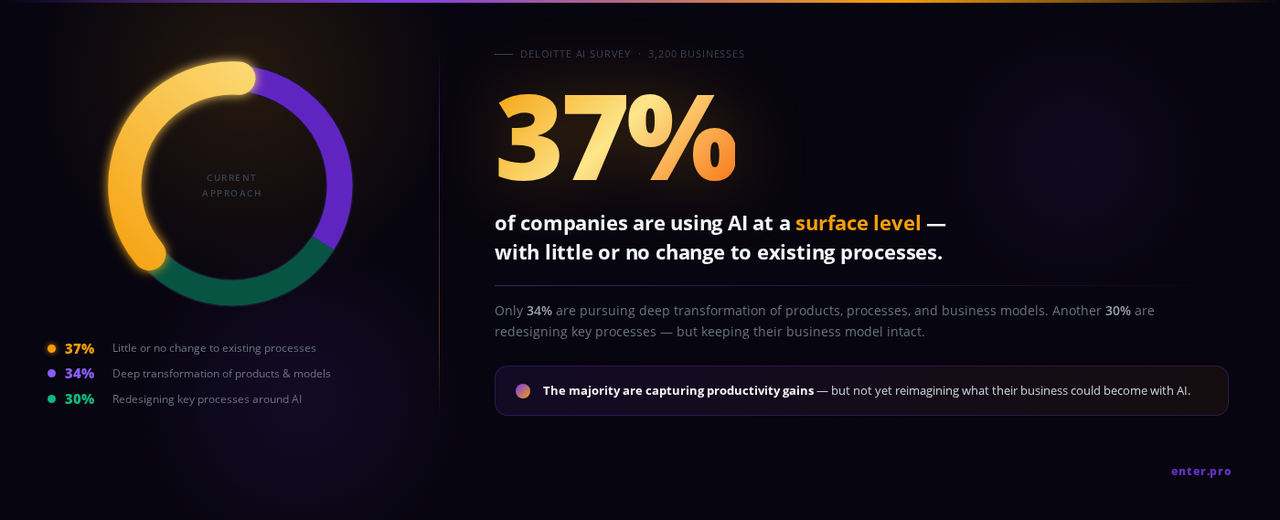
37% of companies are using AI at a surface level, with little or no change to existing processes. They have the tools. They are not getting the value.
That gap — between how fast companies are moving and how ready they actually are — is where the real risk lives.
It is not that the technology is not ready. It is that most organisations have not yet built the frameworks, the visibility, or the understanding to deploy it responsibly.
This is not a capability crisis. It is a management crisis.
And a team of students at HackPrinceton Spring 2026 built the tool to address it.
Indeed, if you missed out, Enter team was part of the HackPrinceton 2026 — one of the most competitive student hackathons in the country, held on Princeton's campus over a single weekend.
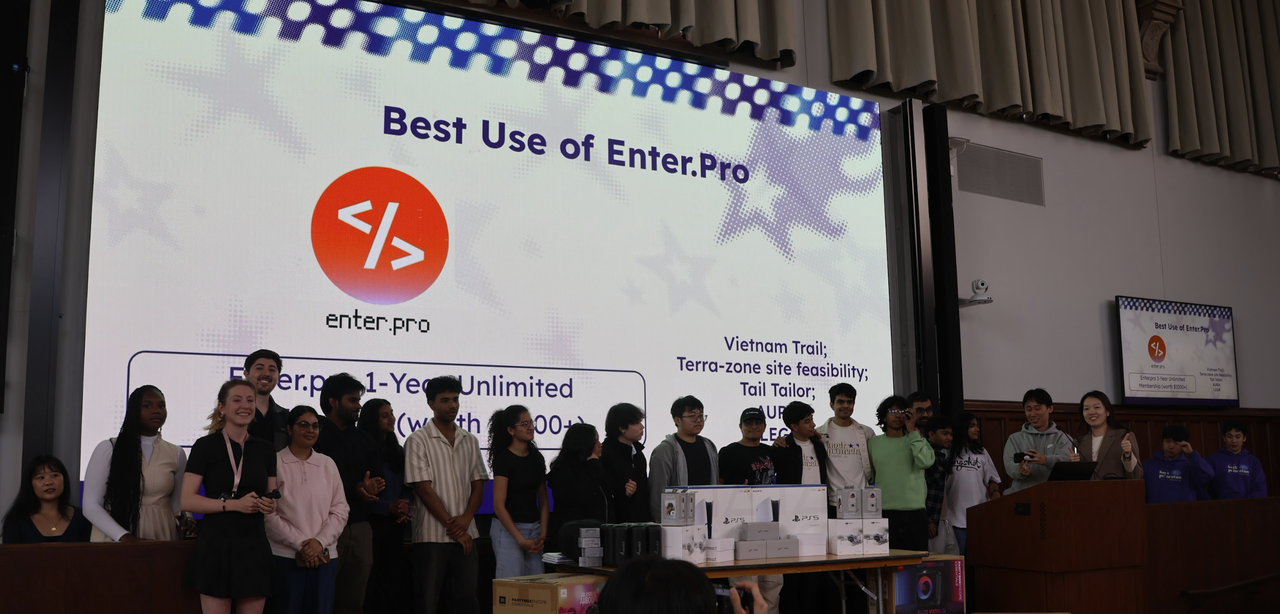
We were there to support the next generation of builders. We ran workshops, held office hours, and watched teams go from blank screen to live product in a timeframe that still impresses us every time.
This is the third article in our HackPrinceton Builder Series, where we go one project at a time; and one of the projects we saw that weekend spoke directly to the management crisis described above.
A team of students — armed with original research and a sharp thesis — built a tool designed to give companies the visibility they are missing before they deploy.
That project is reAgent.
What reAgent Is
Most AI deployment failures share one thing in common: nobody could see what they were building until it was already breaking.
The architecture lived in someone's head, or in a diagram on a whiteboard, or in a Slack thread full of assumptions. The costs were invisible. The failure points were invisible. The logic gaps were invisible. And then the system went live — and the bill arrived.
reAgent is built on a simple premise: make it visible before it matters.
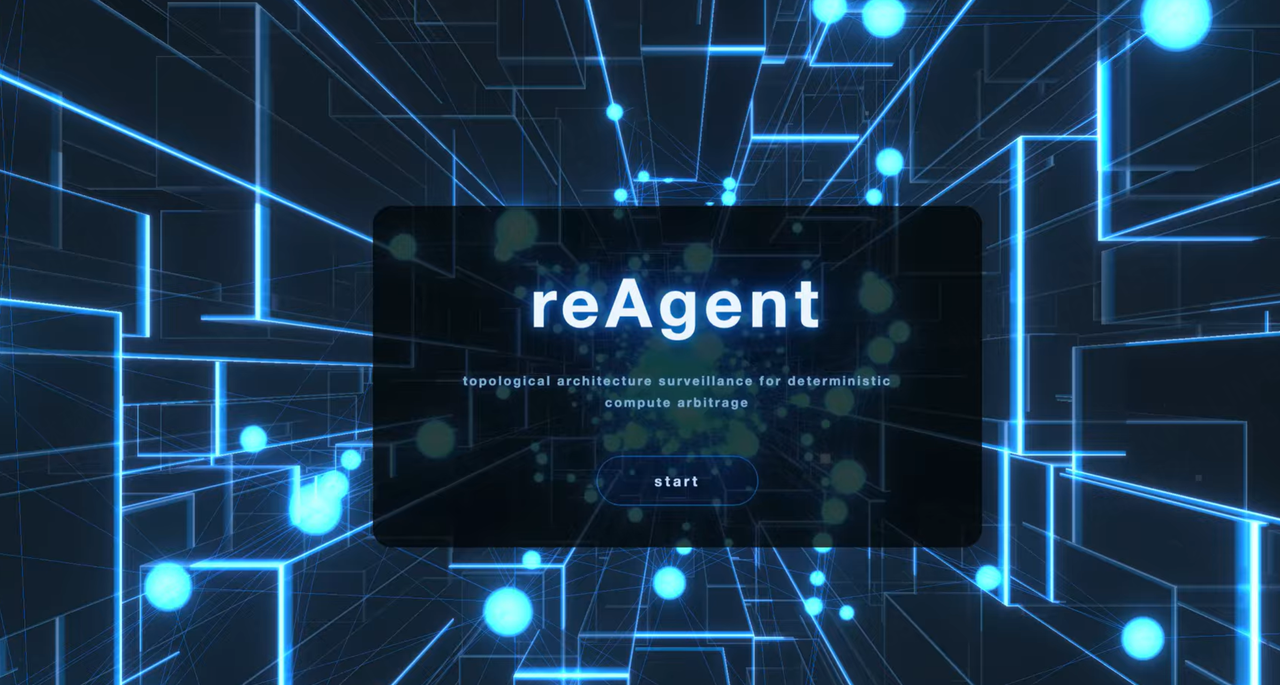
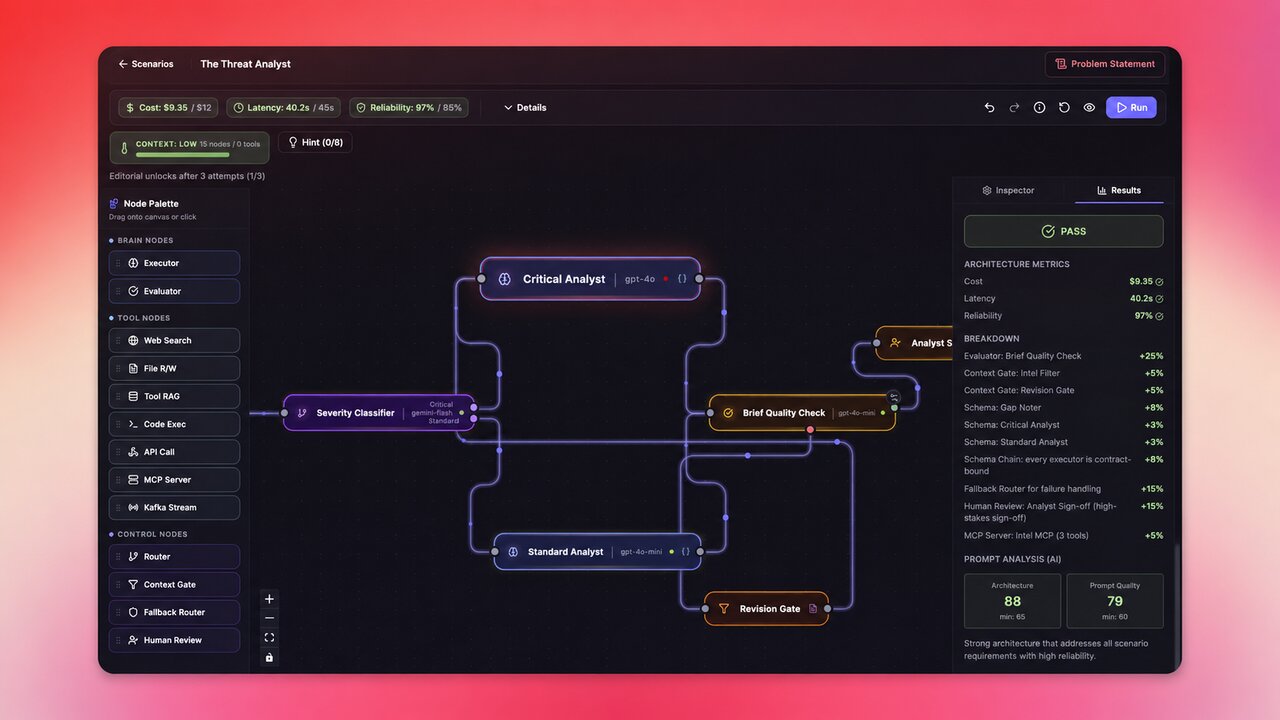
It is an interactive, browser-based platform that translates the invisible chaos of AI orchestration into something you can see, measure, and stress-test — before a single line of code is written.
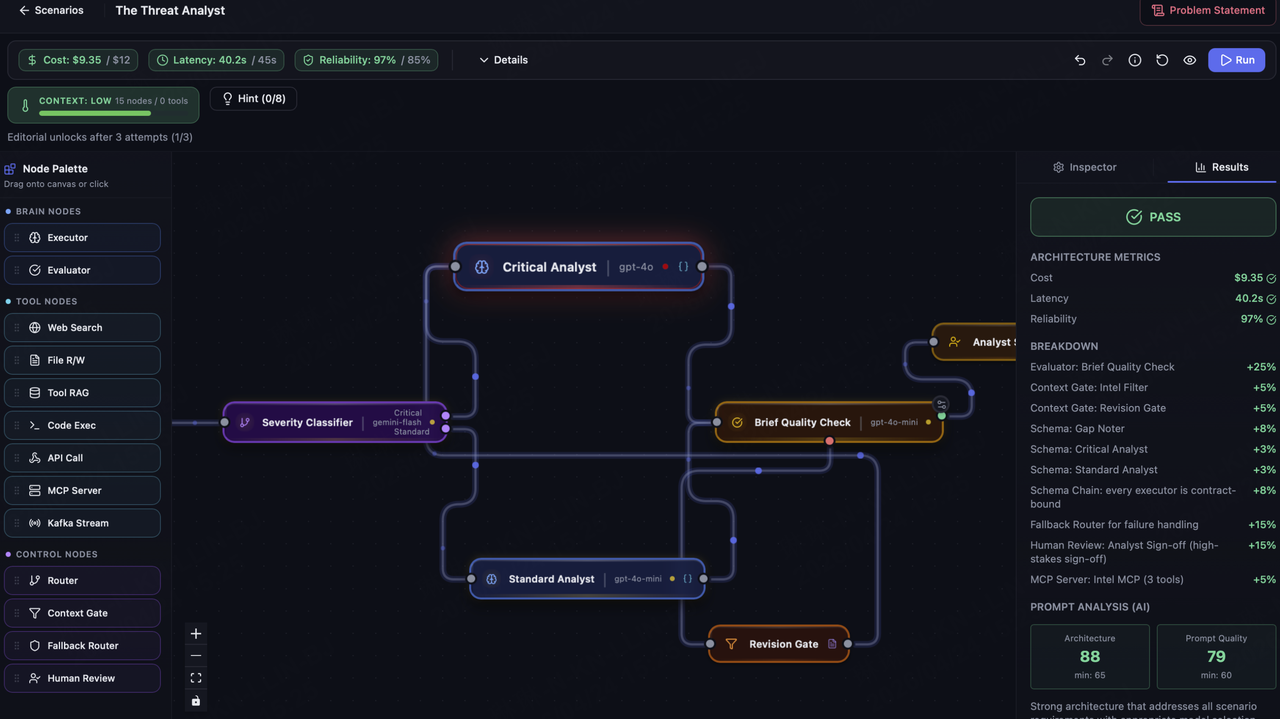
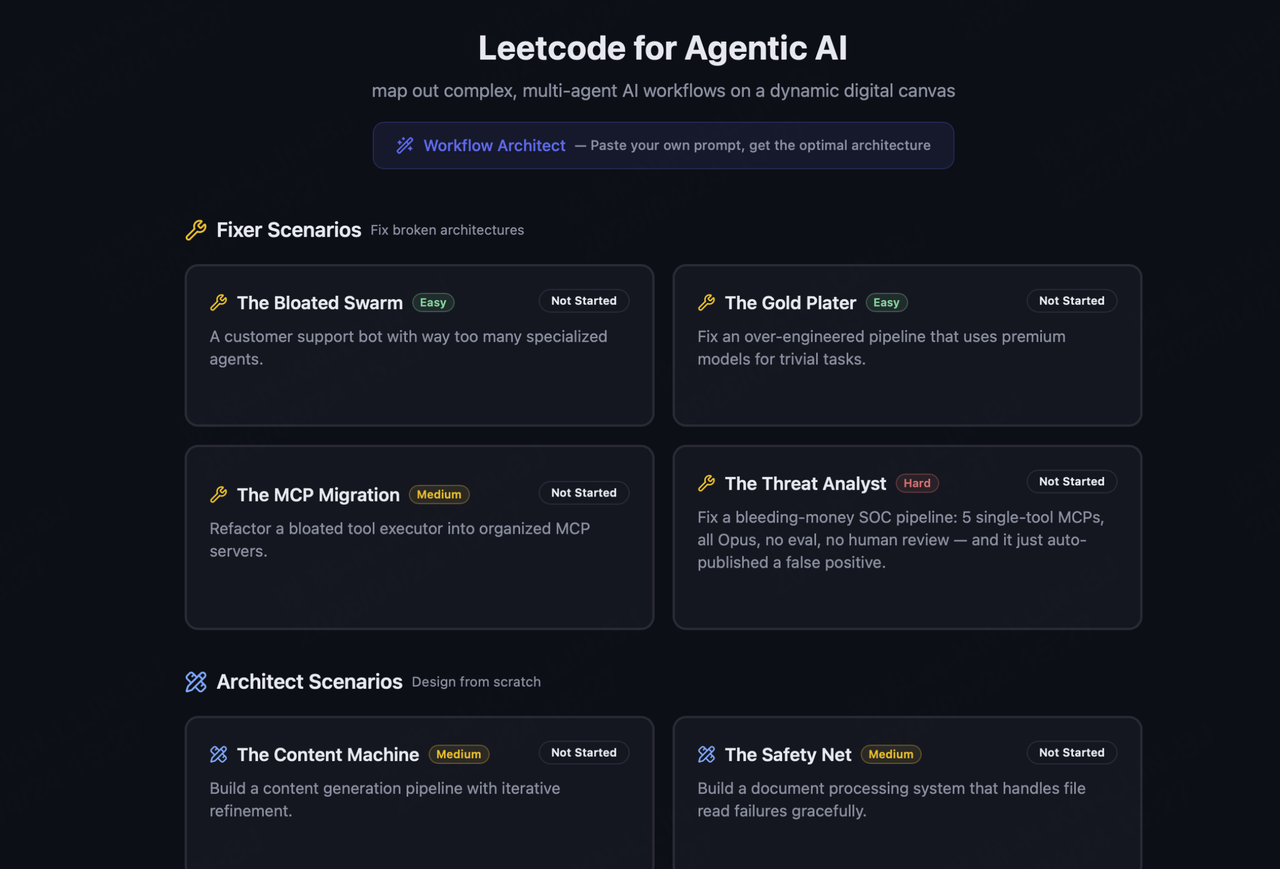
You open a browser. You drag and drop AI components onto a digital canvas — 14 distinct, configurable node types representing the real building blocks of multi-agent systems. You wire them together. You define how information flows, where decisions are made, where the data goes next. You build the architecture the way you would draw it on a whiteboard — except this whiteboard talks back.
The moment you make a bad design choice, the node glows red. The moment you create an inefficient route, the cost updates. The moment your architecture overloads a context window, the interface reacts visibly.
This is not a static diagram tool. It is an active coach: one that calculates the exact business impact of every architectural decision you make, in real time, before you have committed anything to production.
reAgent replaces "deploy and pray" with something the industry has been missing: visual risk management.
The Engine Room: How reAgent Actually Works
You cannot manage what you cannot measure. So the reAgent team built a Dual-Pass Evaluation System: a two-checkpoint process ensuring every architectural decision is grounded in both mathematical reality and logical intent.
Pass 1 — The Deterministic Engine: Math and Money
The moment you hit Evaluate, classical graph algorithms run across your architecture.
Loop Prevention uses Depth-First Search — a method of tracing every possible path through a system — to detect infinite loops. If an AI model is caught in a cycle with no exit condition, the system flags it immediately, with the cost impact calculated and displayed. This is exactly the kind of failure that produced that $47,000 cloud bill. reAgent catches it before it starts.
Speed Calculation uses Kahn's Algorithm to map the longest path your data must travel through the system, computing exact p95 latency. Parallel designs — where tasks run simultaneously rather than waiting on each other — are rewarded. Bottlenecks are penalised. The math is objective.
Pass 2 — The LLM-as-Judge: Logic and Intent
Once the numbers check out, the architecture is evaluated by an AI model acting as a senior reviewer. It asks the questions a seasoned engineer would ask:
Is the data flowing efficiently? Are you using an expensive AI model for something a simple rule could handle? Does this architecture actually solve the problem you described?

Both passes must clear. You cannot produce a nonsensical graph and pass the math check. You cannot build something that costs $50 to run and pass the logic check. The system holds both standards simultaneously — and that rigour is the point.
Three Features Worth Understanding
The Context Thermometer
Every AI model has a context window: the amount of information it can hold and process at one time. It is finite. It is expensive. And teams routinely overload it without realising, feeding in everything available and letting the model sort through it at cost.
The Context Thermometer is a live visual element that physically shakes and emits a warning when an architecture is approaching that limit. The system traverses the full graph, tracks every chain of actions, counts every downstream tool feeding into the model. When load becomes dangerous, the interface responds — visibly, immediately.
Not a notification. A physical reaction. The kind of design detail that tells you the people who built this have felt the pain of runaway context costs firsthand.
Live ROI Display
Every decision you make on the canvas reflects instantly in a live display showing exact latency and calculated dollar cost. A bad routing choice = the node glows red. A more efficient path = the number drops.
This is a learning tool as much as a cost tool. It builds the intuition for what a well-managed AI architecture feels like, before you have spent anything building it.
Sandbox Mode
Type a plain-English business objective : "Monitor SEC filings and flag risk" — and the platform auto-generates a fully optimised, routed, and gated multi-agent architecture on the canvas in seconds.
What would normally take weeks of engineering trial-and-error becomes a five-second starting point.
36 Hours. One Live Product.
Everything above: the dual-pass evaluation, the context thermometer, the live ROI display, the sandbox mode — was built in 36 hours.
Enter.pro gave the team the infrastructure to move at hackathon speed without giving up production quality. Not a prototype. A deployed, interactive product that anyone can open in a browser right now. The kind of thing that used to take weeks to scaffold was built over a single Princeton weekend.
That is what Enter is built for. To remove every barrier between a sharp idea and a live product, so the people doing the real thinking can spend their time on exactly that : the thinking.
The Bigger Mission
The reAgent team did not describe what they built as a product. They described it as a movement.
LeetCode is a platform that trained a generation of software engineers through thousands of algorithmic challenges. It became the global standard for engineering preparation: a shared language, a shared baseline, a shared way of knowing whether you are ready.
Nobody built the equivalent for the age of agentic AI. No curriculum for how to route models, gate context, detect loops, calculate real-time cost, and architect systems that do not consume each other in invisible, expensive spirals.
"LeetCode taught a generation how to reverse a linked list. We are teaching the next generation how to orchestrate AI."
For students and new engineers: a proving ground that teaches the most valuable engineering skills of the next decade, before anyone touches a production system.
For business leaders: the first interface where an executive and an engineer can sit at the same screen, speak the same language, and understand exactly where the AI budget is going.
For the society: lean AI architectures are not just cheaper. Efficient orchestration means fewer unnecessary API calls, less server compute, and a more responsible way to scale.
What Is Next
Export to production-ready boilerplate — bridging the visual canvas to deployable code — is in progress. Sandbox Mode will expand to cover more enterprise scenarios. The interpretability research is ongoing.
The IDE that will help the next generation deploy AI responsibly is only beginning.
One Weekend Is Enough to Change the Direction
The AI race is not going to slow down. The pressure on companies to deploy is not going to ease. The cloud bills and the failed projects will keep arriving — as long as the tools to understand what is being built do not exist.
reAgent is one of those tools. Built in 36 hours by a team of students who did not wait for someone else to solve the problem.
That is what we keep coming back to, every time we think about HackPrinceton.
The blank screen never wins here.
Here is your chance to experience this project: Leetcode for Agentic Workflows
Missed the earlier volumes? → Vol. 1 — Heritage in Pixels → Vol. 2 — Terra Zone AI