What Is Cloud-Native Application Development? Complete Guide
Explore cloud-native application development with this comprehensive 2026 guide covering core principles, the 12-factor methodology, best practices, emerging trends, and AI-powered tools to build scalable, resilient, and modern cloud applications.
Cloud-native application development has transformed how organizations build, deploy, and scale software in today's digital landscape. Instead of relying on traditional monolithic systems, businesses now develop applications using containers, microservices, Kubernetes, DevOps, and continuous delivery practices to improve agility and resilience. This guide explains everything from architecture and benefits to best practices, emerging trends, and AI-powered development platforms shaping 2026.
What is cloud native application development?
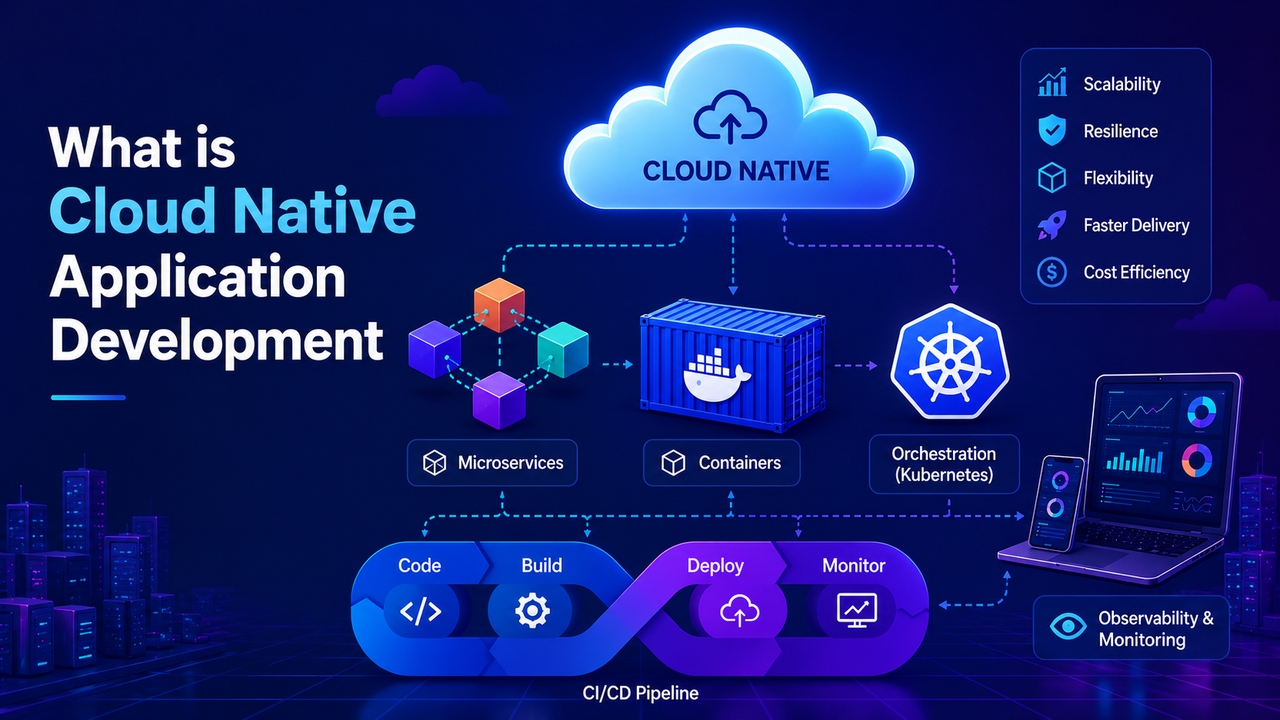
Cloud-native application development is an approach to building, deploying, and managing software specifically designed to run in cloud environments. Rather than relying on large, monolithic applications, it uses microservices, containers, APIs, and orchestration platforms like Kubernetes to create scalable, resilient, and portable applications.
This approach enables development teams to release updates more frequently, automate deployments through CI/CD pipelines, and quickly respond to changing business needs. Cloud-native applications are built with flexibility, fault tolerance, and automation in mind, allowing organizations to improve performance, reduce operational overhead, and deliver reliable user experiences across public, private, or hybrid cloud environments.
Core cloud-native application development principles
Cloud-native application development is guided by a set of foundational principles that enable applications to thrive in dynamic cloud environments. These principles emphasize modularity, automation, scalability, and resilience, distinguishing cloud-native approaches from traditional monolithic development.
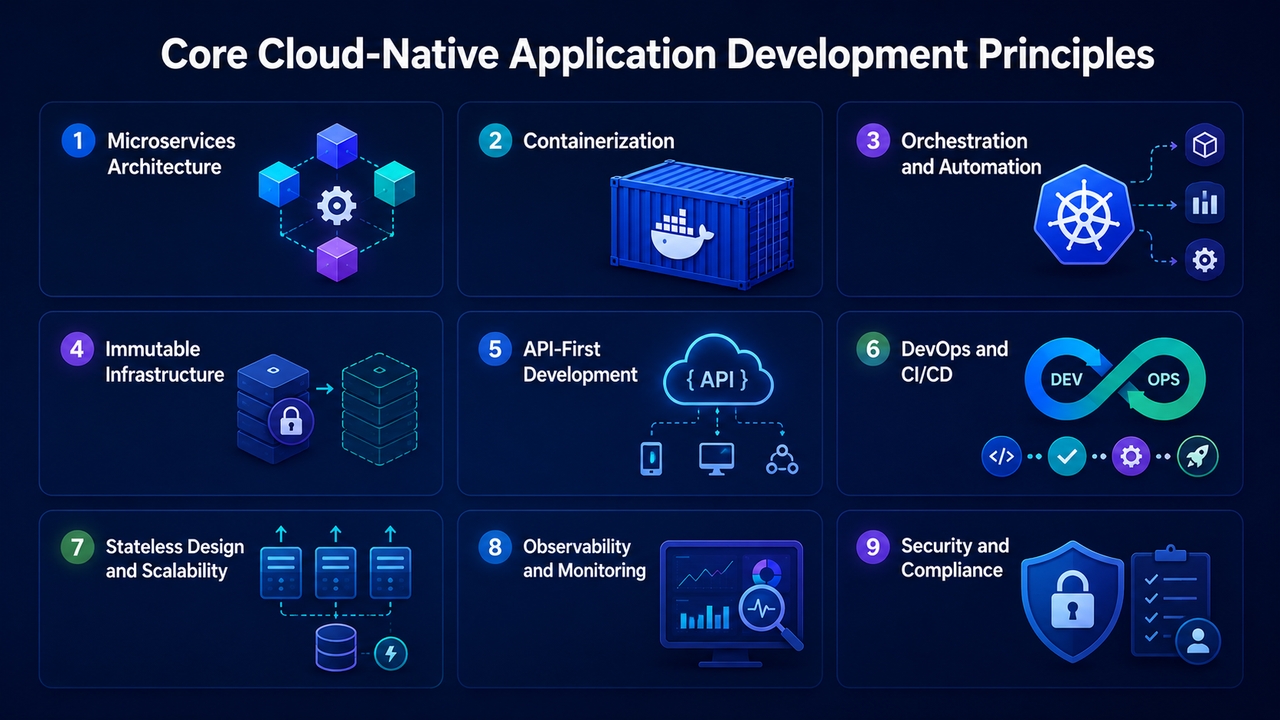
Microservices architecture
Break large applications into small, independent services that each handle a specific business function. These services communicate via well-defined APIs, allowing teams to develop, deploy, and scale them independently without affecting the entire system.
Containerization
Package applications and their dependencies into lightweight, portable containers (e.g., using Docker). Containers ensure consistency across development, testing, and production environments, enabling "build once, run anywhere" capabilities.
Orchestration and automation
Use orchestration tools like Kubernetes to automate deployment, scaling, load balancing, and self-healing of containerized workloads. Combined with CI/CD pipelines, this principle supports frequent, reliable releases with minimal downtime.
Immutable infrastructure
Treat infrastructure as replaceable instead of modifying live servers. Using Infrastructure as Code (IaC), organizations deploy new instances for updates, ensuring predictable environments, simplified rollbacks, consistent configurations, and more reliable cloud operations.
API-first development
Design applications around well-defined APIs before implementation begins. This approach simplifies communication between services, improves interoperability, supports third-party integrations, encourages code reuse, and enables independent development across distributed cloud-native applications.
DevOps and continuous integration/delivery (CI/CD)
Promote collaboration between development and operations teams while automating code integration, testing, and deployment. Continuous Integration and Continuous Delivery accelerate software releases, improve quality, reduce manual errors, and enable faster feedback throughout development.
Stateless design and scalability
Build applications so they store minimal session data internally, keeping state in external databases or caches. Stateless services scale horizontally with ease, allowing additional instances to handle increased traffic without affecting performance.
Observability and monitoring
Implement comprehensive logging, metrics, and distributed tracing to gain complete visibility into application health. Continuous monitoring helps detect performance issues, troubleshoot failures quickly, optimize resources, and maintain reliable cloud-native application performance.
Security and compliance
Integrate security throughout the software development lifecycle using DevSecOps practices. Automate vulnerability scanning, enforce identity and access controls, manage secrets securely, and adopt zero-trust principles to protect cloud-native applications and infrastructure.
The 12 factors of cloud-native application development
The 12-factor methodology provides proven best practices for building cloud-native applications that are portable, scalable, maintainable, and resilient across modern cloud environments.
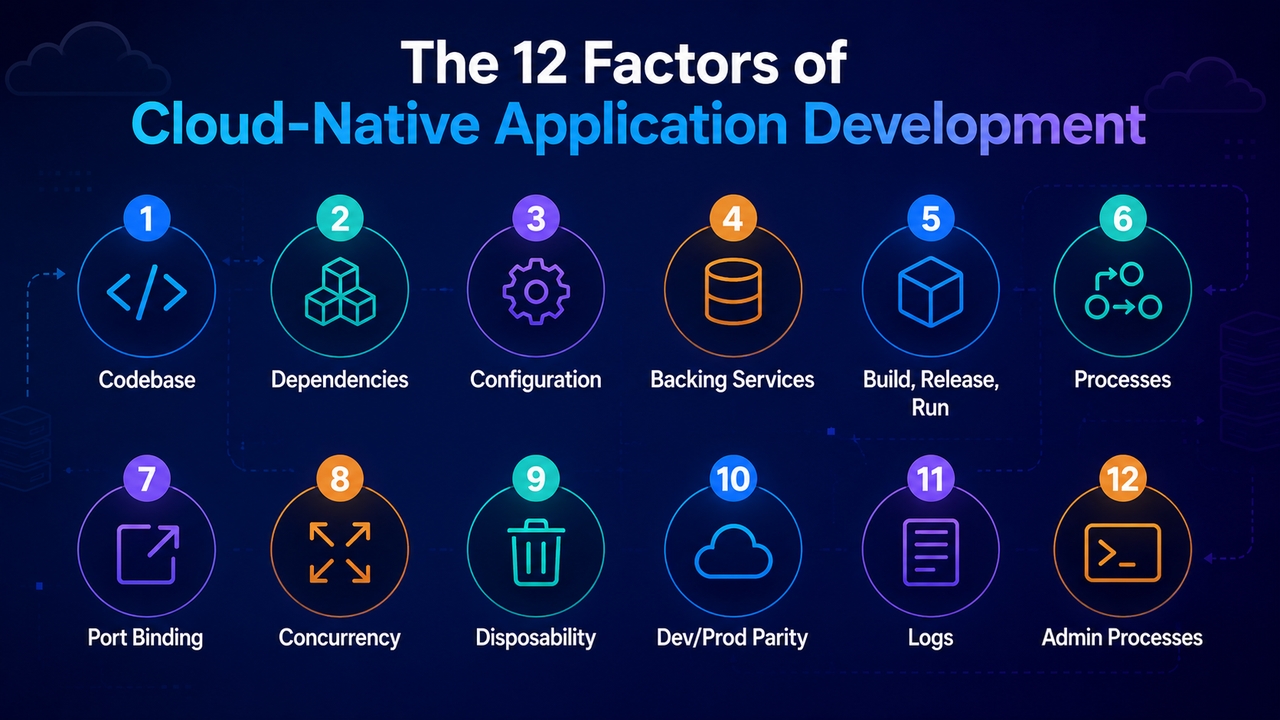
- Codebase: Maintain a single codebase in version control while supporting multiple deployments. This ensures consistency, simplifies collaboration, and streamlines application lifecycle management.
- Dependencies: Explicitly declare and isolate all application dependencies instead of relying on system packages. This creates predictable environments and prevents compatibility issues across deployments.
- Configuration: Store configuration separately from application code using environment variables or external configuration services. This improves flexibility, security, and deployment consistency across environments.
- Backing services: Treat databases, caches, messaging systems, and external services as attached resources that can be replaced without modifying the application's code.
- Build, release, run: Separate the build, release, and run stages into independent processes. This enables reliable deployments, version control, and easier rollback when necessary.
- Processes: Run applications as stateless processes, storing session data in external services. This improves scalability, resilience, and efficient workload distribution across multiple instances.
- Port binding: Export services through self-contained port binding instead of relying on external web servers. This increases portability and simplifies application deployment.
- Concurrency: Scale applications horizontally by running multiple process instances rather than increasing server capacity. This enhances performance, availability, and efficient resource utilization.
- Disposability: Design applications for fast startup and graceful shutdown. This enables rapid deployments, automated recovery, and minimal disruption during updates or failures.
- Development/production parity: Keep development, testing, and production environments closely aligned. This minimizes deployment errors, accelerates releases, and improves software reliability.
- Logs: Treat logs as event streams and forward them to centralized logging platforms. This simplifies monitoring, troubleshooting, auditing, and performance analysis.
- Admin processes: Execute administrative tasks, such as database migrations or maintenance scripts, as one-off processes using the same codebase and environment as the application.
9 Cloud-native application development trends 2026
Cloud-native technologies continue to evolve as organizations prioritize automation, scalability, and faster software delivery. The following trends are shaping how businesses build, deploy, and manage modern applications in 2026.
AI-assisted software development
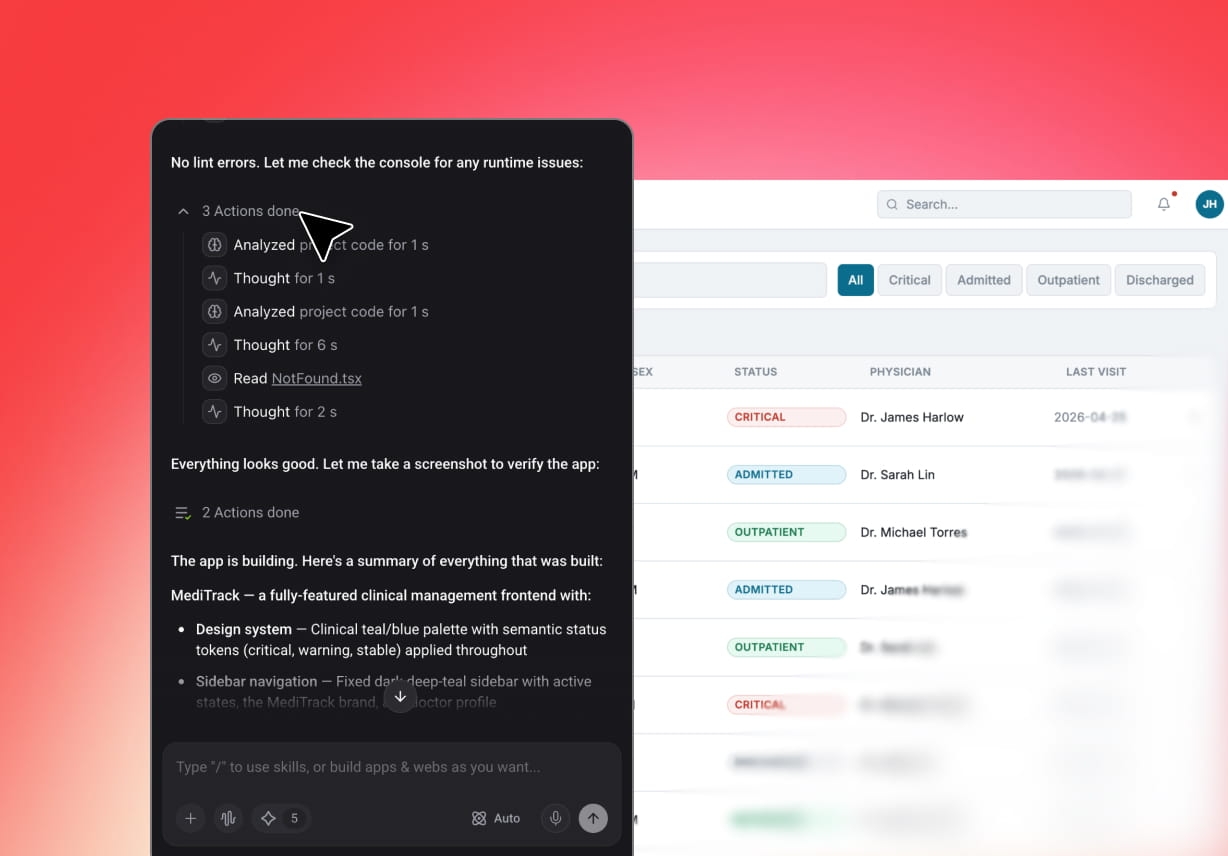
AI-powered coding assistants streamline code generation, testing, debugging, and documentation. Development teams can automate repetitive tasks, improve code quality, and accelerate application delivery while maintaining developer productivity.
Platform engineering
Organizations are building internal developer platforms (IDPs) that provide standardized tools, templates, and workflows. This simplifies cloud-native development, reduces operational complexity, and enables developers to focus on building applications.
Serverless containers
Serverless container platforms combine the flexibility of containers with automatic infrastructure management. Developers can deploy applications without managing servers while benefiting from automatic scaling and pay-as-you-go resource usage.
Multi-cloud and hybrid cloud adoption
Businesses are increasingly deploying applications across multiple cloud providers and on-premises infrastructure. This approach improves resilience, avoids vendor lock-in, and enables organizations to meet compliance and performance requirements.
FinOps for cloud cost optimization
As cloud spending grows, organizations are adopting FinOps practices to monitor, optimize, and control infrastructure costs. Automated resource management and cost visibility help maximize cloud investment while reducing unnecessary expenses.
AI-powered observability
Modern observability platforms use artificial intelligence to analyze logs, metrics, and traces in real time. These tools detect anomalies, predict potential failures, and accelerate root cause analysis for improved application reliability.
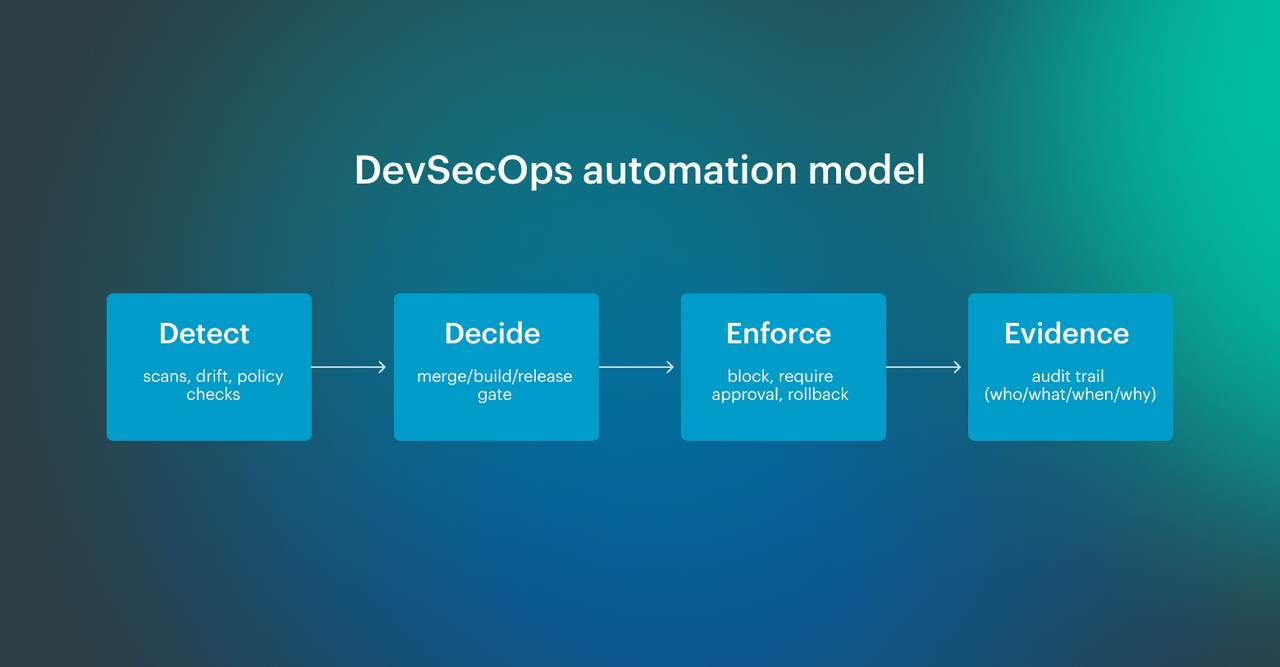
DevSecOps automation
Security is becoming an integral part of cloud-native development pipelines. Automated vulnerability scanning, policy enforcement, compliance checks, and runtime protection help organizations build secure applications without slowing software delivery.
Edge-native applications
Applications are increasingly deployed closer to users through edge computing platforms. This reduces latency, improves performance for real-time workloads, and supports use cases such as IoT, gaming, and AI-powered services.
GitOps adoption
GitOps is gaining widespread adoption as teams manage infrastructure and application deployments through Git repositories. This approach improves version control, automation, consistency, and collaboration across cloud-native environments.
How Enter Pro accelerates cloud-native application development
Adhering to strict cloud-native principles manually often creates intense operational bottlenecks for independent developers, startups, and small engineering teams. This is where modern AI-driven creation environments redefine the workflow.
With AI coding, Enter Pro lets you chat to build apps, websites, and AI agents. It streamlines cloud-native development through Enter Code, a terminal-based AI agent that understands your codebase and handles editing, testing, and iteration, and Enter CLI, which gives AI agents end-to-end control over cloud projects, deployments, and publishing. Whether you are building microservices or full applications, these tools complement Kubernetes, CI/CD, and GitOps by accelerating the entire lifecycle from local prototyping to global edge deployment.
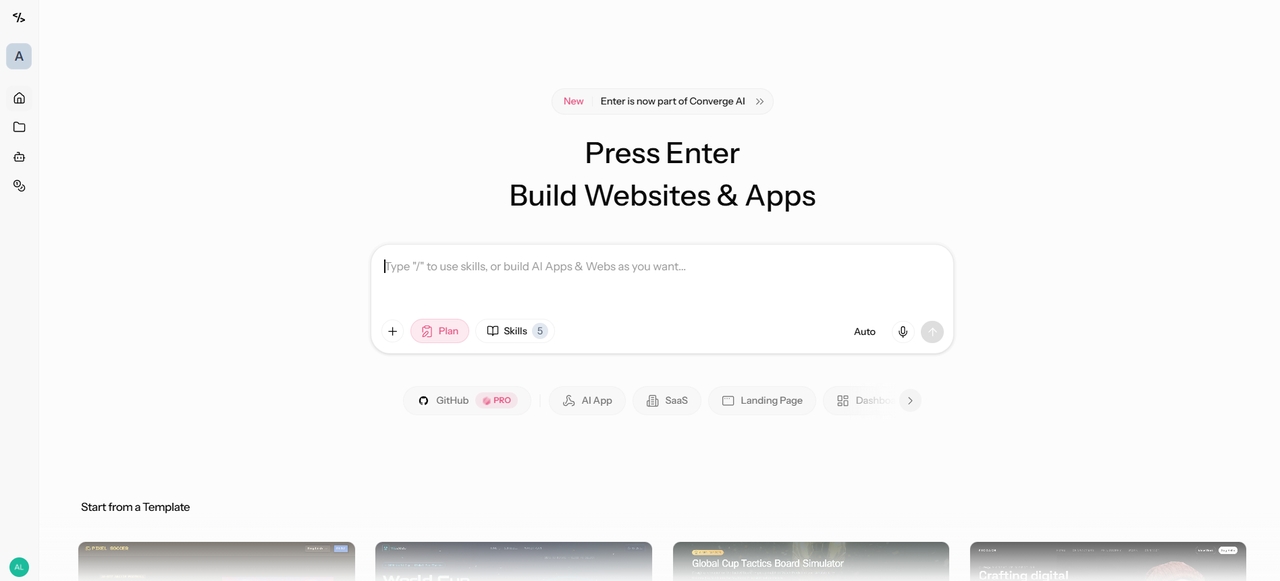
How Enter Pro fits into a cloud-native workflow
- Rapid microservices and backend prototyping: Describe a service in natural language (e.g., "Build a scalable order processing microservice with JWT auth, PostgreSQL integration, and REST + gRPC endpoints"). Enter Pro generates the code, sets up a stateless design, and connects backing services. You can then export and orchestrate it with Kubernetes.
- CI/CD and deployment automation: Use one-click global edge deployment for instant scaling and high availability. For production, export the full codebase and integrate into your existing GitOps, Kubernetes, or serverless pipelines.
- Observability and resilience from the start: Built-in integrations and generated code support logging, metrics, and stateless patterns that align with the 12-factor methodology.
Key features of Enter Pro
- Native AI at the core: Enter Pro integrates leading large language models (LLMs), including GPT, Claude, Gemini, and Grok, through a unified interface. Developers can leverage AI throughout the software development lifecycle to assist with planning, coding, debugging, refactoring, and application design.
- Integrated cloud backend: Enter Pro provides built-in cloud services, including databases, cloud storage, serverless functions, and scheduled jobs. These capabilities simplify backend development and support the creation of scalable cloud-native applications without extensive infrastructure setup.
- Seamless third-party integrations: Enter Pro integrates with popular development and cloud services such as GitHub, Supabase, Stripe, Google Analytics, and other tools. These integrations simplify connecting external services within modern cloud-native application workflows.
- Terminal and CLI access: Enter Code and Enter CLI extend the platform beyond the browser, giving developers a full local dev experience or a direct line for their own AI agent to build and deploy through Enter Pro.
- Visual editor with live preview: Developers can modify user interfaces visually while seeing changes instantly with visual editor. The platform automatically updates the underlying code, enabling faster UI development without sacrificing flexibility or customization.
- One-click hosting & global edge deployment: Deploy projects instantly to a global edge network with automatic scaling. Full code ownership and export capabilities let you move seamlessly to Kubernetes, serverless platforms, or any cloud provider.
Best practices for cloud-native application development
Following proven best practices helps organizations build cloud-native applications that are scalable, resilient, secure, and easy to maintain. These strategies improve software quality while enabling faster development and reliable deployments.
- Design for scalability: Build applications using loosely coupled microservices and stateless components that can scale independently. Horizontal scaling enables applications to handle growing workloads efficiently without compromising performance or availability.
- Automate development and deployment: Implement CI/CD pipelines, Infrastructure as Code (IaC), and automated testing to streamline software delivery. Automation minimizes manual errors, accelerates release cycles, and ensures consistent deployments across cloud environments.
- Prioritize security from the start: Integrate DevSecOps practices throughout the development lifecycle. Automate vulnerability scanning, enforce least-privilege access, encrypt sensitive data, and securely manage secrets to strengthen application security.
- Implement comprehensive observability: Use centralized logging, metrics, and distributed tracing to monitor application health and performance. Real-time insights enable faster troubleshooting, proactive issue detection, and continuous optimization of cloud-native services.
- Optimize for resilience: Design applications with redundancy, self-healing capabilities, load balancing, and automated recovery. These practices minimize downtime, improve fault tolerance, and ensure reliable user experiences during unexpected failures.
Conclusion
Cloud-native application development has become the foundation for building scalable, resilient, and high-performing software in today's cloud-first world. By adopting principles such as microservices, containerization, automation, and DevOps, organizations can accelerate innovation while improving operational efficiency. Following best practices and embracing emerging trends will help teams stay competitive in 2026 and beyond. Platforms like Enter Pro further simplify cloud-native development with AI-powered capabilities, enabling developers to build, modernize, and deploy applications faster while maintaining quality, security, and scalability.
FAQs
What are the main benefits of cloud-native application development?
Cloud-native development improves scalability, resilience, deployment speed, resource utilization, and application availability. It also supports continuous delivery, reduces operational overhead, and accelerates software innovation.
How is cloud-native different from traditional application development?
Traditional applications are often monolithic and difficult to scale. Cloud-native applications use modular architectures, containers, and automation to deliver better flexibility, scalability, resilience, and faster software releases.
What programming languages are commonly used for cloud-native development?
Popular cloud-native languages include Go, Java, Python, JavaScript, TypeScript, C#, and Rust. The best choice depends on your application's performance, scalability, and ecosystem requirements.
Is Kubernetes mandatory for cloud-native applications?
No, Kubernetes is highly popular for container orchestration, but it is not mandatory.() Organizations can use serverless functions, alternative container managers, or managed cloud platform services instead.
What are the main challenges of cloud-native adoption?
Major challenges include handling the complexity of distributed microservices, managing large volumes of system data, securing a wider attack surface, and transforming organizational culture to match rapid release cycles.