How Guardian used Enter to create an AI Health for Eldery
Guardian uses Apple Watch and iPhone to detect falls and trigger hands-free emergency alerts for seniors. Passive safety tech that works when it matters most.
"Falls are the leading cause of injury-related death among adults 65 and older. Most happen at home. Most go undetected for too long." — Centers for Disease Control and Prevention
Enter was at HackPrinceton Spring 2026 — 410 participants, 36 hours, on Princeton's campus. We are on a mission to give anyone with an idea the tools to build something real. The team behind Guardian came in with an idea that was not abstract.
The Problem Nobody Has Fully Solved
One in four adults aged 65 and older falls every year. Three million of them are treated in emergency departments for fall injuries. Eight hundred thousand are hospitalised.
The technology gap in that statistic is not about detection. Sensors that can identify a fall exist. The gap is what happens in the seconds after — when the person who has fallen cannot reach their phone, cannot unlock the screen, and cannot dial for help. The device that was supposed to connect them to the world is sitting two feet away and completely inaccessible.
That gap is where Guardian begins.
Where the Idea Came From
Both founders had watched their grandmothers fall. They described the scariest part as not the injury itself — it was the helplessness. The inability to act at the moment that mattered most.
They wanted to build something that used the devices people already wear and carry — and make those devices work when the person wearing them cannot.
What Guardian Does
Guardian is designed around a single principle: passive safety. The system should work without requiring the person in danger to do anything at all.
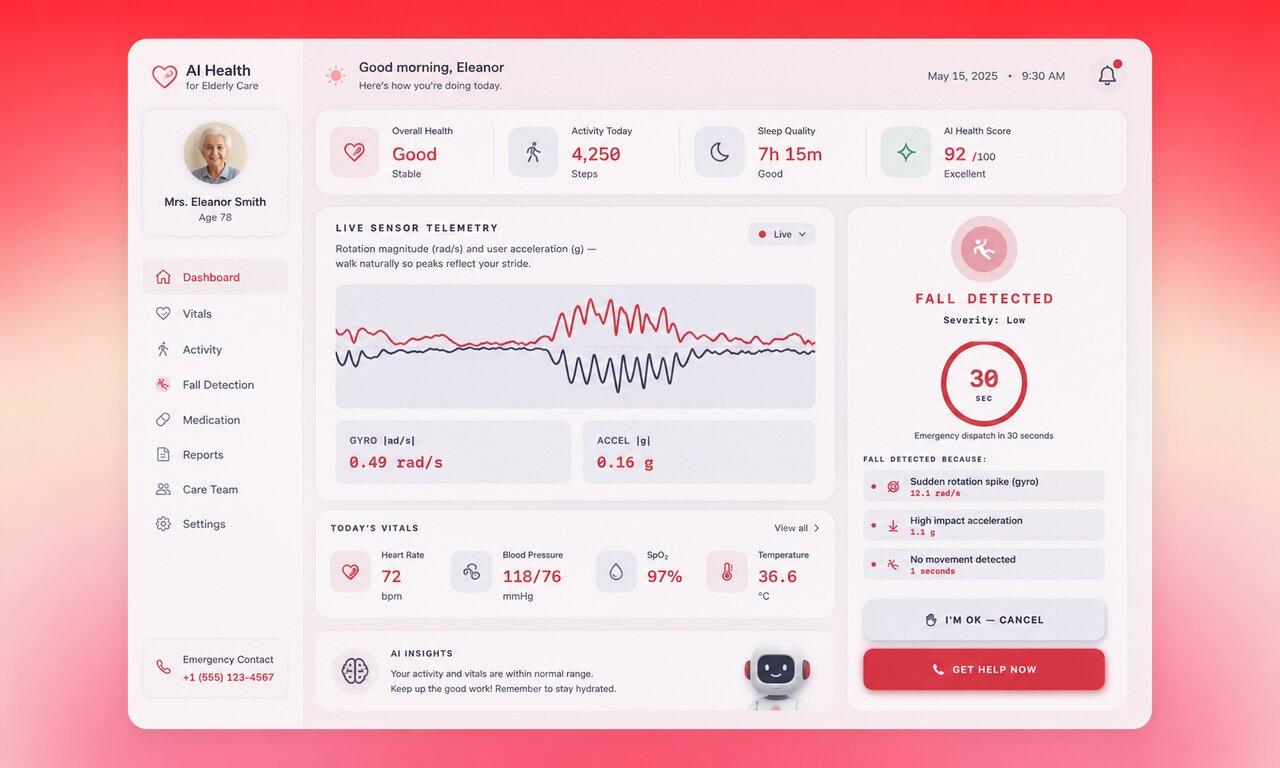
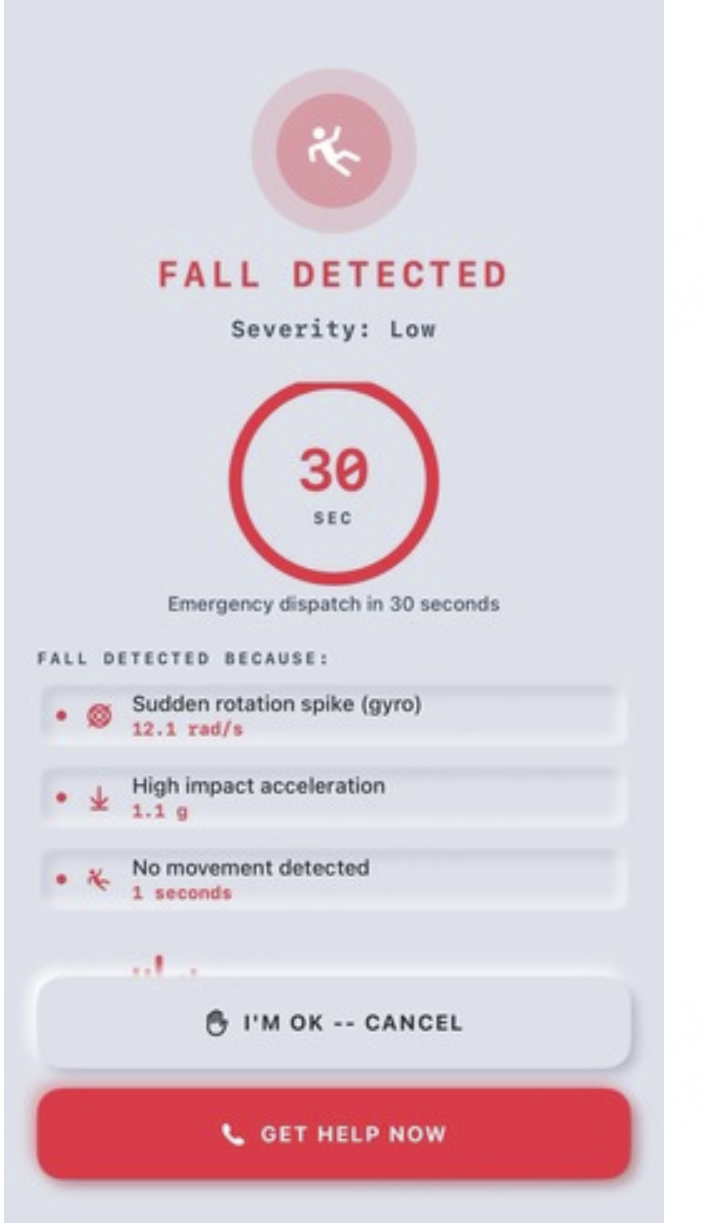
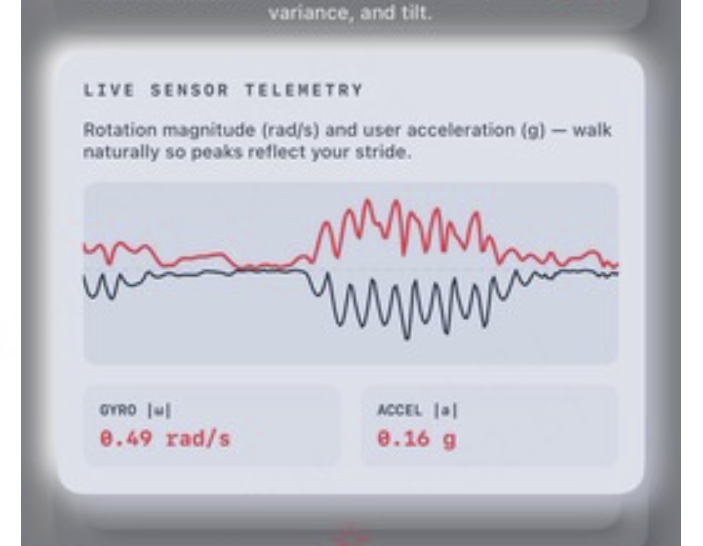
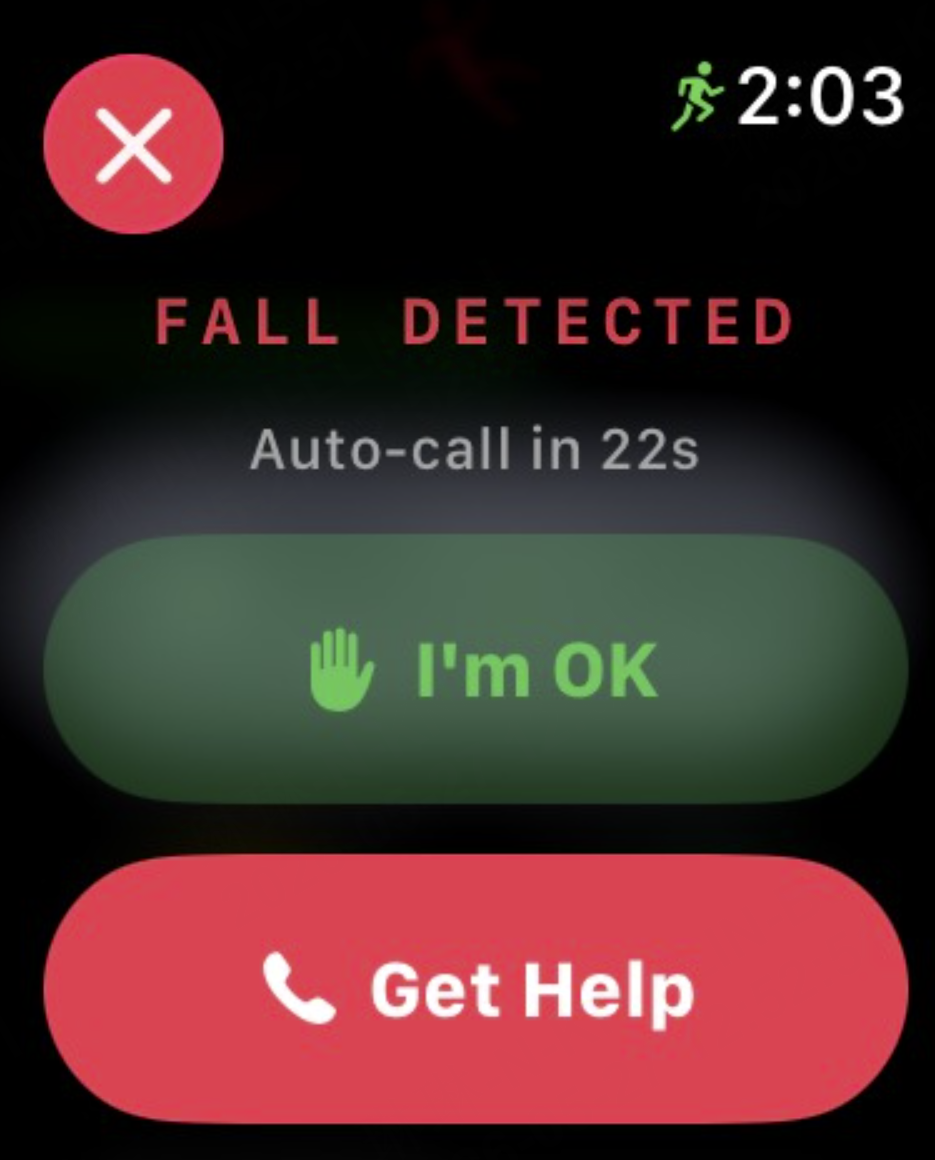
The iOS app and paired Apple Watch app run together, using high-frequency motion sensors to track impact and stillness. When a fall is detected, the Watch delivers a haptic alert immediately. Then, instead of sounding an alarm, the phone speaks. It asks if the person is okay. The response can be entirely verbal — "I'm fine" or "help me" — processed through speech recognition so the screen never needs to be touched.
If the user confirms they need help, or does not respond within the timer window, Guardian triggers an emergency flow. The Watch can call services directly via cellular. If there is no signal, it hands the request to the iPhone, which sends the user's location and a distress message. The failover is built in because the moments when a call matters most are often the moments when the connection is weakest.
The platform also includes a gait analysis tool — a feature that operates before any fall happens. It scores how someone walks, tracking patterns over time that indicate rising fall risk. The goal is to give families a signal before an accident, rather than only a response after one.
Guardian's Apple Watch interface showing fall detection alert and hands-free voice confirmation flow — designed so the person who has fallen never needs to touch a screen.
The Technical Pivot That Made It Work
The team's original approach to fall detection used a machine learning framework that refused to perform reliably under real conditions. Rather than force it, they rebuilt the detection layer around a custom sensor-reasoning pipeline — a decision that cost time but produced a system that could meaningfully distinguish a dropped phone from a genuine fall.
The handoff logic between Watch and Phone was the other major challenge. Making sure an emergency call goes through regardless of which device has signal, keeping both in constant communication, and ensuring that resolved events are stored for caregivers to review later — each of those required careful engineering in a stack neither founder had used before. This was their first time writing in Swift.
What They Are Proudest Of
The full passive loop working end to end. A fall is detected. A voice prompt is delivered. A verbal response is processed. An emergency flow is triggered — or not, depending on what was said. No screen interaction required at any point.
For elderly users with limited mobility, with shaking hands, with the disorientation that follows a serious fall, that passivity is the product. It is the thing that makes the difference between a system that exists and a system that actually helps.
What Comes Next
The next integration the team is focused on is heart rate monitoring — using the Apple Watch to detect a significant spike at the moment of high-impact detection, which would allow the system to bypass the confirmation timer entirely for the most serious falls.
A family dashboard for monitoring gait trends and safety status over time is also on the roadmap — giving caregivers access to the longitudinal data Guardian is already collecting, from anywhere.
The Bigger Picture
Guardian is a specific answer to a problem the healthcare system has not fully addressed: the window between when something goes wrong and when help arrives. Sensors and smartwatches are everywhere. The infrastructure to make them act in that window, automatically, without requiring anything from the person who needs help — that is still being built.
A team of two, at their first major hackathon, spent 36 hours closing part of that gap. The problem is real and the population it affects is growing. That combination tends to produce things worth continuing.
Team of this Hackathon: Pulkit Chaudhary || Aryan Acharya
Missed the earlier volumes? → Vol. 1 — Heritage in Pixels → Vol. 2 — Terra Zone AI → Vol. 3 — reAgent → Vol. 4 — TaleTailor → Vol. 5 — LEGR → Vol. 6 — PolyPath → Vol. 7 — EcoThread→ Vol. 8 — Aletheia → Vol. 9 — Synova → Vol. 10 — Overturn Insurance→Vol. 11 — VentureLink →Vol. 12— Atlas: Immersive 3D AI Learning →Vol. 13— ACTA AI