Hi Buddy — The Pet That Never Looks Away
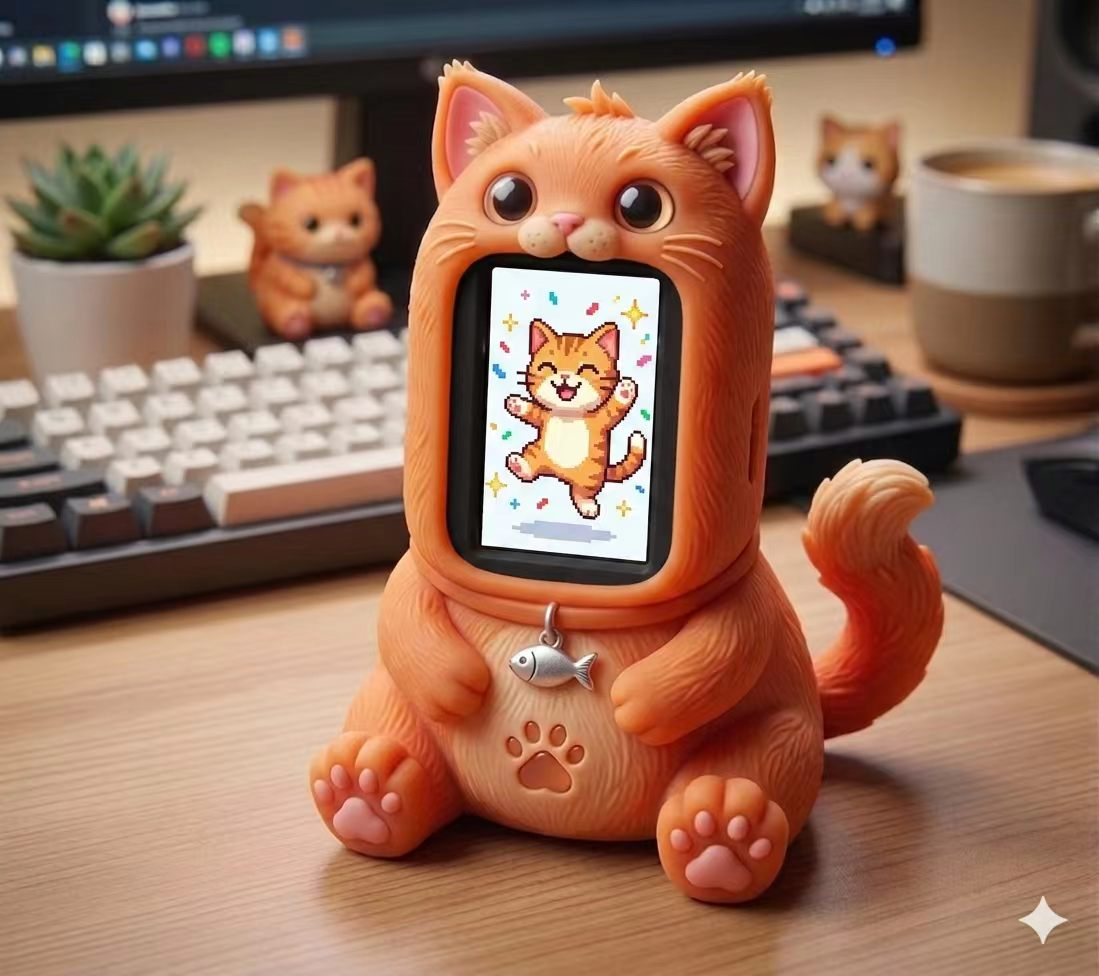
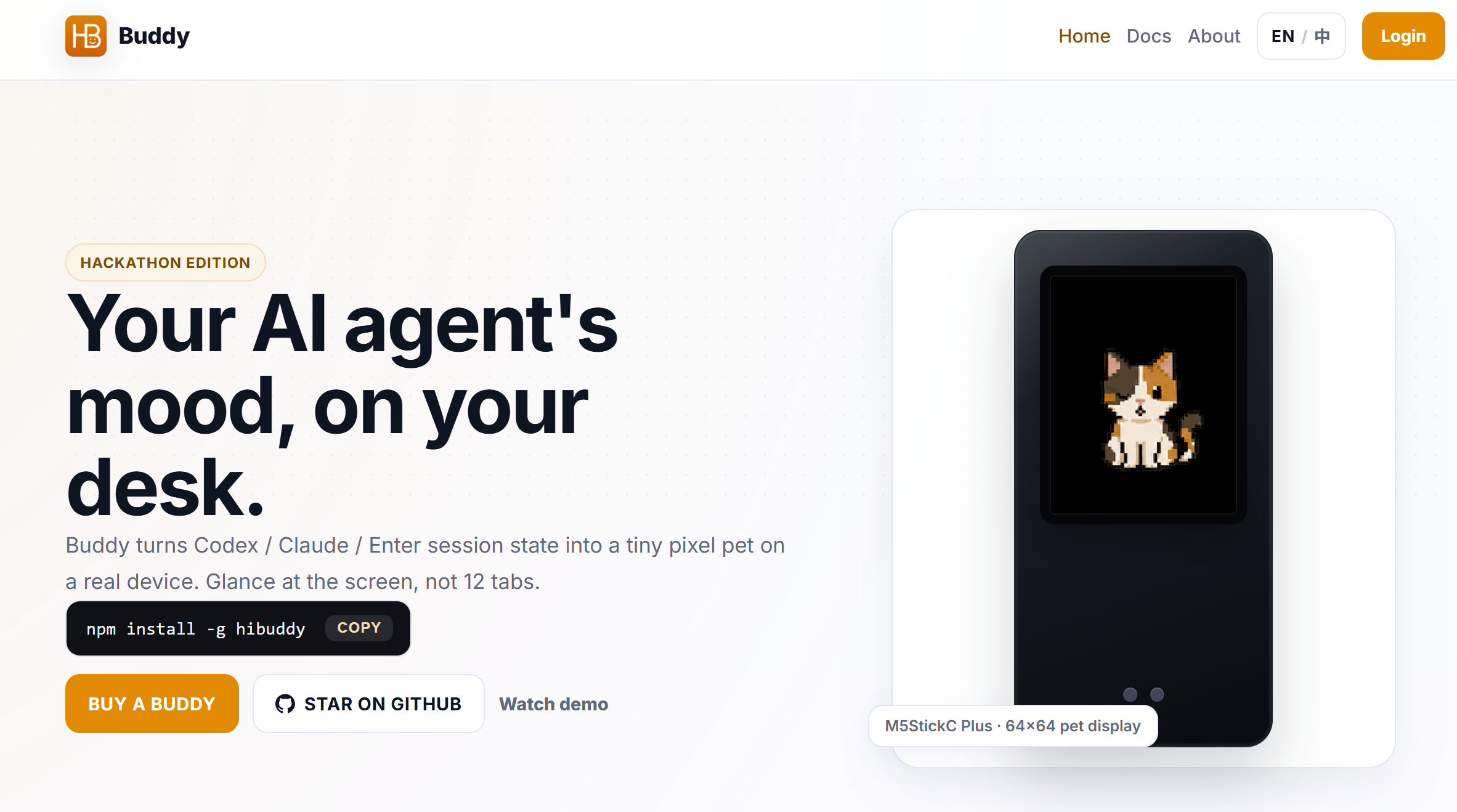
You delegate to the AI, step away, and come back to find — nothing. Was it done ten minutes ago? Did something break? Guoer, 11, from Shenzhen's Huaqiangbei, noticed this quiet friction before most adults thought to name it. Her answer: Hi Buddy, a pixel-screen desktop pet whose animated mood mirrors exactly what your AI agent is doing in real time. Six emotional states, one glance. Built in four days at a hackathon, powered by Enter, and awarded Best Popularity.
"Attention is the rarest and purest form of generosity." — Simone Weil
The Gap Nobody Fixed
There's a specific kind of uncertainty that comes with letting AI code for you. You describe the task, hit go, and then — you're free. You check your phone. You get a glass of water. The screen dims. And then you're back, staring at the terminal, genuinely unsure: is it done? Still thinking? Did something break ten minutes ago while you weren't looking?
The terminal doesn't tell you. The screen won't until you wake it. The gap between delegation and completion is invisible — and for anyone who's been building with AI agents, it becomes one of the quiet frictions you stop noticing precisely because you can't fix it.
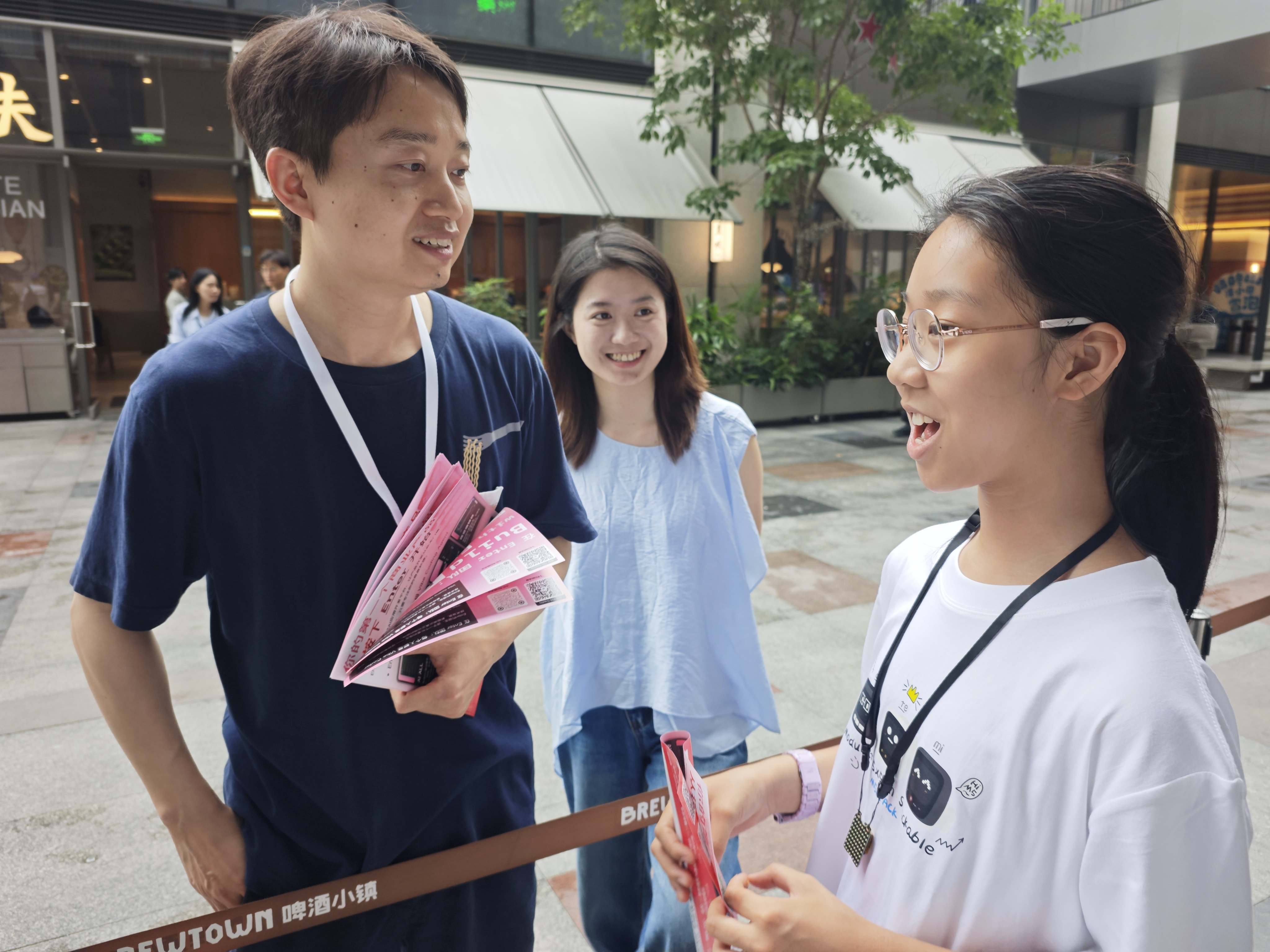
Guoer noticed it. She's 11 years old, from Shenzhen's Huaqiangbei. As she'll tell you with complete matter-of-factness, Huaqiangbei's whole identity is about making things and making money — and she's been doing both for years. There was the competition timer she built for one of the world's largest youth robotics events, which she sold for over a thousand dollars. The tool she made to track sailing race results. The AI-powered badge maker that turns a photo into a cartoon portrait you can print and pin to your jacket. She documents all of it on Xiaohongshu under the handle "搞钱少女果儿" — roughly, "money-hustling girl Guoer" — where she's racked up over a thousand followers and just as many likes, posting in the style of someone who treats building as just a normal thing to do with your spare time. Her bio says it plainly: "11 years old, grinding 💰."

So when she saw a real problem, she built something.
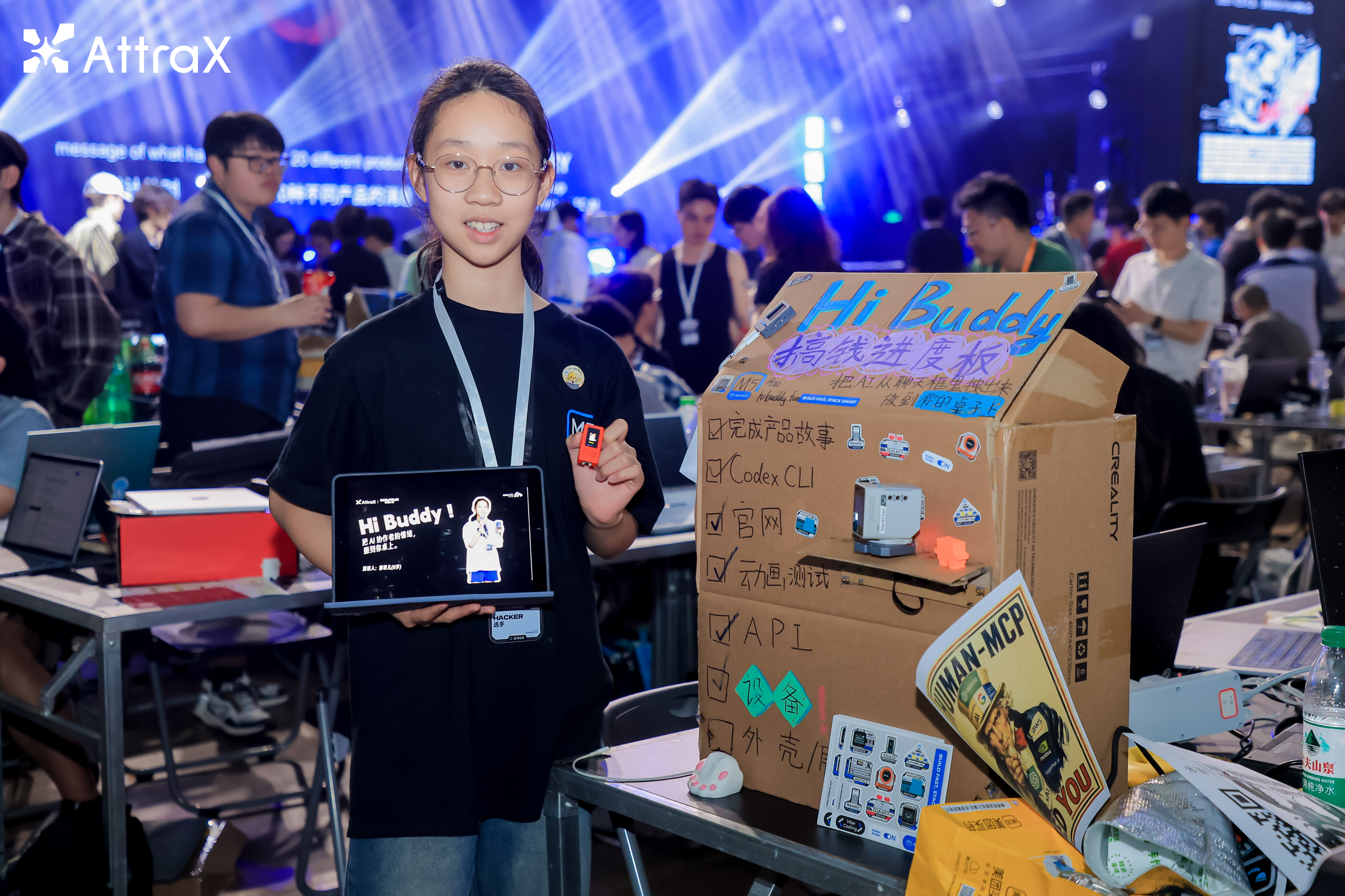
Six Moods, One Glance
HiBuddy is a small pixel screen that lives on your desk. It runs a tiny animated creature — a pet — whose mood mirrors exactly what your AI agent is doing at any given moment. When the agent is thinking, the pet paces in circles. When it's building, it hammers away. When it's waiting for you to confirm something, it stares at you. When it finishes, it dances. When it hits an error, it trips and looks up.
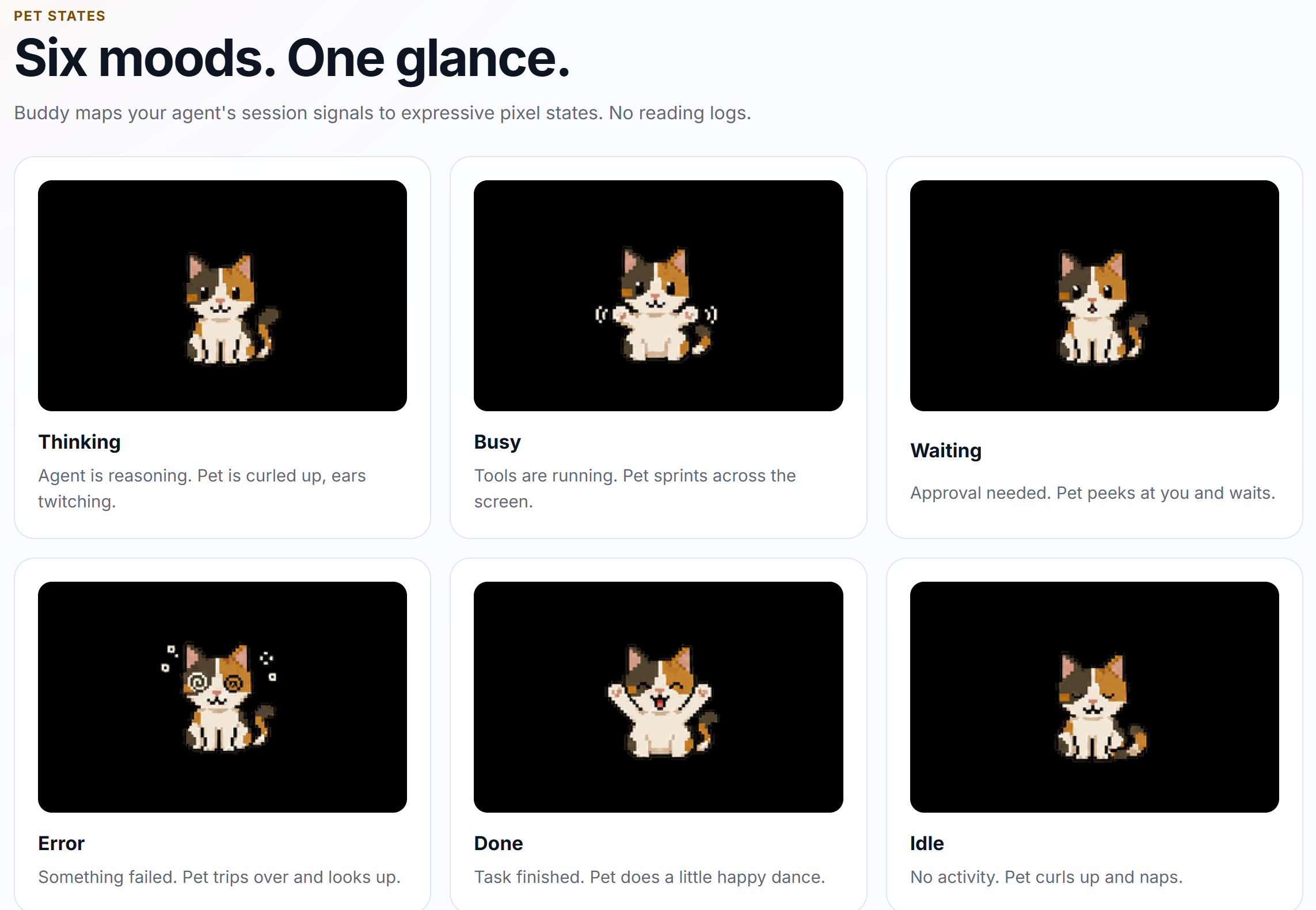
Six emotional states. One glance. No more guessing.
Guoer built it over four days at the AttraX Shenzhen Spring Hackathon in April 2026, working alongside adult engineers, designers, and hardware builders. Her dad wrote the firmware. He also, as Guoer puts it, "gives me a lot of chances to join different competitions — sometimes he even lets me skip school and skip homework." The firmware was one contribution. The permission to show up was another. She made the art — designing, drawing, and iterating on each of the six expressions that would need to read instantly on a tiny pixel screen, with no labels, no hover text, no room for ambiguity. The creature had to tell the whole story at a glance.
The idea came from watching herself work. "A lot of people are using AI to code," she explained. "You type for a bit, then let AI go do its thing — you check your phone, the screen goes dark. With HiBuddy, you just glance over and you know if AI is done, or still thinking, or still building."
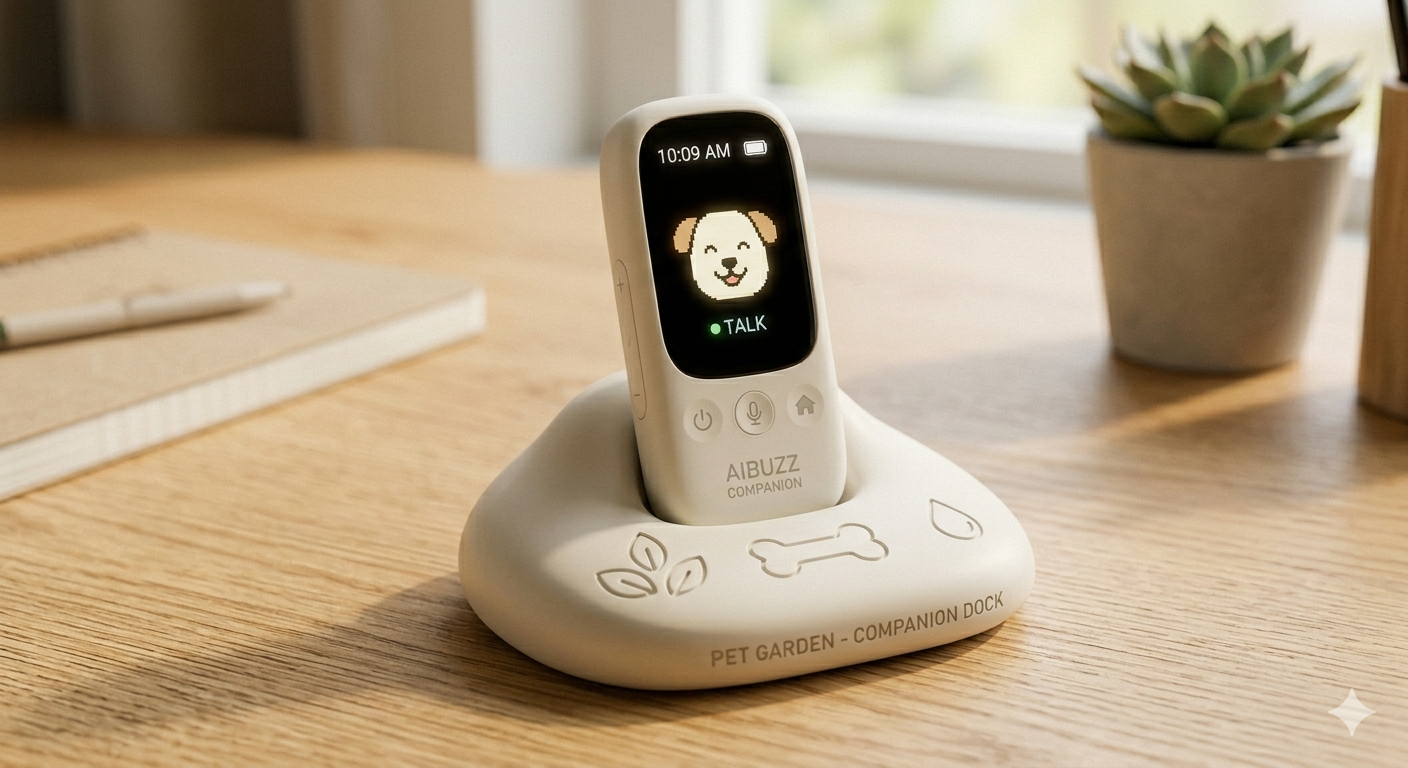
Making the Creature Feel Real
The hardest part wasn't the idea. It was making the pet feel alive.
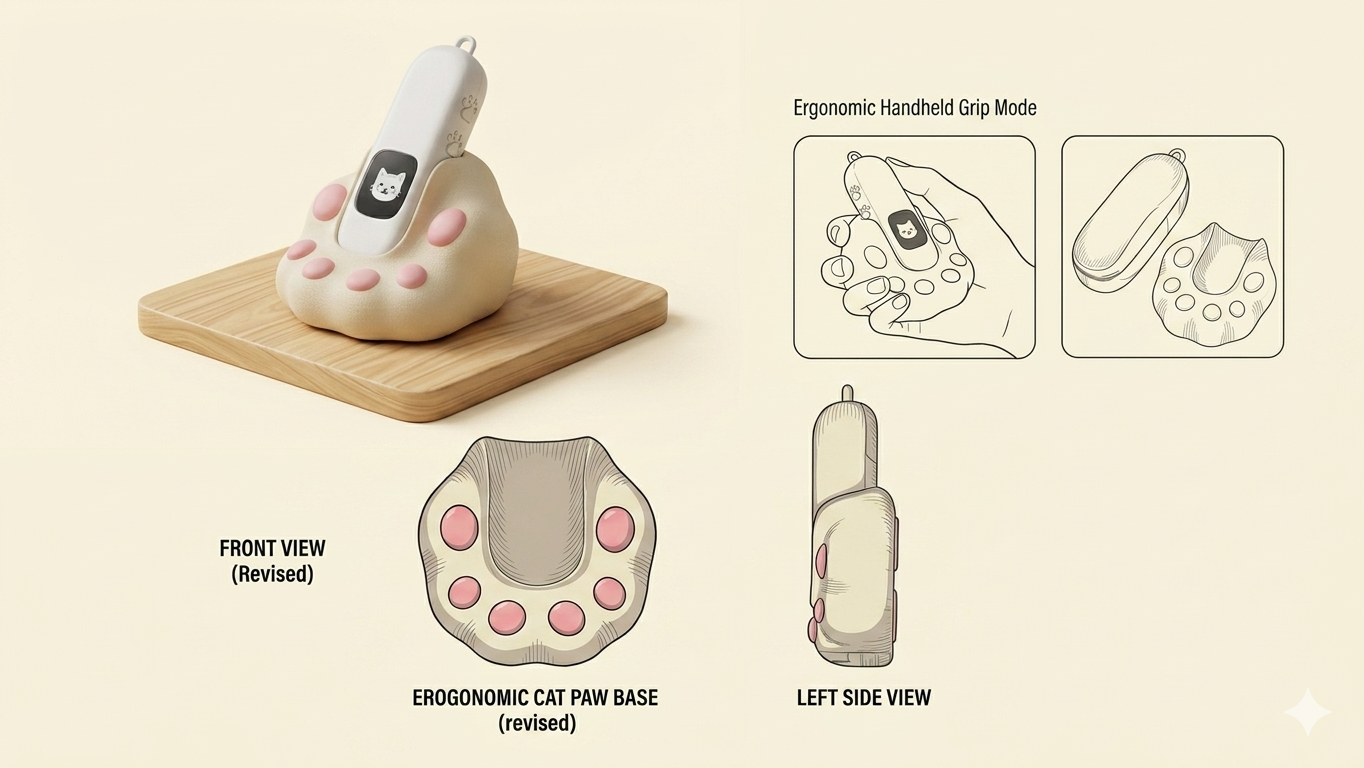
Pixel animation on a small screen is less forgiving than it looks. Every frame has to carry meaning. Early tests weren't landing — the expressions weren't reading cleanly, and there was a real fear that the animation just wouldn't work. Guoer drew a hand-rendered backup version, just in case. Then the team made a decision: expand the pixel grid. More resolution gave the creature more room to be expressive. It came to life.
With the hardware working, HiBuddy still needed a way to introduce itself to the world. During the hackathon crunch, Guoer turned to Enter to build the demo site — the page that would explain what the product was, show the six pet states in action, and walk new users through setup.
It came together quickly. The animations she'd spent days refining translated onto the page, including a shake effect when you clicked that she hadn't explicitly asked for but immediately liked. "It built it fast," she said, "and the click animation was already there." For someone who had previously written every line by hand, the pace felt different — describe what you want, see it appear, keep moving. Easy to pick up, connected to capable models, and fast enough to keep up with a four-day deadline.
The site went live. HiBuddy had a face. At the end of the hackathon, it walked away with the Best Popularity Award.

What Comes Next
What Guoer is proudest of is the creature itself — specifically, that it works. That six emotional states can live on a 128×128 pixel screen and be readable in the half-second it takes to glance up from your keyboard. That something hand-drawn by an 11-year-old became the emotional interface between a developer and their AI agent.
Her next project is already taking shape. In July, she's headed to a youth international school program connected to a sailing competition, where she plans to build something around the sport. Enter is already in the plan.
Her longer-term ambitions are, characteristically, direct: "I just want to stay home, not go to school, do more research, and make a lot of money."

Most productivity tools ask you to pay more attention. Hi Buddy asks you to pay less — and promises that nothing will slip by while you're gone.
The pet is already watching.