How AI Agents Are Saving Startups Thousands on Software Subscriptions
Discover how AI agents like LEGR help startups eliminate SaaS sprawl, cut AI spend waste, and automate vendor negotiations. Stop overpaying for software today.
"Beware of little expenses. A small leak will sink a great ship." — Benjamin Franklin

There is a version of startup financial management that most founders know intimately. It is not dramatic. It does not show up in a board deck. It shows up in a cloud bill that nobody questioned, a seat that someone who left four months ago is still technically using, a renewal that auto-renewed at eighteen percent more because no one had time to push back.
Startups are extraordinarily good at moving fast. They are remarkably bad at the small, boring, expensive work of actually managing what they are spending. Not because founders are reckless — because their attention is the scarcest resource they have, and nobody has figured out how to automate the negotiation.
Consumers got tools that find and cancel their forgotten subscriptions. Startups got nothing.
The team behind LEGR decided that was the wrong state of the world.
The Problem They Lived First
The inspiration did not come from research. It came from running a startup.
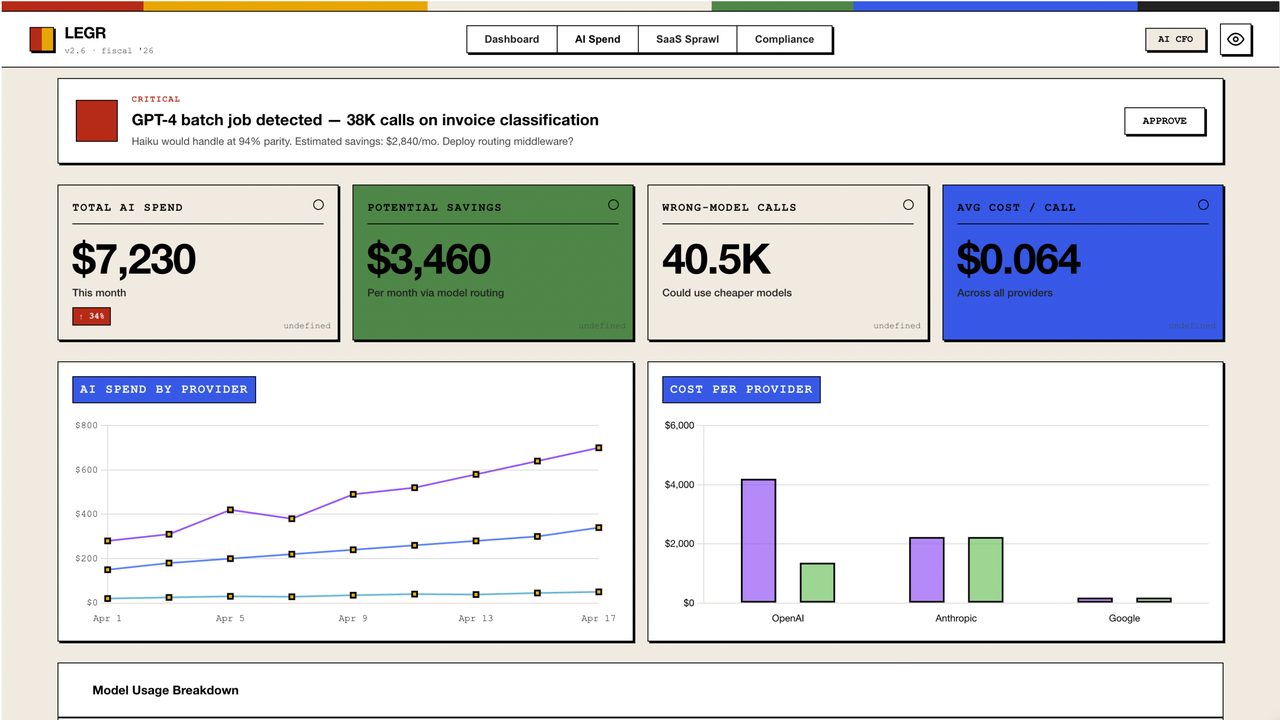
Wrong model calls running the most expensive option when a cheaper one would have done the same job. Ghost seats for people who had left months ago. Subscriptions nobody remembered signing up for. Renewals that bumped automatically because nobody had three days to go back and forth with a vendor.
The insight was not that startups neAAeded a better dashboard. Dashboards already exist. They get ignored, because seeing a problem and fixing a problem are two entirely different things. What the team wanted to build was not a tool that showed you the waste. It was something that did something about it — drafted the email, ran the negotiation, survived the weekend, and sent you one message when it was done.
The analogy they kept coming back to: a good CFO does not hand you a report and wait. A good CFO handles it, keeps you informed at the moments that matter, and closes the loop.
LEGR is the CFO nobody could afford to hire before this was possible to build.
What LEGR Actually Does
The product has three jobs.
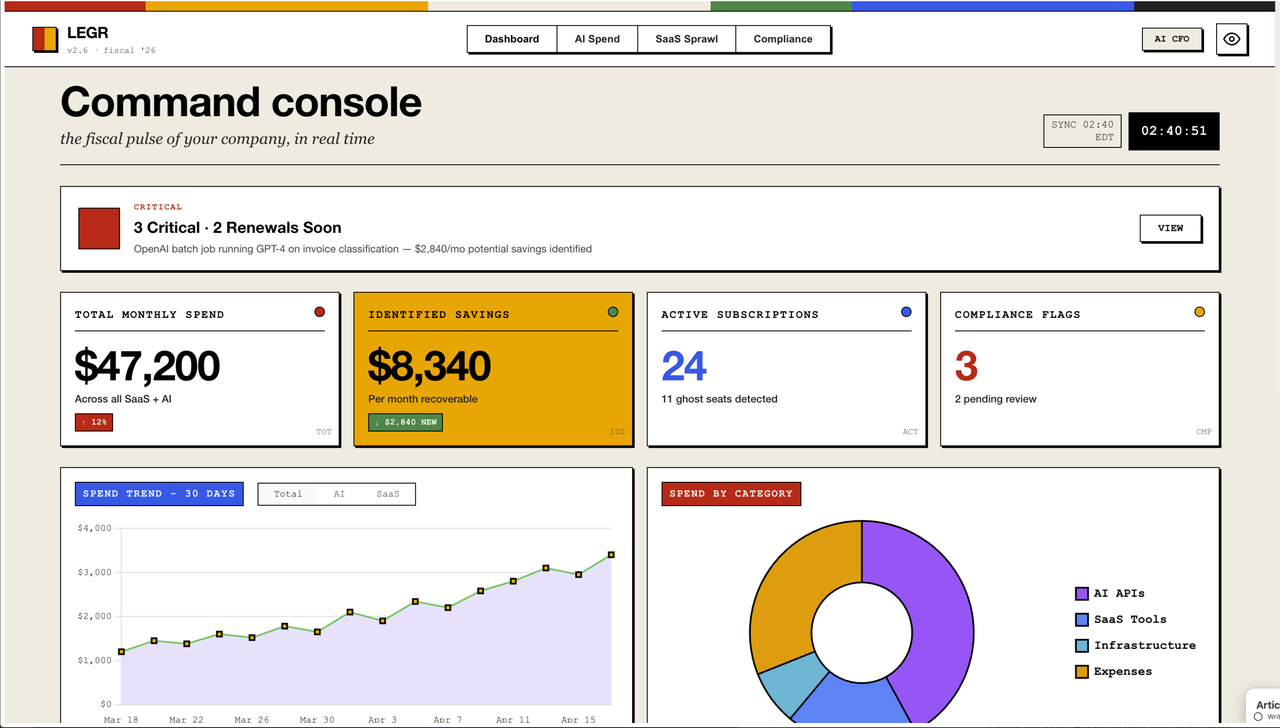
- The first is catching AI spend waste — the model routing decisions that accumulate invisibly. Expensive calls running where a cheaper model would have produced the same result. Idle credits. Forgotten batch jobs. Patterns that nobody noticed because they live in a log file, not a conversation.
- The second is killing SaaS sprawl. Every startup accumulates tools. Some of those tools accumulate seats and subscriptions that outlive the people or workflows they were meant to serve. LEGR finds them — by cross-referencing what the invoices say against what usage actually looks like — and then does what no dashboard has ever done: negotiates the renewal, autonomously, over however many days it takes.
- The third is expense compliance — scoring every transaction against policy, staying silent when everything is clean, escalating only when something needs a human.
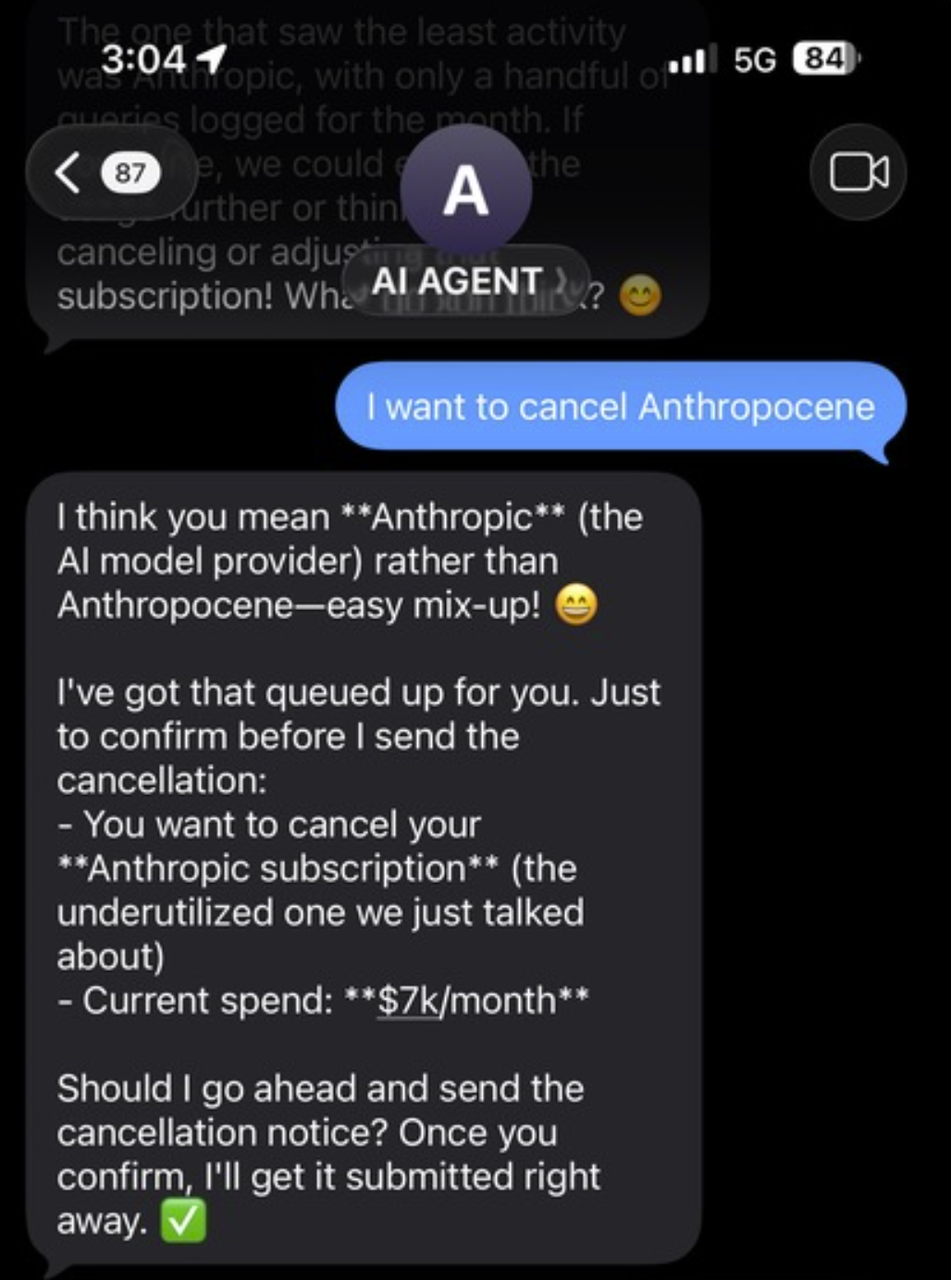
The experience for a founder looks like this: a message arrives. "Found a renewal coming up. Negotiate? Y/N." They type Y. Three days later, a follow-up: "Closed. $4,140 saved."
Three words in. Forty hours of back-and-forth handled. One message out.
The Thinking Behind It
The architectural question the team had to answer was this: some work takes seconds. Some work takes days. Those are not the same problem, and they should not be treated the same way.
Checking whether a transaction violates a policy is a fast, stateless task. You run it, you get an answer, it is done. But negotiating a software renewal is not stateless. It spans days. The vendor replies on their own schedule. Each response changes what the next message should say. The system has to survive being restarted in the middle of round three.
The team built a clear separation between these two types of work. Fast, bounded tasks run as short calls. Long-running negotiations live as persistent processes — each one with its own memory, its own thread history, its own understanding of what leverage has been used and what remains.
Each active negotiation carries a state file. Current round. Full thread history. What arguments have already been made. When a vendor replied "let me check with my manager," the system had to classify that correctly — not as acceptance, not as rejection, but as a stall — and respond with patience. That classifier, the team said, took more iterations than almost anything else in the build.
The hardest problem was not technical. It was restraint.
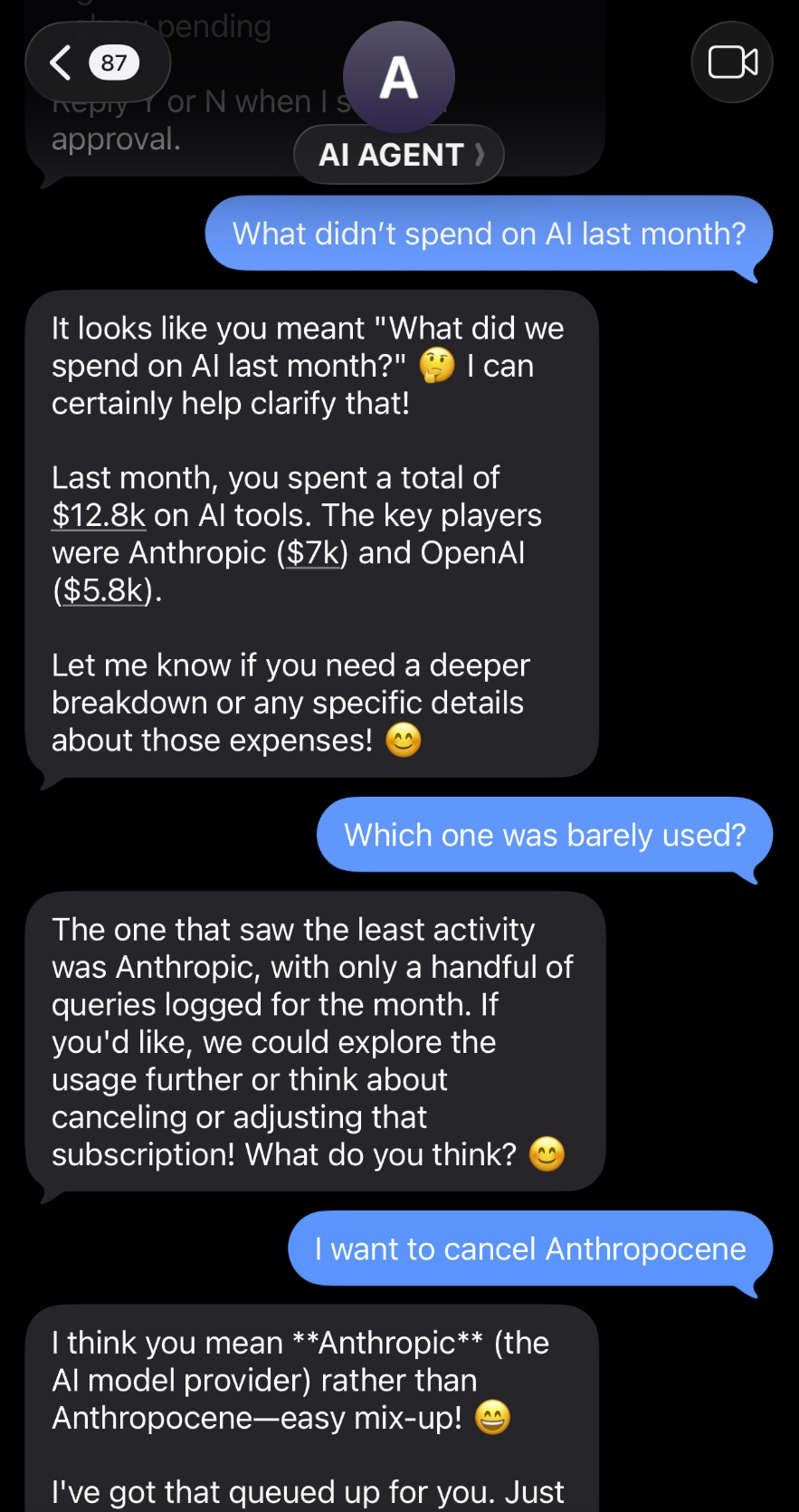
The first version of the interface sent a message on every event. Within an hour it had become noise — the thing you stop reading because it always has something to say. The fix was a three-tier messaging system: silent when things are running, informational when there is a development worth knowing, and a real ping only when a human decision is actually needed. Knowing when not to speak turned out to be the most important design choice in the product.
What They Are Proudest Of
The moment they demonstrated on stage: killing a running negotiation process mid-round, restarting it, watching it read its state file and pick up exactly where it left off. Persistent state is not a feature they described. It is one they proved in real time.
And the end-to-end loop — a founder typing three words, a system running for days, a single closing message. That is not a demo flow. That is the product working as designed.
105 participants. 38 projects. 36 hours. We have been following what came out of that weekend because the quality of thinking has kept earning the attention.
It is also worth saying: we know the SaaS sprawl problem from the inside. Enter was built specifically so builders would not need seven tools to ship one product — the design editor, the backend, the database, the deployment, the collaboration layer, all in one place. One subscription. One platform. The irony of covering a project that hunts down forgotten subscriptions is not lost on us.
LEGR earns its place in the series because the problem is real, the solution is specific, and the team understood something important: the hard part of building an autonomous agent is not the automation. It is knowing when to step back and let a human back in. Restraint as a design principle. That is rarer than it sounds.
What Comes Next
Near-term: a process that logs into vendor admin panels directly and executes cancellations, complete with screenshot receipts. Parallel negotiations that share a common intelligence layer — a win in one negotiation becoming leverage in the next. A persistent model of each founder's preferences, risk tolerance, and burn runway.
The longer bet: finance is the entry point. The same architecture — fast agents for bounded tasks, persistent processes for work that takes days — applies to legal operations, vendor management, HR compliance. The team described it as the first tool a startup connects and the last finance tool they need before they can afford to hire the real thing.
That kind of ambition is exactly what Princeton weekends are for.
Missed the earlier volumes? → Vol. 1 — Heritage in Pixels → Vol. 2 — Terra Zone AI → Vol. 3: reAgent → Vol. 4: TaleTailor