HumanMCP — When AI Knows to Ask for Help
Caesar didn't set out to slow AI down — he set out to make it smarter about when to stop. HumanMCP, built across a single hackathon weekend, does one precise thing: when an AI agent hits a decision that needs human judgment — a gut check, an aesthetic call, a trust signal — it routes that exact question to someone qualified to answer it. Not a workaround. A new kind of interface. This is the story of a meme, a gap, and a product built to close it.
The intuitive mind is a sacred gift and the rational mind is a faithful servant. We have created a society that honors the servant and has forgotten the gift." — Albert Einstein
There's a specific kind of frustration that comes from watching a highly capable system confidently get something wrong. Not wrong on facts — wrong on feel. The copy that reads like a press release. The landing page that makes sense to whoever built it but confuses everyone else first look. The design that is technically correct but somehow off. These aren't failures of computation. They're failures of something AI, for all its speed and reach, isn't wired to provide: human judgment.
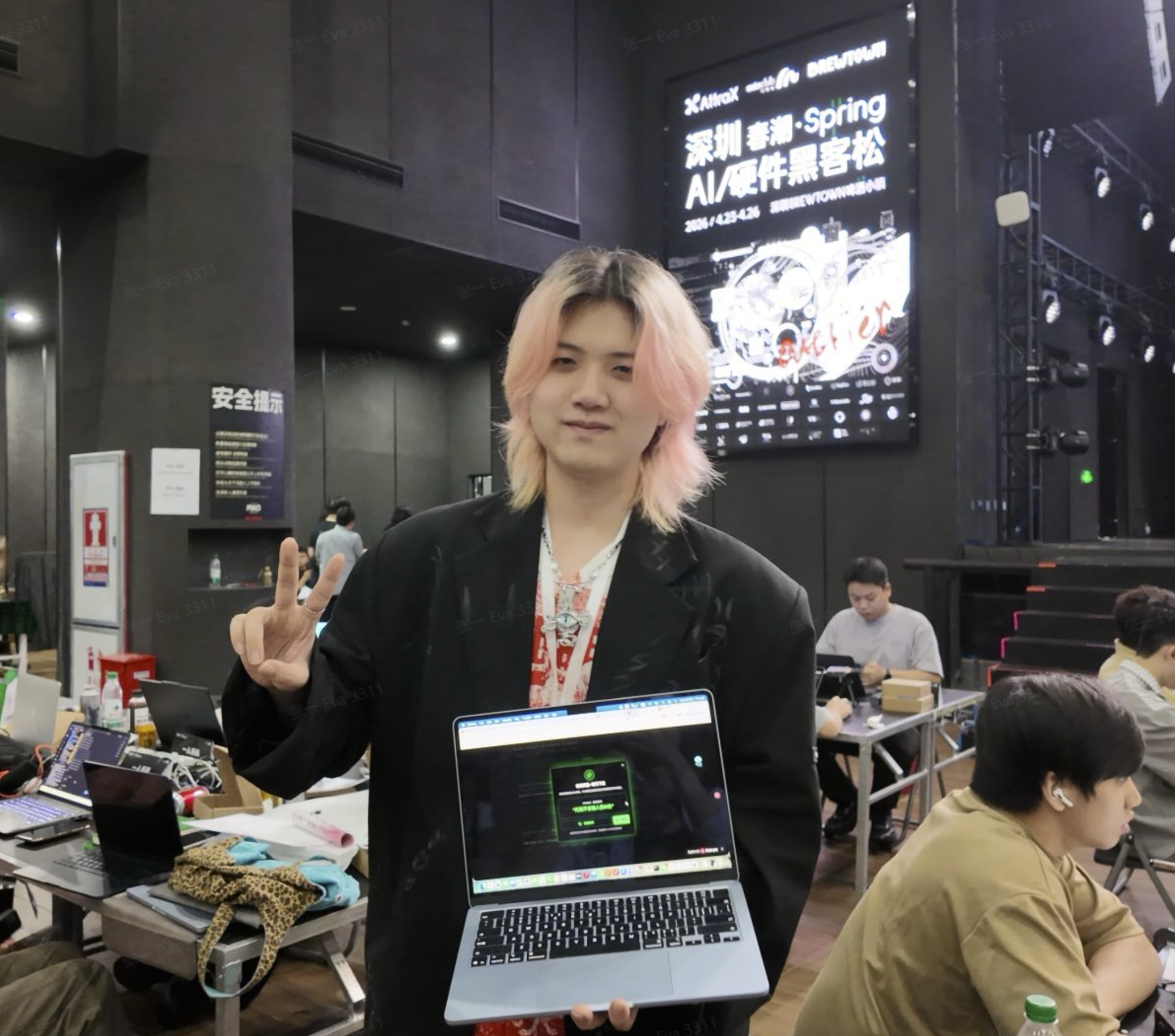
谢佳辰 — Caesar — had been sitting with this gap long before he walked into a hackathon with two teammates and a plan to do something about it.
The meme that became a product
The idea for HumanMCP started, improbably, with an internet joke.
A meme had been circulating about the cost of running AI agents — burning through tokens, burning through money. The punchline: what about using 能工智人 — skilled humans — instead? They think with their brains, not tokens.
Caesar didn't scroll past it. He sat with it.
"AI has capability boundaries," he explained. "And if AI reaches those boundaries — or the person using it reaches their own understanding limits — the output just isn't going to be good." The meme wasn't just funny. It was pointing at something real: there are moments in an AI workflow where a confident wrong answer is worse than a paused right one.
So what if, instead of letting AI guess, you paused the workflow and routed that specific question to a qualified human? Not a consultant. Not a committee. Just one person, with the relevant experience, answering one question in under thirty seconds.
That's HumanMCP.
What it actually does
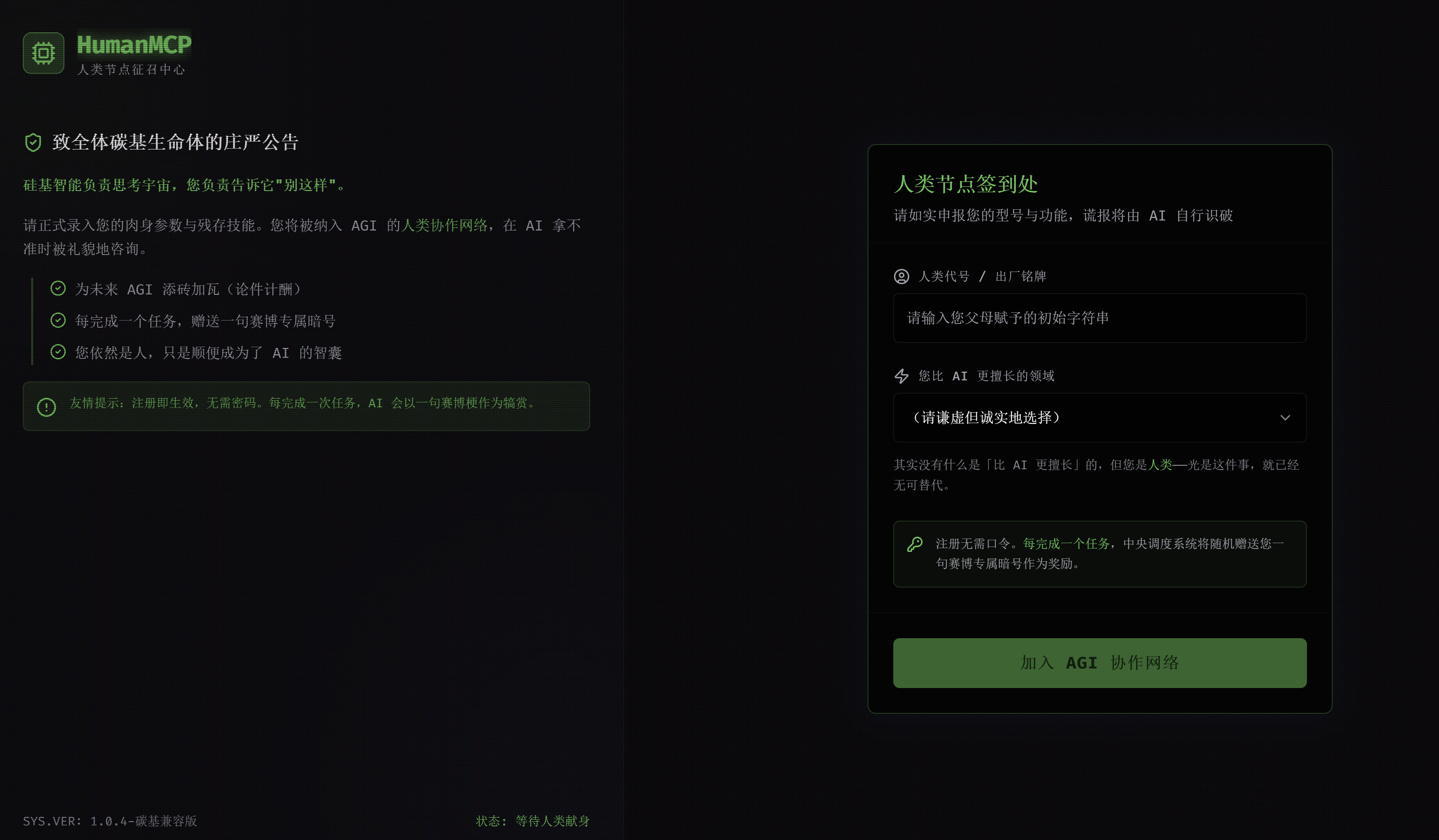
HumanMCP doesn't try to replace AI — it completes it. When an AI agent reaches a decision point that requires human judgment (Does this landing page make sense at first glance? Does this legal disclaimer feel trustworthy? Does this design feel premium?), the system packages the minimum necessary context into what the team calls a Task Packet and routes it to someone qualified to answer.
The person on the receiving end sees only what they need to see. Not the full context of the underlying project. Not anything that might compromise the user's privacy. Just the question, framed clearly, with a single-choice answer. Thirty seconds. Done.
The answer flows back into the AI workflow, which continues where it left off — this time, with a real human signal baked in.
The key insight Caesar kept returning to: "Let professional people give a directional judgment. Let AI do better with that."
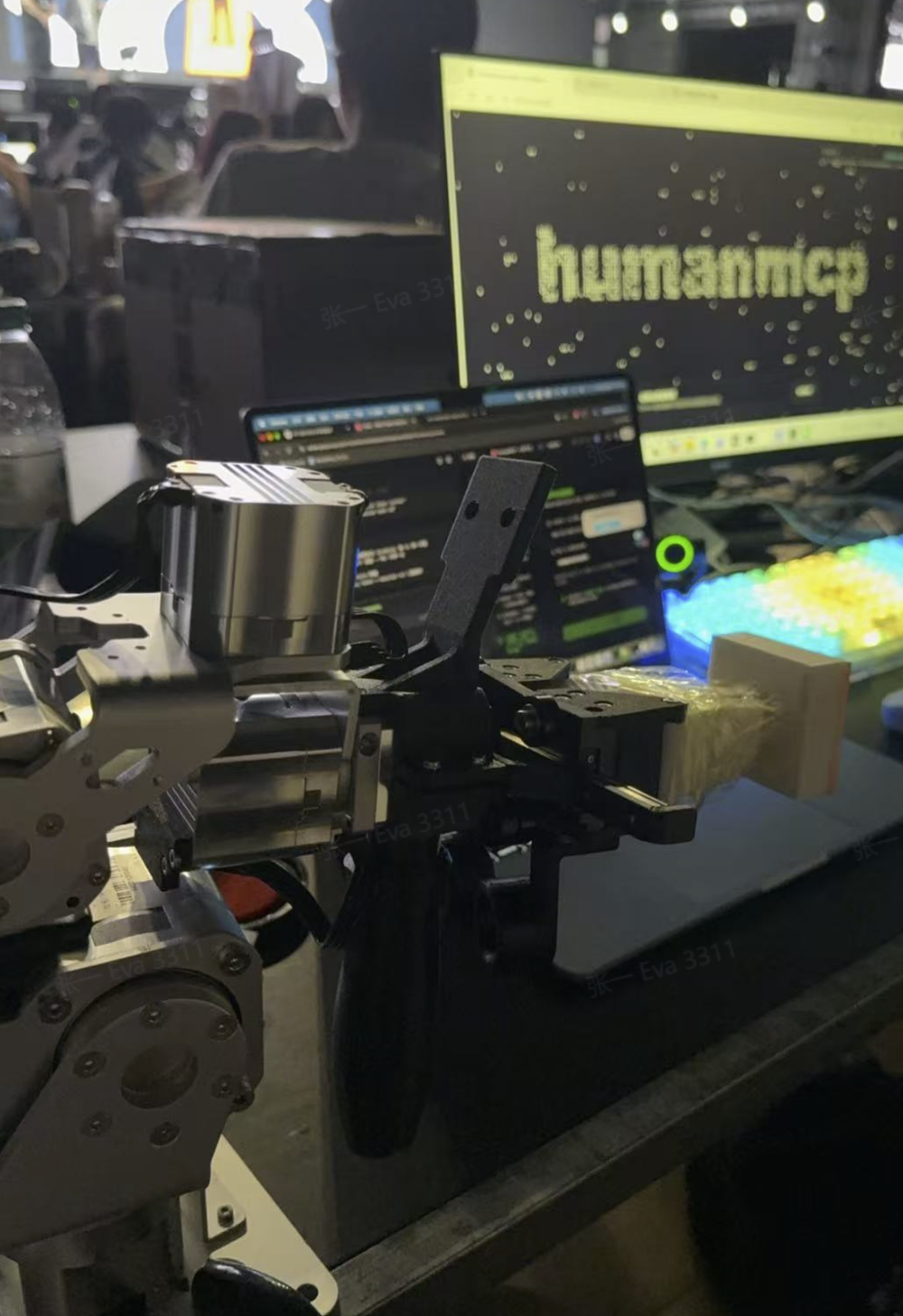
Building it in a weekend
Three people. A half-formed idea. A hackathon clock.
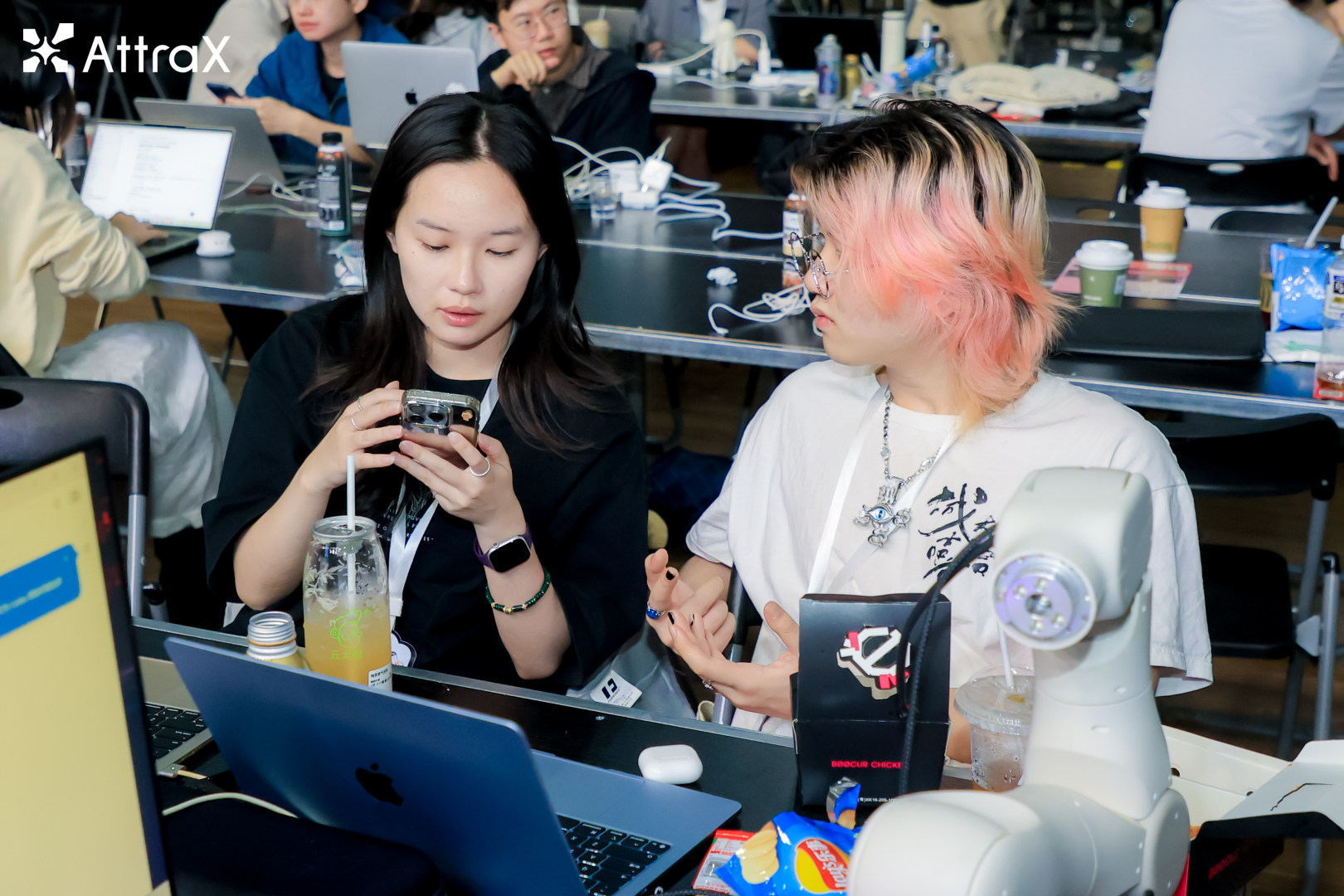
Caesar's co-founder and classmate handled the technical architecture together. Their third teammate, studying media and communications, led the business planning and pitch video. The division looked clean on paper. In practice, Caesar was carrying most of the product build himself, and the scope was not small.

The platform needed a working frontend. A backend that could receive task packets and route them in real time. A system for recording proof of completion so every human judgment could be verified and audited. All of it live. All of it functional. By the end of the weekend.
This is where Enter Pro came in.
Caesar had first encountered Enter a few weeks earlier at a campus event. He'd spent two or three days prior building a project with AI tools — debugging, adjusting, trying to get it deployed, never fully making it across the finish line. At the event, he rebuilt something equivalent in twenty to thirty minutes. Full stack, fully deployed, backend wired up and accessible. "It just opened up the whole chain at once," he said. "I realized — if you have an idea, you can build a site, get it live, and start telling people about it. That fast."
For HumanMCP, that speed was the margin. Caesar built the entire frontend and backend through Enter, and pushed further — connecting Enter's backend infrastructure directly so external agents could call into the platform without additional setup. By the end of the hackathon, Caesar alone had consumed roughly 7,000 credits.
The thing that makes it different
The easy critique of HumanMCP is that it's just another crowdsourcing platform. Caesar is clear that it isn't.
Traditional crowdsourcing sends tasks to whoever's available. HumanMCP routes questions to people with relevant expertise — and critically, controls what they see. The team calls this the Privacy Budget: a system that governs exactly how much information a human receives for any given task. Completing a judgment doesn't require seeing anything beyond what the judgment demands. Human insight, without human access to everything.
The result is something that didn't exist before: human judgment as a callable, verifiable, auditable capability inside an AI workflow. Not a workaround. An actual interface.
The bigger picture
Caesar is, by his own description, an AI believer. He first touched AI in 2022, before the current wave — teaching himself to run image generation models because he couldn't draw, and realizing for the first time that he could get what was in his head out into the world. He's been building ever since.

But what he believes isn't that AI replaces humans. It's almost the opposite.
"AI should liberate human creativity and productivity," he said. "Let humans focus on judgment, aesthetics, the things they actually want to do. The grunt work in between — let AI handle that. Humans just need to be free to be themselves."
HumanMCP is a product built from that belief. Not humans serving AI. Not AI serving humans in isolation. Two kinds of intelligence, each doing what the other cannot — and a system precise enough to know when to hand off.
The future Caesar is building toward isn't one where AI does everything. It's one where AI knows exactly what it can't do, and asks the right person.