The AI Pterodactyl on Your Desk That Feeds You Snacks and Bites Back
A friend kept passing Tangshui snacks during a brainstorm. The bag ran out. The idea didn't. In 72 hours, a team built an AI pterodactyl that lives on your desk, reads your face, feeds you candy when you're tired, and bites back when someone talks down to you. This is the story of how a snack became a product, and why the workplace needed a dinosaur.
"Attention is the rarest and purest form of generosity." — Simone Weil
Nobody in the office asks if you're tired.
You arrive at nine. You sit through meetings. You eat lunch in twelve minutes. You frown at a spreadsheet for two hours, sigh into your keyboard, zone out somewhere around four — and by eight, when you're still at your desk, still working, the only thing you want is for someone to notice.
That someone rarely shows up.
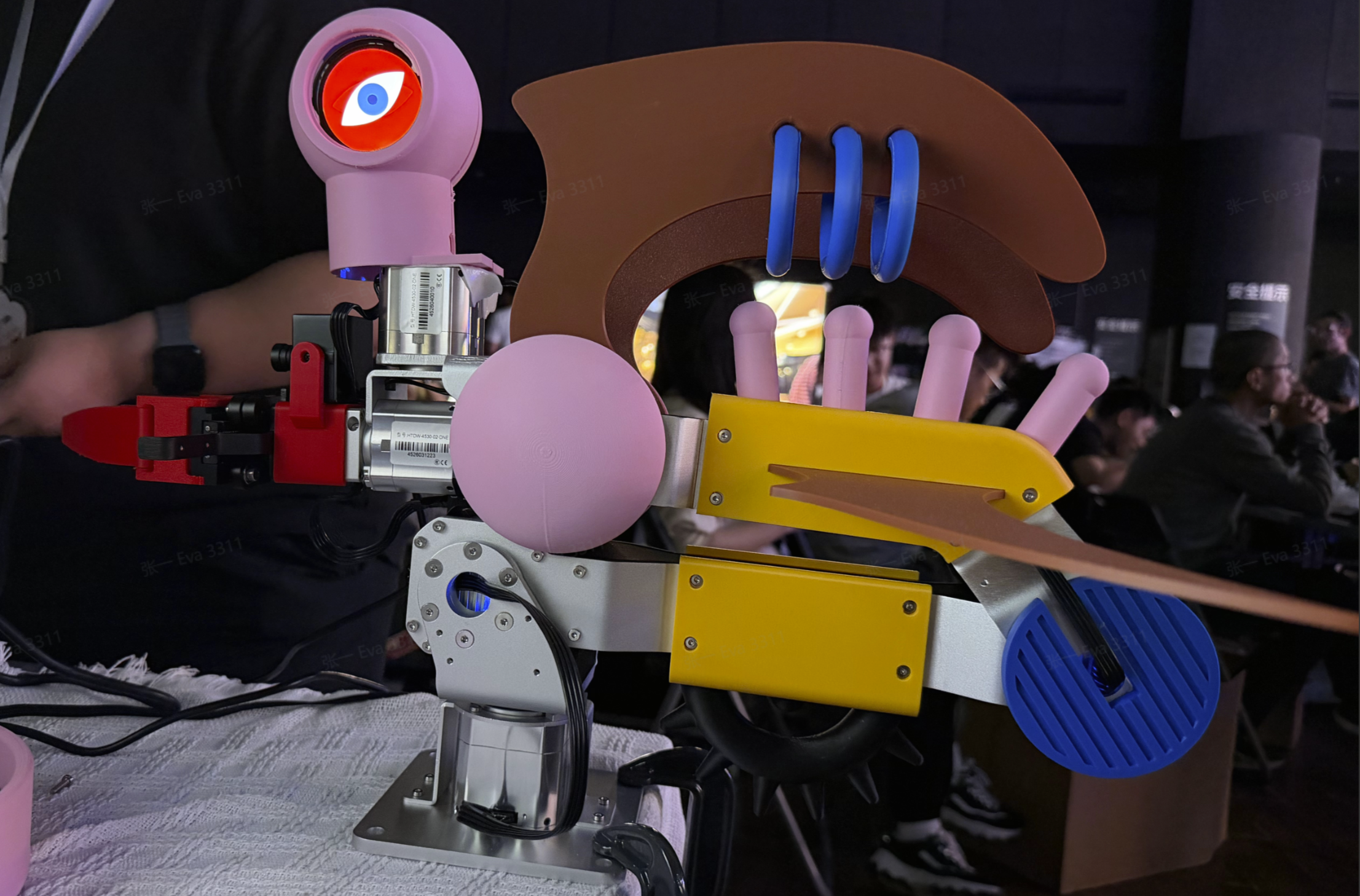
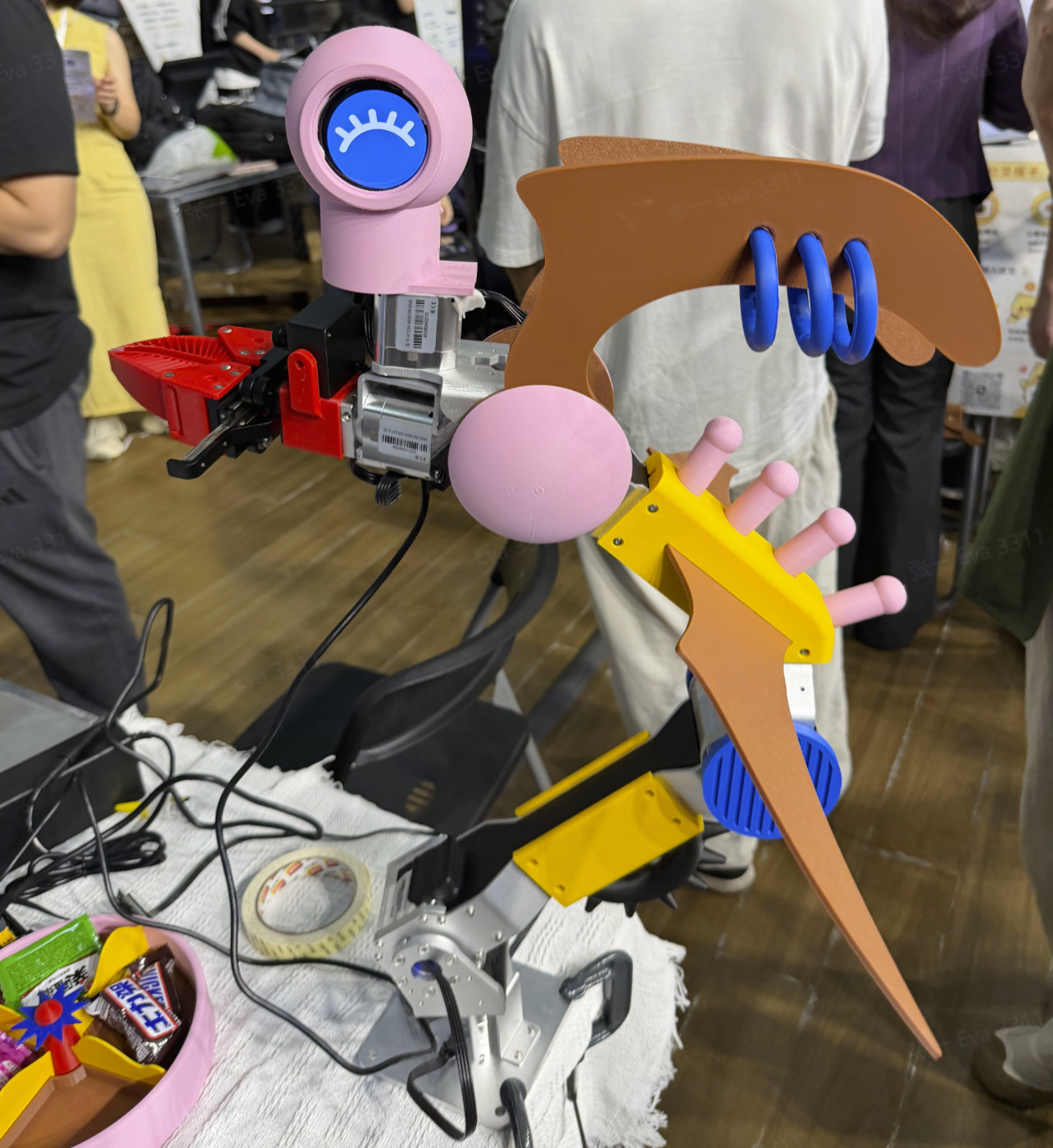
Dare & Devour noticed. It lives on your desk, shaped like a pterodactyl, and it watches you. When you yawn, it feeds you something. When someone talks to you in a way that makes your face go tight and your voice go quiet, it turns toward them — and bites.
Not metaphorically. It bites.
Where It Started
The idea started, as many good ones do, with snacks.
Tangshui arrived at the Spring Hackathon with no fixed direction. A friend was feeding him snacks during brainstorming — kept handing him over, one after another, until the bag was gone.
"I just kept eating," he says. "And then I thought — what if something did that for you? Something that actually paid attention?"
Ahao was a small find. He builds physical products in his spare time — the kind of work that turns a sketch into something you can hold. He'd been invited to join a Top 20-ranked team. He turned them down. He saw the vision and thought it matched his.
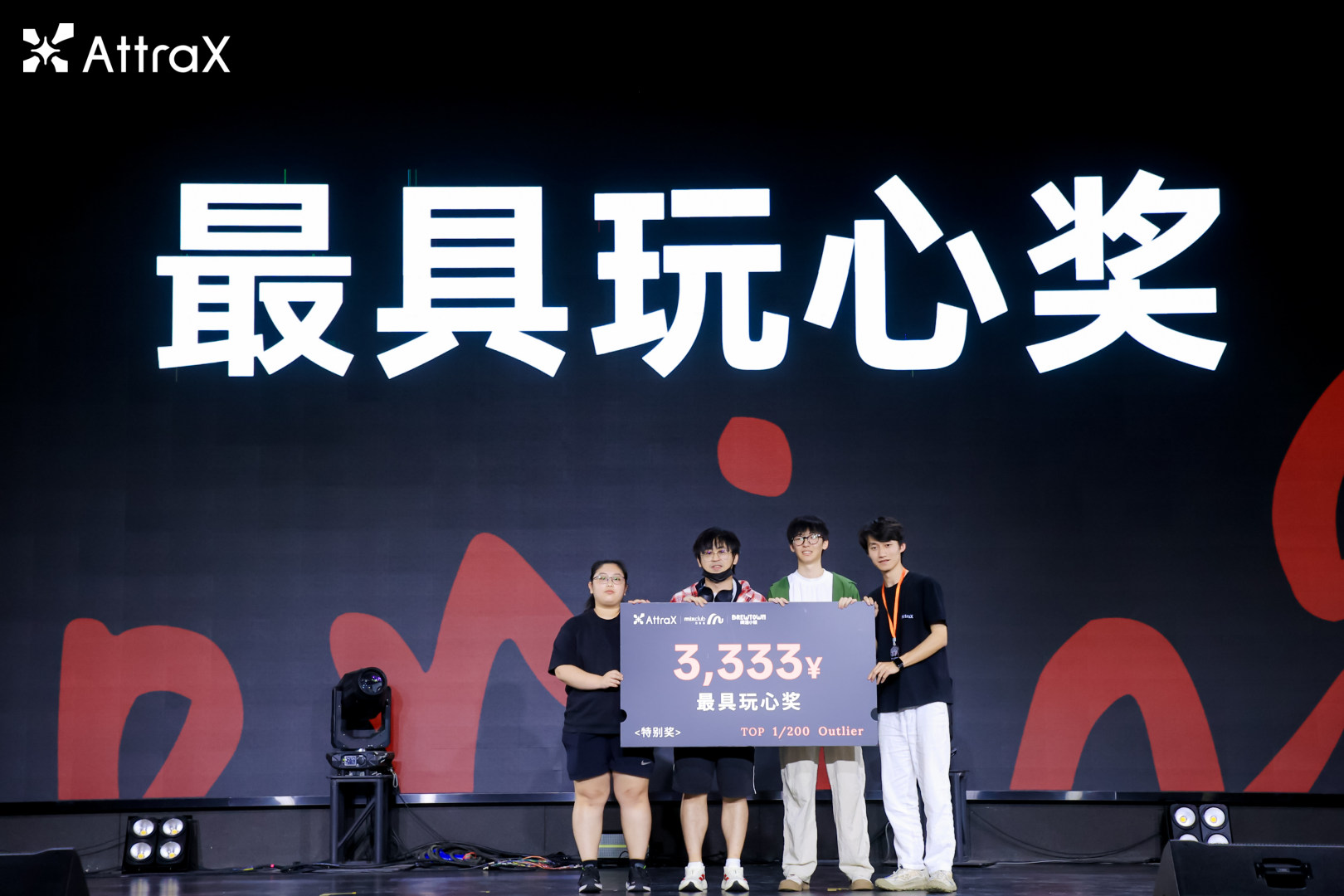
Seventy-two hours later, the pterodactyl had a working robotic arm and a face with LED eyes, and they'd won two awards at the hackathon — including Best Playfulness.
More Than Something That Moves
Dare & Devour is a complete system, which is what makes it unusual for something built in a weekend.
A camera watches your face in real time and reads micro-expressions: furrowed brow, open yawn, the particular slack of fatigue. When it detects something, a mechanical arm extends, carrying a piece of candy to just within reach of your mouth. You never have to move your hands from the keyboard.
When the environment turns hostile — sustained loud volume, a tense expression, the behavioral signature of someone being talked down to — the pterodactyl rotates toward the source. It bites. Then it rotates back and offers the candy anyway.
"It's not really about biting," Tangshui explains. "It's an interrupter. It physically breaks the transmission of that energy."
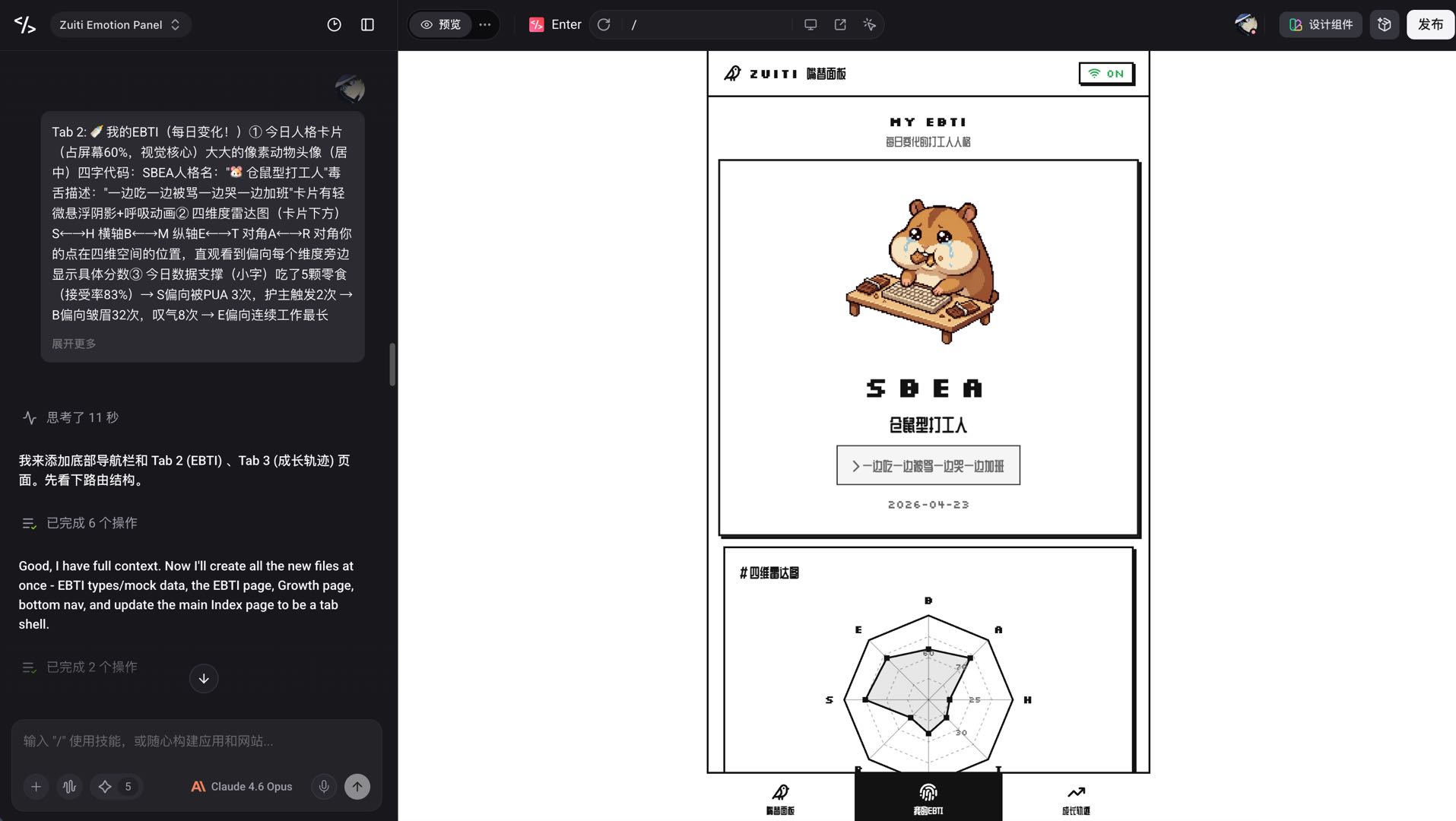
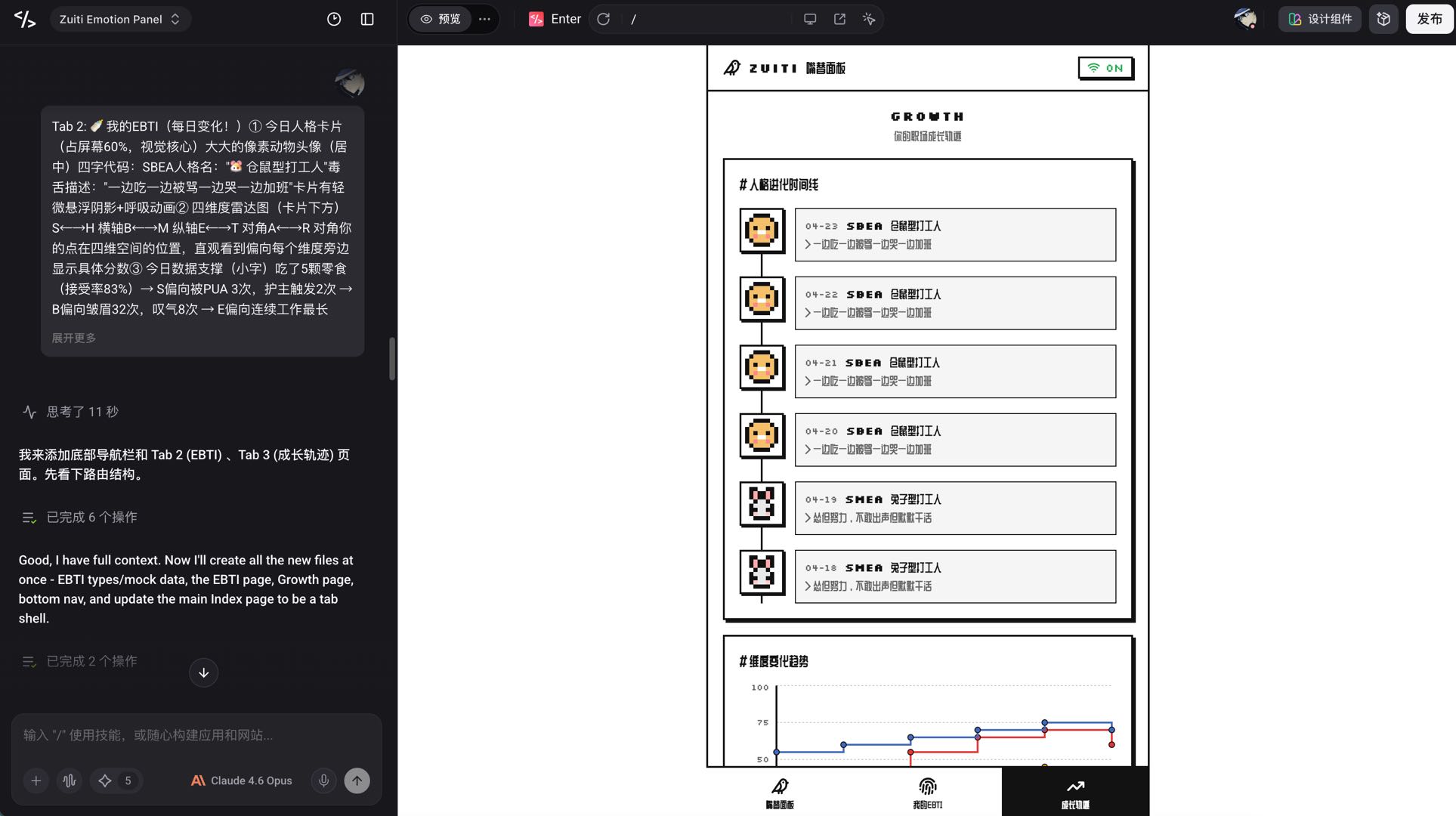
The third piece is EBTI — a workplace personality system that doesn't ask you anything. Instead, it watches. How many times did you frown today? How many times were you talked over? What was your snack acceptance rate? How long did you work without stopping? At the end of the day, it generates your profile from the data your body actually produced — one of sixteen animal types, different each day, with descriptions that have the specific sting of accuracy. "Zero snacks consumed. Refuses comfort. Has decided suffering is a personality."
Three Systems, 72 Hours, From Scratch
Building three systems at once — hardware, emotion detection, and a data product — in 72 hours, from scratch, is where everything got complicated.
Dependencies compounded. The codebase became heavy. The AI coding environment would work through a long sequence of decisions, then lose the thread of earlier ones when the context window filled. The team would have to start over.
Their solution was to stop treating the project as one thing. They broke it into isolated modules: one feature, built completely, before touching the next. Each piece had to stand on its own before it could connect to anything else. They ran this process over and over, tightening each component until it worked.
The emotion dashboard — the live panel that receives real-time data from the hardware and makes it visible — was where Enter Pro came in. They needed a frontend that matched their visual direction, built fast, without negotiating with a slow feedback loop.
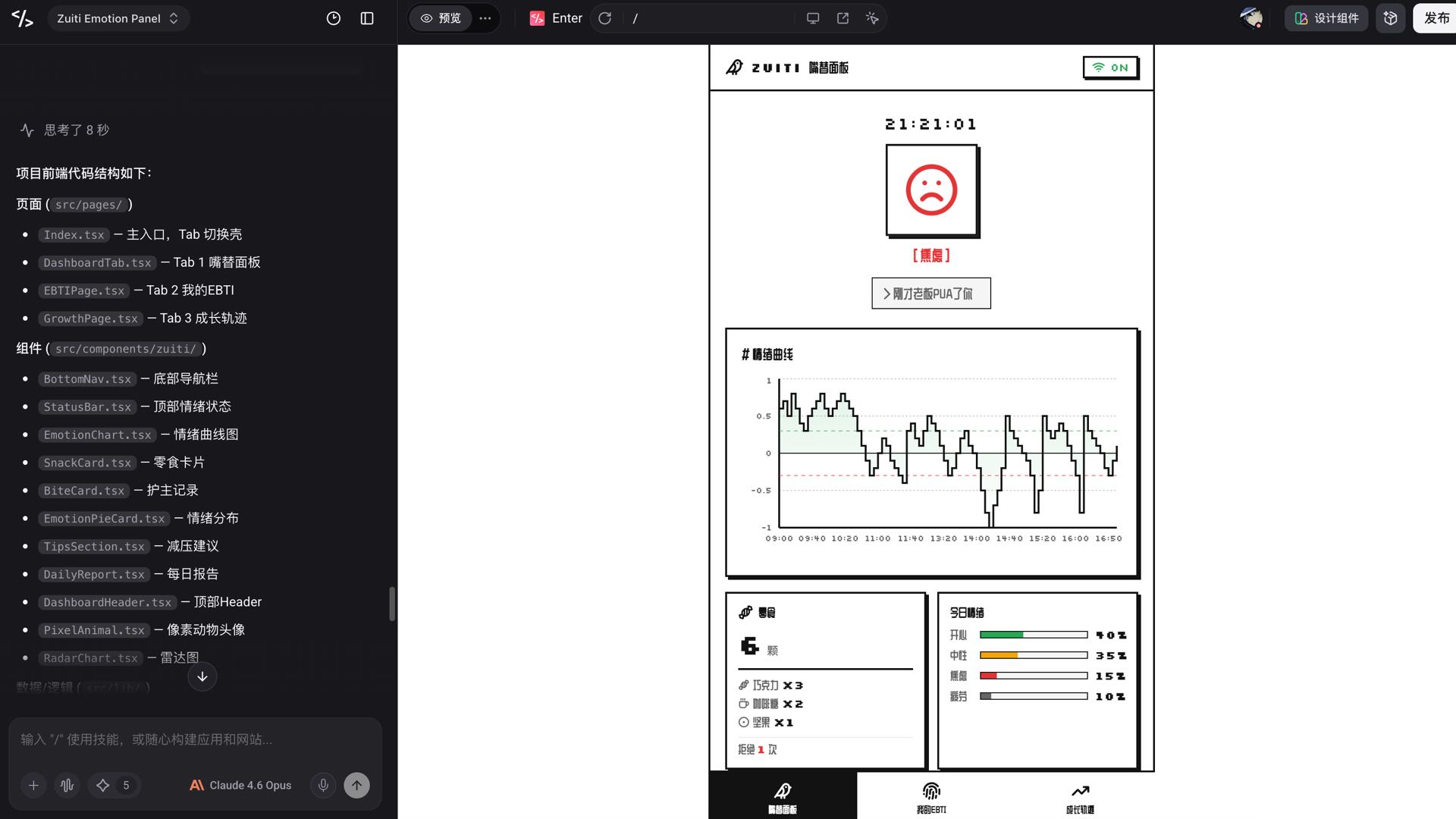
"The first version that came out was pretty much aligned with what we'd imagined," Tangshui says.
In a 72-hour build with hardware and firmware running in parallel, landing close on the first attempt isn't a given.
The Pterodactyl Leaves the Hackathon
The team is now engineering a smaller version of the arm — compact enough to belong on any desk, not just a hackathon table. They're preparing to enter "奇绩创坛", one of China's competitive early-stage startup programs, where the pterodactyl will need to explain itself to people who ask harder questions than hackathon judges.
At the end of this month, they're bringing Dare & Devour to "睿派R&A Park" in Dongguan — a commercial district being built around robotics and AI. It will be the first public demonstration outside the competition. The first time strangers, not teammates, will sit in front of it and frown.
The pterodactyl will notice.
Workplaces are full of signals that go unread. The yawn nobody responds to. The frown that stays on your face for an hour. The moment your shoulders drop and you just keep going anyway.
Dare & Devour doesn't fix any of that. But it pays attention — and sometimes, that's the thing that was missing.