
Web Development Best Practices for Modern Websites
Discover key web development best practices including responsive design, security, and performance optimization. Learn 12 proven strategies to create scalable, user-friendly web applications that drive results and stand the test of time.
Web development best practices form the foundation for creating reliable, user-friendly, and high-performing websites. In a competitive digital landscape, following established guidelines ensures your projects load quickly, remain secure against threats, and provide seamless experiences across all devices. These practices cover everything from clean code structure and responsive layouts to security protocols and ongoing maintenance. By implementing them, developers can reduce technical debt, improve search engine rankings, and deliver applications that users love. This guide explores 12 essential web development best practices drawn from industry standards and real-world experience to help you build better web solutions.
What is web development?
Web development is the process of creating and maintaining websites and web applications. It involves both front-end development, which focuses on the visual and interactive elements users see and engage with, and back-end development, which handles server-side logic, databases, and application functionality. Full-stack developers manage both areas. Modern web development combines HTML, CSS, and JavaScript with frameworks and tools to build responsive, secure, and high-performing digital experiences. Following web development best practices ensures these projects are scalable, user-friendly, and aligned with current industry standards.

Top 12 web application development best practices
Implementing best web development practices is essential for building robust, scalable, and secure web applications. Here are the top 12 practices every developer should follow:
Adopt responsive design
Responsive design ensures that a website delivers a seamless experience regardless of the device being used. With users accessing websites from smartphones, tablets, laptops, and desktops, developers must create layouts that automatically adjust to different screen sizes and resolutions. This can be achieved through CSS media queries, flexible grid systems, and responsive images that scale appropriately based on the viewport. A responsive website improves usability, reduces bounce rates, and increases engagement by making content easy to read and navigate on any device. Since search engines prioritize mobile-friendly websites, responsive design also contributes to stronger SEO performance and higher rankings.
Prioritize performance optimization
Website speed has a direct impact on user satisfaction, conversion rates, and search engine rankings. Performance optimization focuses on improving Core Web Vitals such as Largest Contentful Paint (LCP), Interaction to Next Paint (INP), and Cumulative Layout Shift (CLS). Developers can improve performance by compressing images, minifying CSS and JavaScript files, enabling browser caching, and reducing unnecessary code. Using content delivery networks and lazy loading techniques can further enhance loading speeds. A fast website keeps visitors engaged, reduces abandonment rates, and provides a smoother browsing experience that encourages users to explore more pages and complete desired actions.
Implement strong security measures
Security should be a core consideration throughout the development process. Cyber threats continue to evolve, making it essential to follow web development security best practices that protect both businesses and users. Developers should validate and sanitize all user inputs, enforce HTTPS encryption, implement secure authentication methods, and regularly update frameworks and third-party libraries. Additional measures, such as protection against Cross-Site Scripting (XSS), Cross-Site Request Forgery (CSRF), and SQL injection attacks help prevent common vulnerabilities. A secure website builds trust with visitors, protects sensitive information, and reduces the risk of costly data breaches and compliance issues.

Ensure accessibility compliance
Accessibility is an essential component of modern web development that ensures websites can be used by people of all abilities. Following Web Content Accessibility Guidelines (WCAG) helps developers create inclusive digital experiences. This includes using semantic HTML elements, adding descriptive alt text to images, supporting keyboard navigation, and maintaining sufficient color contrast between text and backgrounds. Accessibility improvements often enhance usability for all visitors, not just those with disabilities. By making websites accessible, organizations can reach a broader audience, improve user satisfaction, and meet legal and regulatory requirements in many regions.
Write clean and maintainable code
A well-structured codebase makes development more efficient and sustainable over time. Clean code is easier to understand, debug, and update, especially when multiple developers work on the same project. Following consistent naming conventions, organizing files logically, and using comments only where necessary helps improve readability. Modular coding practices allow components to be reused across projects, reducing duplication and maintenance effort. By prioritizing code quality, development teams can reduce technical debt, accelerate future enhancements, and ensure that applications remain stable and scalable as requirements evolve.

Use version control effectively
Version control systems such as Git are essential tools for managing code changes and supporting collaboration among development teams. Effective version control practices include creating meaningful commit messages, using feature branches for new work, and conducting code reviews before merging changes into the main codebase. These workflows help teams track project history, identify the source of issues, and roll back problematic updates when necessary. Version control also facilitates collaboration across distributed teams by ensuring everyone works from a consistent and organized codebase, reducing conflicts and improving overall productivity.
Optimize for search engines
Search engine optimization should be integrated into the development process from the beginning rather than treated as a separate marketing activity. Developers can improve search visibility by using semantic HTML, implementing proper heading structures, creating descriptive URLs, and optimizing metadata. Fast page loading speeds, mobile responsiveness, and structured data markup also contribute to better search engine performance. Technical SEO best practices help search engines crawl and understand website content more effectively, increasing the likelihood of higher rankings and greater organic traffic. A strong SEO foundation supports long-term digital growth and visibility.

Implement automated testing
Automated testing helps maintain software quality by identifying issues before they reach production environments. Testing frameworks can be used to perform unit tests, integration tests, and end-to-end tests that validate different aspects of an application. Automated tests provide developers with confidence when making code changes and help prevent regressions that could impact functionality. Integrating testing into continuous integration and deployment pipelines enables faster development cycles while maintaining reliability. A comprehensive testing strategy reduces bugs, improves user satisfaction, and minimizes the time spent troubleshooting unexpected issues after deployment.
Focus on user experience design
User experience design plays a critical role in determining how visitors interact with a website. A well-designed user experience emphasizes intuitive navigation, clear content hierarchy, accessible interfaces, and efficient workflows. Developers and designers should collaborate to ensure that websites are easy to use and aligned with user expectations. Conducting usability testing and gathering feedback from real users can reveal pain points and opportunities for improvement. When visitors can quickly find information and complete tasks without frustration, engagement, satisfaction, and conversion rates typically increase.

Plan for scalability and maintainability
Successful web applications should be built with future growth in mind. Scalability involves designing systems that can handle increasing traffic, data volumes, and feature requirements without sacrificing performance. Developers should adopt architectural patterns that separate concerns, use reusable components, and support efficient resource management. Choosing the right frameworks, databases, and infrastructure can make it easier to expand functionality as business needs evolve. By planning for scalability and maintainability from the start, organizations can avoid expensive redesigns and ensure their applications remain reliable, adaptable, and cost-effective over the long term.
Leverage modern development frameworks and tools
Modern frameworks and development tools can significantly improve productivity, code quality, and application performance. Frameworks such as React, Angular, Vue, and Next.js provide reusable components, streamlined workflows, and built-in optimization features that simplify complex development tasks. Developers should also utilize package managers, build tools, and automation platforms to enhance efficiency and reduce manual work. However, it is important to choose technologies based on project requirements rather than trends. Using the right tools enables faster development, better maintainability, and a more consistent user experience while supporting long-term project growth.

Monitor, analyze, and continuously improve
Web development does not end once a website is launched. Continuous monitoring and improvement are essential for maintaining performance, security, and user satisfaction. Developers should regularly analyze website metrics such as traffic patterns, page load speeds, user behavior, and conversion rates using analytics and monitoring tools. Performance audits, security assessments, and user feedback can reveal opportunities for optimization and feature enhancements. By adopting a continuous improvement mindset, organizations can quickly address issues, adapt to changing user expectations, and ensure their websites remain competitive, efficient, and effective over time.
Develop your next project with Enter Pro
Ready to put these web development best practices into action? Enter Pro is an innovative AI-powered platform that lets you build professional websites, web applications, and AI agents through simple conversation. Whether you need a responsive business site, a scalable web app, or a complex digital solution, Enter Pro combines modern development standards with the power of AI to deliver fast, secure, and high-quality results. Say goodbye to lengthy development cycles. Chat with Enter Pro to generate clean code, implement best web development practices, and launch polished projects efficiently. Perfect for startups, businesses, and developers looking to accelerate their digital presence.
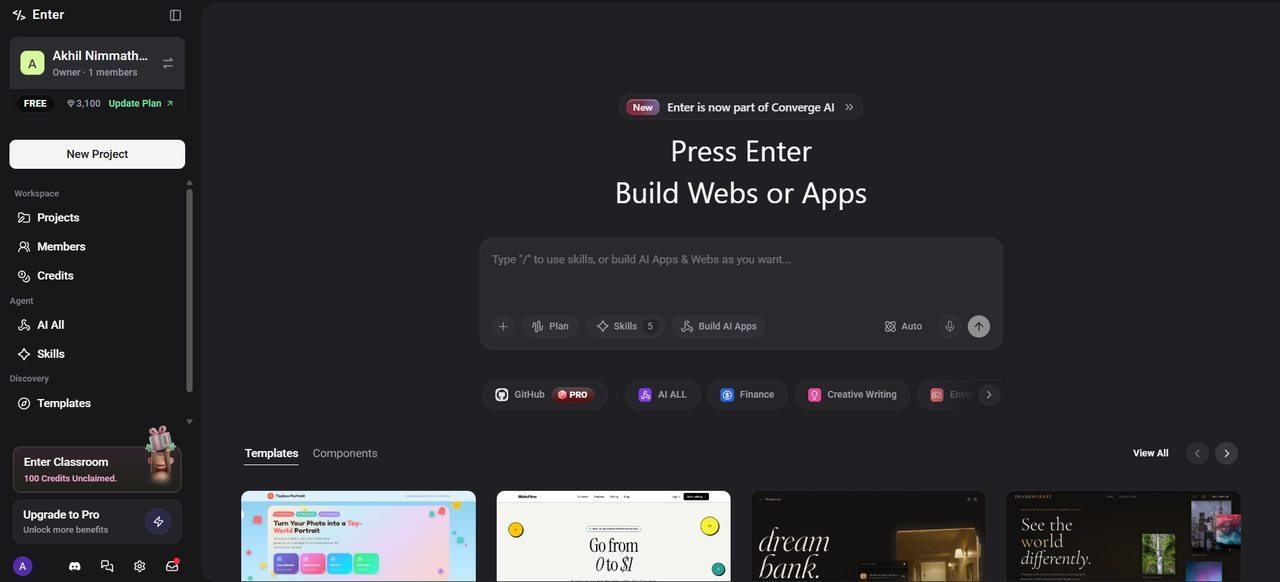
Key features of Enter Pro
- Native AI at the core: Enter Pro integrates the most powerful LLMs like GPT, Claude, Gemini, and Grok in one unified platform. Switch between models instantly without managing multiple API keys, giving you maximum flexibility and performance for every web development project.
- Visual editor with real-time preview: Edit your website directly on a live canvas with a visual editor. Adjust fonts, colors, spacing, layouts, and styles visually with instant updates. This powerful no-code editor makes designing beautiful, responsive interfaces fast and intuitive.
- Cloud storage, backend & integrations: Built-in Supabase backend, secure cloud storage, and seamless integrations with Stripe, databases, analytics tools, and more. Focus on building features instead of managing infrastructure.
- Team workspace for collaboration: Work together in real-time with your team. Manage members, assign roles, and collaborate on projects efficiently within a secure shared workspace designed for modern development teams.
Step-by-step guide to develop websites with Enter Pro
Step 1: Describe your website idea
Log in Enter Pro and start a new project. Start by clearly describing your website idea, including its purpose, target audience, and key features. Enter Pro uses this input to understand your requirements and generate a relevant structure for your application. Then, hit "Build" to generate website.
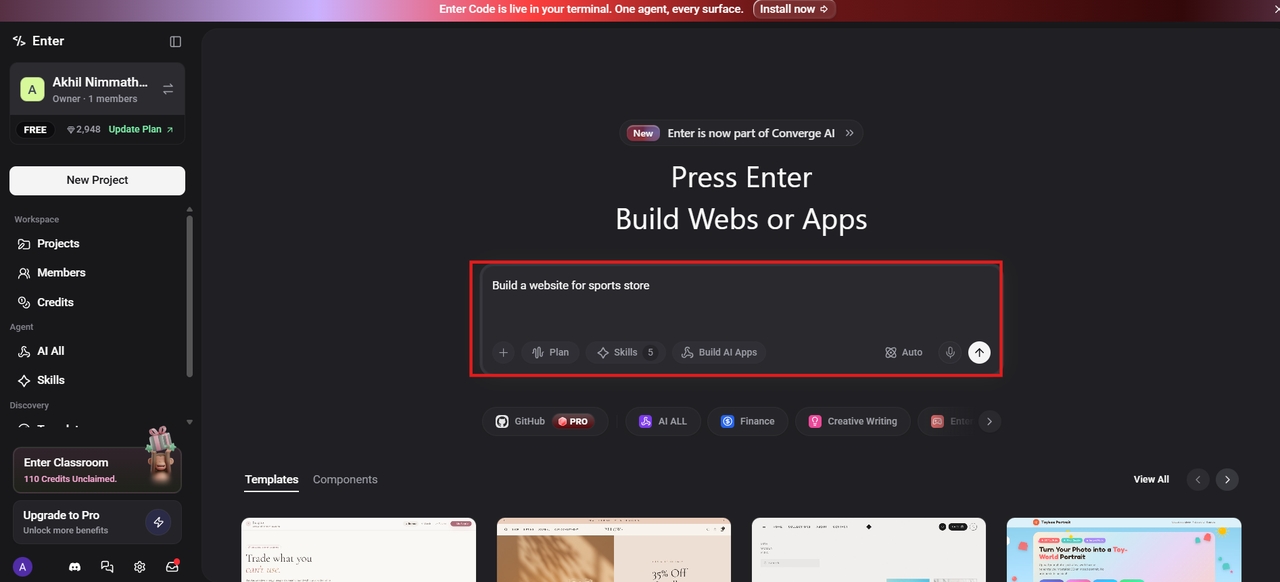
Step 2: Generate and refine
Once you hit "Build", Enter Pro generates a complete website draft for you. Use AI chat to request changes in plain language, and the visual editor to click-and-edit content, layouts, colors, and more.

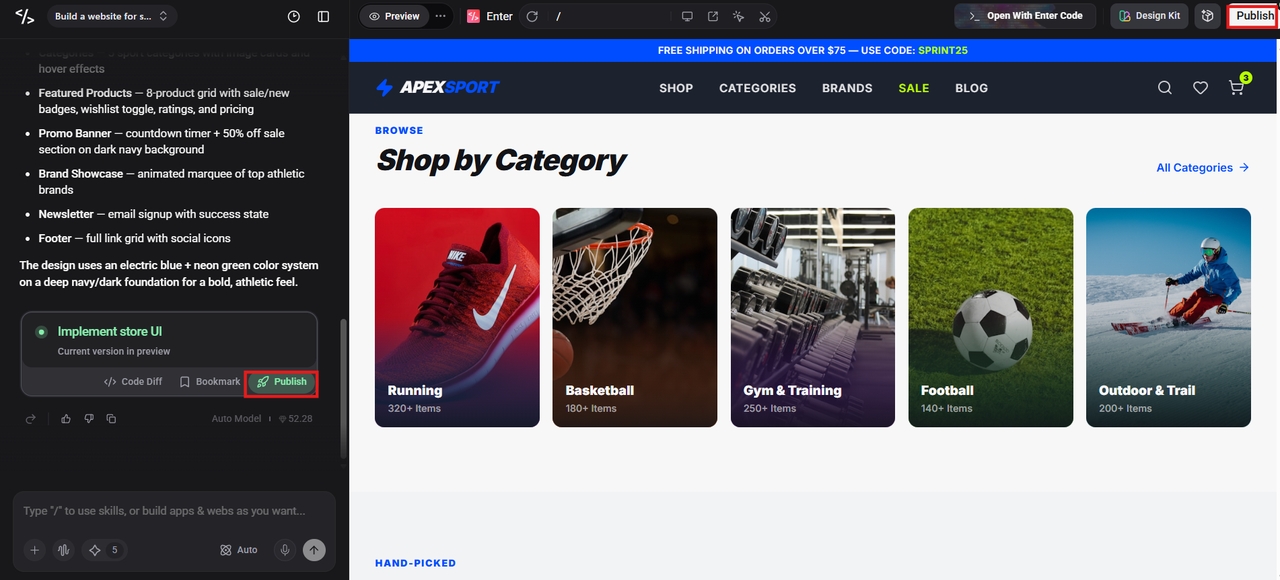
Step 3: Publish website
When you're happy with your site, hit "Publish." Enter Pro hosts it instantly with a shareable link. You can also connect a custom domain to make it fully yours.
Conclusion
Mastering web development best practices is crucial for building fast, secure, and user-friendly websites that deliver exceptional results. By following responsive design, performance optimization, strong security measures, accessibility standards, and other essential strategies outlined in this guide, developers can create scalable web applications that stand the test of time. These best practices for web development not only improve user experience but also reduce maintenance costs and boost business growth. Start applying them in your next project to achieve outstanding outcomes.
Ready to implement these practices effortlessly? Head over to Enter Pro and build professional websites and web applications faster with the power of AI. Turn your ideas into reality today.
FAQs
What are web development best practices?
Web development best practices are proven guidelines that help developers create secure, fast, accessible, and maintainable websites. They include responsive design, performance optimization, clean coding standards, security measures, and SEO techniques that improve overall website quality and user experience.
Why are web development best practices important?
Following best practices helps ensure websites perform efficiently, remain secure, and provide a consistent experience across devices and browsers. They also reduce maintenance costs, improve search engine rankings, and make it easier for teams to collaborate on projects.
What are the most important web development security best practices?
Key security practices include using HTTPS, validating user inputs, implementing secure authentication, protecting against vulnerabilities such as XSS and CSRF, and keeping software dependencies updated. These measures help safeguard sensitive data and reduce security risks.
How often should developers update web platform software dependencies?
Scan and update project packages weekly to mitigate security vulnerabilities and keep software performing optimally. Frequent incremental updates prevent massive technical debt and protect your infrastructure against newly discovered zero-day exploits targeting old open source libraries.
Why is accessibility important in web development?
Accessibility ensures websites are usable by everyone, including people with disabilities. Following WCAG guidelines with semantic HTML and keyboard navigation improves user experience and complies with legal standards.